Poetry Collection Review: How to Fly (In Ten Thousand Easy Lessons)

April is National Poetry Month, a month set aside to celebrate poetry and its vital place in our society. Launched by the Academy of American Poets in 1996, this month-long celebration has attracted millions of readers, students, teachers, librarians, booksellers, and poets.

Each Friday of April, I will share a favorite poetry collection.

Today’s pick is How to Fly (In Ten Thousand Easy Lessons) by Barbara Kingsolver, a collection described as “reflections on the practical, the spiritual, and the wild.”
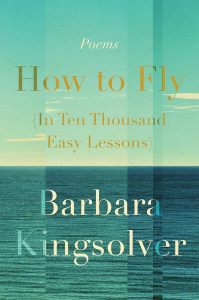
Having enjoyed reading Kingsolver’s novels, I was delighted to discover that she also writes poetry. In this collection, she explores everyday life with warmth and insight.

The book opens with a series of “how to” poems that range from the intimate—marriage and divorce—to the unexpected, like shearing a sheep or doing nothing at all. Her poem “How to Survive This” was featured in The New York Times during the pandemic.

The second set, “Pellegrinaggio,” follows a family trip to Italy with her mother-in-law. I could easily visualize the following scene in “On the Train to Sicily:”

“In a family compartment we take the long
road south, down the coast and across the channel
to the patria of her father. She is so tired.
We’ve lifted her onto the sill of this urbane clatter,
tucked ourselves in a cupboard of relative
peace, but now her small frame finds no resting
place on the great square seats. We offer
pillows, sips of water. She only says, Don’t worry.

Next come four sets of poems about making peace (or not) with our families and friends, aging, grief, and mortality. The final set celebrates the natural world–ruthless ants, clever shellfish, coral reefs, haunting deserts, and ghost-flowers. While reading this set, I was reminded of Mary Oliver’s poems.

I recommend taking your time to read and reflect on each poem. Seven sets in seven days—one possibility. Or simply devour them in one or two gulps and then return to the ones that resonate most with you.

One of my favorites:

How to Do Absolutely Nothing

Rent a house near the beach, or a cabin
but: Do not take your walking shoes.
Don’t take any clothes you’d wear
anyplace anyone would see you.
Don’t take your rechargeables.
Take Scrabble if you have to,
but not a dictionary and no
pencils for keeping score.
Don’t take a cookbook
or anything to cook.
A fishing pole, ok
but not the line,
hook, sinker,
leave it all.
Find out
what’s
left.
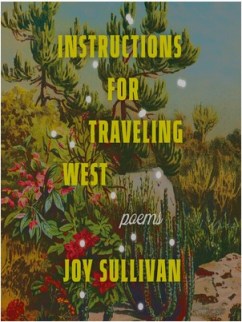
Poetry Collection Review: Instructions for Traveling West

April is National Poetry Month, a month set aside to celebrate poetry and its vital place in our society. Launched by the Academy of American Poets in 1996, this month-long celebration has attracted millions of readers, students, teachers, librarians, booksellers, and poets.

Today, and for the next two Fridays, I will share my favorite poetry collections.

Today’s selection, Instructions for Traveling West, has been described as “a lush debut collection that examines what happens when we leave home and leap into the unknown.”

A master wordsmith, Joy Sullivan possesses that rare ability to transform life’s most ordinary moments into dazzling poetry that brims with emotion and insight. I was impressed by her vivid imagery, fresh metaphors, and the threads of humor and compassion that run throughout the collection.

Underlying each poem is the importance of listening to our deepest desires and embracing the call to reinvent ourselves. This is something Sullivan understands very well. In the midst of the pandemic, she left the man she planned to marry, sold her house, quit her corporate job, and drove west.

These poems, with their deeply personal and universal relatable themes, will resonate with women at every age and stage of life. A must-read book for anyone seeking clarity, courage, or a spark of reinvention.

Here’s one of my favorite poems:

Giving Notice

One day soon, you’ll rise from your desk or quietly excuse yourself
from the meeting or turn the car around in the middle of the street.
Anything may trigger it. An open window. A sunny day in April.
Daffodils panting in a mason jar. Call it madness. Call it glorious

disappearance. Call it locomotion. Do what you should have done
years ago. Let your body out to pasture. Fill your calendar with
nothing but sky. Surrender to the woods. To cicadas and sap
beetles. To the moths, the color of memory and dream. Wear
dusk like an ancient cloak. Hurry—

there’s still time to creature—to pluck all the wild cloudberries
and carry them home. Even now, you can hear coyotes crying
at the canyon’s edge. Find your first fang. Grow back your hackles
and howl. This was always your chorus, the mother tongue, a feral
hymn you know by heart.

Poetry Collection Review: All Along You Were Blooming

April is National Poetry Month, a month set aside to celebrate poetry and its vital place in our society. Launched by the Academy of American Poets in 1996, this month-long celebration has attracted millions of readers, students, teachers, librarians, booksellers, and poets.

Today, and for the next three Fridays, I will share my favorite poetry collections.

Today’s selection, All Along You Were Blooming, has been described as “a love letter from the poet to your heart, to your soul, and to your body.”

There is so much to like here, starting with the title and subtitle. These initial messages are reassuring, reminding us that we have been blooming for a while and that we can enrich our lives with “thoughts for boundless living.” I was also impressed by the striking colors and illustrations that accompany each piece of poetry and prose.
Morgan Harper Nichols—a multi-talented artist, musician, and poet—does more than create art. She also gives meaning to each season of our lives. Her work gently encourages us to live fully in the present moment and own our unique stories. Her backstory is an intriguing one. An introvert, she didn’t believe she could show up in the world. All that changed on a cold autumn day when Morgan took a deep breath and wrote an Instagram message to her followers. She invited them to share their stories, and one by one, she responded with a personalized poem, forging a deep and authentic connection with her audience.

Beautifully written and aesthetically pleasing, this book is a versatile gift for many occasions. Whether it’s for Mother’s Day, Valentine’s Day, birthdays, or holidays, this collection will delight the poetry readers in your circle.

One of my favorite poems from the collection:

You find yourself
beneath a canopy of trees
with broken branches,
covered with moss tangled at your knees.

Rest assured
the forest does not crawl on forever,

But you must begin the journey
here.

For this is the time,
this is the time to come alive,
to walk tall with a beating heart
and wide-open midday eyes,
to surrender,
here in the green,
for you are still free
to travel free,
without knowing
everything,
humbly following the traces of daylight,
even though the path is unmarked,
even though this was not a favored start,
this is your only Hope
to make it through
precisely here,
pushing through the land of the unknown
you will find your home
in Hope.

So for now,
while you are here,
turn your attention
to the lessons of strength
this present forest offers.

STOP

On Wednesdays, I share posts, fables, songs, poems, quotations, TEDx Talks, cartoons, and books that have inspired and motivated me on my writing journey. I hope these posts will give writers, artists, and other creatives a mid-week boost.

Here’s a thought-provoking poem from Susan Davidson. She wrote this poem after attending a mindfulness course in Malvern, Worcestershire.

STOP

I used to say ‘Stop the world, I wanna get off’
Now I’ve realised I’m the one who needs to stop

Stop filling every waking minute
Taking every silent space and putting something in it

Stop striving, trying so hard to be the best
When what my mind is crying out for is a rest

Remember kindness, peace and loving
Just breathe, and feel, and notice without judging

Because, as Shakespeare said those many years ago,
‘There is nothing either good or bad, but thinking makes it so.”

The Hippo

On Wednesdays, I share posts, fables, songs, poems, quotations, TEDx Talks, cartoons, and books that have inspired and motivated me on my writing journey. I hope these posts will give writers, artists, and other creatives a mid-week boost.

Here’s a thought-provoking poem from Steven Hickman:

The Hippo

The hippo floats in swamp serene,
some emerged, but most unseen.

Seeing all and only blinking,
Who knows what this beast is thinking.

Gliding, and of judgment clear,
Letting go and being here.

Seeing all, both guilt and glory,
Only noting. But that’s MY story.

I sit here hippo-like and breathe,
While inside I storm and seethe.

Would that I were half equanimous
As that placid hippopotamus.

The Fourth Quarter

On Wednesdays, I share posts, fables, songs, poems, quotations, TEDx Talks, cartoons, and books that have inspired and motivated me on my writing journey. I hope these posts will give writers, artists, and other creatives a mid-week boost.

In 2006, Burlington author and retired school principal Lewis Raymond Long released a book of rhymes and reminiscences entitled The Fourth Quarter. A keen follower of the Hamilton Tiger Cats, Ray felt the title related to the fourth quarter of his life.

Here’s the introductory poem to the book:

A Minor Bird

On Wednesdays, I share posts, fables, songs, poems, quotations, TEDx Talks, cartoons, and books that have inspired and motivated me on my writing journey. I hope these posts will give writers, artists, and other creatives a mid-week boost.

April is National Poetry Month, a month set aside to celebrate poetry and its vital place in our society. Today, and for the next Wednesday, I will be sharing thought-provoking poems I have discovered this past year.

The following poem was written by Robert Frost.

A Minor Bird

I have wished a bird would fly away,
And not sing by my house all day;

Have clapped my hands at him from the door
When it seemed as if I could bear no more.

The fault must partly have been in me.
The bird was not to blame for his key.

And of course there must be something wrong
In wanting to silence any song.

A Poem with an Intriguing Backstory

April is National Poetry Month, a month set aside to honor poetry and its vital place in our society. First celebrated in 1996 by the Academy of American Poets, this event has grown into a national movement that inspires millions, from the youngest children to the oldest readers. All forms of poetry from sonnets and romantic ballads to haiku and limericks to free verse are shared throughout the month.
Today, I am sharing one of my favorite poems, “Comes the Dawn.” I recall first seeing this poem in the early 1970s. At the time, the poet was Unknown. Since then, I have learned that several poets have been credited with creating this inspiring poem.

Continue reading on the Soul Mate Authors blog.

Inspiration from P. Bodi

On Wednesdays, I share posts, fables, songs, poems, quotations, TEDx Talks, cartoons, and books that have inspired and motivated me on my writing journey. I hope these posts will give writers, artists, and other creatives a mid-week boost.

April is National Poetry Month, a month set aside to celebrate poetry and its vital place in our society. Today, and for the next two Wednesdays, I will be sharing thought-provoking poems I have discovered this past year.

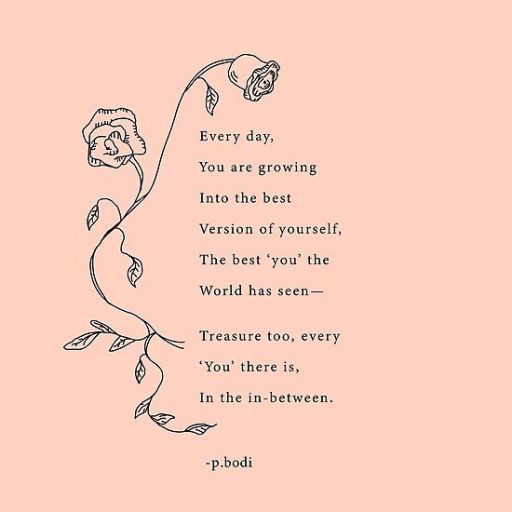
The following untitled poem was written by P. Bodi and can be found in her inspirational collection, Inherit the Dawn.

Celebrating National Poetry Month

On Wednesdays, I share posts, fables, songs, poems, quotations, TEDx Talks, cartoons, and books that have inspired and motivated me on my writing journey. I hope these posts will give writers, artists, and other creatives a mid-week boost.

April is National Poetry Month, a month set aside to celebrate poetry and its vital place in our society. Today, and for the next three Wednesdays, I will be sharing four thought-provoking poems I have discovered this past year.

The following poem was written by Ada Limón, the 24th Poet Laureate of the United States.

How to Triumph Like a Girl

I like the lady horses best,
how they make it all look easy,
like running 40 miles per hour
is as fun as taking a nap, or grass.
I like their lady horse swagger,
after winning. Ears up, girls, ears up!
But mainly, let’s be honest, I like
that they’re ladies. As if this big
dangerous animal is also a part of me,
that somewhere inside the delicate
skin of my body, there pumps
an 8-pound female horse heart,
giant with power, heavy with blood.
Don’t you want to believe it?
Don’t you want to lift my shirt and see
the huge beating genius machine
that thinks, no, it knows,
it’s going to come in first.