Yin | Yang | Raunchy

songsaboutmermaidsWhen I Googled “Songs about Mermaids,” I came up with 1,270,000 hits. While I don’t plan to visit all those sites, I will share a selection of songs over the next few months.

In today’s post, I’m featuring a group of Canadian artists, two of whom are near and dear to me.

After receiving my contract for Between Land and Sea, I asked my musically talented brothers to compose the music for the trailer. I had envisioned my brothers collaborating and composing one theme song, but that’s not how their muses worked. Each brother had his own unique interpretation of the middle-aged mermaid who was aged beyond recognition and then dumped on the fog-drenched shores of southwest England. Unable to choose between them, I decided to use both versions and hired Erin Kelly to produce the trailers.

Ernie G came up with the Yin version. Aptly titled, “It’s Your Time,” the soft, contemplative music gently skims over the heartbreak, encouraging Isabella to imagine a happier future.

Augy G delivered the Yang version in “Father Time Blinked.” Very different music with several pointed comments and questions sprinkled throughout the lyrics. Is Augy taking Isabella to task?

I couldn’t resist adding “The Mermaid” song performed by Canadian folk rock band Great Big Sea in 2005. Written and originally recorded by Shel Silverstein, this song features the lament of a whaler who has fallen in love with a mermaid but despairs over her fish parts.

Enjoy!

To celebrate the upcoming release of The Coming of Arabella, I’m offering a Rafflecopter giveaway for 5 free eBooks.

Enter here.


Mermaid Sightings In Our 2K World

mermaidsightingsWhile skeptics do exist, there are many people in our 2K world who are intrigued by the prospect of mermaids. Each new sighting raises expectations and generates renewed interest among the scientific community, local governments, and media outlets.

2008: Late one evening, Daniel Cupido and his friends heard an unusual sound while walking along the beach in Suurbraak, a village in the Western Cape of South Africa. Upon approaching, Cupido found a figure “like that of a white woman with long, black hair trashing about in the water.” When he tried to help, she uttered a sorrowful sound. Local tourism officer Maggy Jantijies vouched for the credibility of the group.

2009: Shlomo Cohen was one of the first to see the mermaid near Kiryat Yam in Israel. He provided the following report for the Israel National News: “I was with friends when suddenly we saw a woman lying on the sand in a weird way. At first, I thought she was just another sunbather, but when we approached she jumped into the water and disappeared. We were all in shock because we saw she had a tail.” More reports followed from dozens of spectators who described the mermaid as “half girl, half fish, jumping like a dolphin.” In response to these sightings, the local government has offered a $1 million reward to the first person who can provide conclusive footage capturing a real mermaid.

2012: In Zimbabwe, Water Resources Minister Sam Sipepa Nkomo informed a Senate Comittee that mermaids were hounding government workers off dam sights in the Gokwe and Mutare reservoirs. Several workers were reported missing while others refused to perform their duties. Concerned about the welfare of their people, traditional chiefs of the region were planning to perform rituals to get rid of these mermaids. In an interview, Chief Chihota commented: “As a custodian of the traditional, I have no doubt.”

2013: On a deep-sea exploration contracted by the Iceland GeoSurvey, Dr. Torsten Schmidt and his Danish team worked on seismic mapping and sampling of the ocean floor, hoping to locate promising sites for oil and natural gas reserves. Approximately 3000 feet below the ocean’s surface, Dr. Schmidt observed and heard interesting phenomena. His request to conduct an investigation was denied, and he was reminded of the confidentiality agreement he had signed. But he did make the following comments: “Well, I looked at it, and knew I was looking into the face of another intelligent species, like us.”

On a personal note…

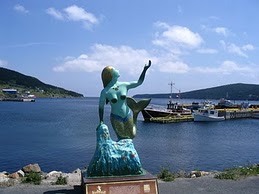
When I visited Newfoundland, I encountered the following mermaid at the entrance to Bay Bulls. A short drive from downtown St. John’s, this community has been in existence for almost 400 years, making it one of the oldest in North America.

nf2

More Mermaid Sightings: 1800 – 2000

mermaidhistoryIn last week’s post, I focused on mermaid sightings before 1800. Today, I will share selected sightings between 1800 and 2000. I have omitted any possible manatee sightings and hoaxes.

During Manatee Awareness Month (November), I will devote a post to those slow-moving, blubbery sea cows that are often mistaken for mermaids.

1811: John McIsaac of Scotland testified under oath that he saw an animal that had a white, upper half with the shape of a human body and lower half covered with scales and a tail. He judged the creature to be between four and five feet long. He noted its long, light brown hair and fingers close together. An article in the London Mirror, included the following testimonial: “The Minister of Campbeltown and the Chamberlain of Mull attest his examination and declare that they know no reason why his veracity should be questioned.”

1830: When villagers at Benbecula (Outer Hebrides off the west coast of Scotland) sighted a small woman on shore, they tried but failed to capture her. They then decided to pelt her with rocks. Several days later, her corpse washed ashore. The following description appeared in the publication Hidden Animals: “The upper part of the body was about the size of a well-developed child of three or four years of age, with an abnormally developed breast. The hair was long, dark, and glossy, while the skin was white, soft, and tender. The lower part of the body was like a salmon but without scales.”

1857: The Shipping Gazette reported the following sighting by Scottish seamen, John Williamson and John Cameron, off the coast of Britain: “We distinctly saw an object about six yards distant from us in the shape of a woman, with full breast, dark complexion, comely face, and fine hair hanging in ringlets over the neck and shoulders. It was about the surface of the water to about the middle, gazing at us and shaking its head. The weather being fine, we had a full view of it and that for three or four minutes.”

1886: The first mermaid sighting in Cape Breton (island off the coast of Nova Scotia) captured the attention of the local townspeople and was featured in the Cape Brooklyn Eagle Newspaper: “The fishermen of Gabarus, Cape Breton have been excited over the appearances of a mermaid…The face, head, shoulders and arms resembled those of a human being, but the lower extremities had the appearance of a fish. The back of its head was covered with long, dark hair resembling a horse’s mane. The arms were shaped like a human being’s, except that the fingers of one hand were very long. The color of the skin was not unlike that of a human being.”

1943: Several mermaids were spotted by Japanese soldiers off the shores of the Kei Islands in Indonesia. One mermaid was actually sighted on the beach, giving the soldiers ample opportunity to provide the following description: roughly 4-foot 9-inches tall, pinkish skin, human looking face and limbs, spikes along its head, and mouth like a carp. Later, Sgt. Taro Horiba heard the news of a dead mermaid on shore and decided to investigate. He urged scientists to study mermaids but failed to convince the scientific community.

1991: About 30 percent of the remains of an unknown, human-like creature were found in the belly of a dead great white shark in South Africa. Upon examination, it was determined that the creature had hands and a humanoid skull. The researchers suggested that the stingray barb jammed in the shark’s jaw could be a mermaid’s weapon.


10 Mermaid Sightings Before 1800

mermaidhistoryBefore writing Between Land and Sea, I researched mermaid sightings. I expected to find only a handful of examples and was surprised by the lengthy list and vivid descriptions that emerged. So much so, that I’ve devoted several posts to this topic.

Today, I will focus on ten documented sightings before 1800.

1. First Century AD: Roman author, naturalist and philosopher Pliny the Elder wrote about the Nereids that were found dead on the seashore. He described their bodies as rough and scaly like fish and then went on to share other supporting evidence: “I have, too, some distinguished informants of equestrian rank, who state that they themselves once saw in the ocean of Gades a sea-man.”

2. Between 1040 and 1105: Rabbi Shlomo Yitzchaki wrote about mermaids in the Talmud: “There are fish in the sea with which half is in the form of man and half in the form of fish, called sereine in Old French.”

3. During the same period, Moshav Zekeinim provided the following details about mermaids (Sirens) in a commentary on the Torah: “This refers to the creature in the sea which is similar in part to a person, from the navel upwards, and it is similar to a woman in all aspects in that it has breasts and long hair like that of a woman, and from the navel downwards, it is a fish. And it sings beautifully, with a pleasant voice.”

4. 13th Century: The King’s Mirror, a Norwegian educational text originally intended to provide King Magnus Lagabote with advice on various subjects, included the following description of a creature found off the shores of Greenland: “Like a woman as far down as her waist, long hands, and soft hair, the neck and head in all respects like those of a human being. The hands seem to be long, and the fingers not to be pointed, but united into a web like that on the feet of water birds. From the waist downwards, this monster resembles a fish, with scales, tail, and fins…This monster has a very horrible face, with broad bow and piercing eyes, a wide mouth and double chin.”

5. 1389: In his book, Eastern Travels of John Hesse, the author described the perils encountered during his voyages. He wrote: “We came to a stony mountain, where we heard syrens singing, mermaids who draw ships into danger by their songs. We saw there many horrible monsters and were in great fear.”

6. 1403: During a heavy storm, a mermaid drifted inland through a broken dyke on the Dutch coast. At first afraid but later intrigued, several local women and their servants befriended the mermaid. They took the mermaid home and tried to domesticate her, clothing and feeding her dairy products and meats. After a number of thwarted escapes into the sea, the mermaid resigned herself to her new life and died fifteen years later. John Swan, an English minister, described her story in Speculum Mundi, a book released in 1635.

7. 1493: After spotting three mermaids rising from the sea, Christopher Columbus wrote in the ship’s journal: “They were not as beautiful as they are painted, although to to some extent they have a human appearance in the face.” He noted that he had seen similar creatures off the coast of West Africa.

8. 1608: After two of his company reported a mermaid sighting, explorer Henry Hudson wrote in the ship’s journal: “Two crew members–Thomas Hilles and Robert Rayner–sighted a mermaid at 75o7’N (Russia) and shouted at the rest of the crew to come and look…From the navel upward her back and breast were like a woman’s, as they say that saw her; her body as big as one of ours; her skin very white and long hair hanging down behind, of colour black. In her going down, they saw her tail, which was like the tail of a porpoise, and speckled like a mackerel.”

9. 1614: Captain John Smith, of Pocahontas fame, reported a mermaid off the cost of Massachusetts: “The upper part of her body perfectly resembled that of a woman, and she was swimming about with all possible grace near the shore. It had large eyes, rather too round, a finely shaped nose (a little too short), well-formed ears, rather too long, and her long green hair imparted to her an original character by no means unattractive.”

10. 1797: While walking on the shore of Sandside Bay (Scotland), schoolteacher William Munro spotted a mermaid sitting upon a rock. In his letter to Dr. Torrance in Glasgow, he wrote: “…my attention was arrested by the appearance of a figure resembling an unclothed human female, sitting upon a rock extending into the sea, and apparently in the action of combing its hair, which flowed around its shoulders, and of a light brown colour…The cheeks ruddy, the eyes blue, the mouth and lips of a natural form, resembling those of a man; the teeth I could not discover, as the mouth was shut; the breasts and abdomen, the arms and fingers of the size in which the hands were employed, did not appear to be webbed, but as to this I am not positive.” The complete letter appeared in The Times of London on September 8, 1809.

Men and Mermaids

menmermaidsWhenever I mention mermaids, I notice the emergence of Duchenne smiles on the faces of all the men in my circle.

What is a Duchenne smile?

Very simply, it is a smile that is characterized by the raising of the lip corners which in turn raise the cheeks and form crow’s feet around the eyes. French physician Guillaume Duchenne first recognized this smile while conducting research on the physiology of facial expressions in the mid 19th century. According to Duchenne, that distinctive smile is associated with a strong positive emotion.

duchennegeorgeAnd, of course, George Clooney.

My conclusion—21st century men are still intrigued by those Sirens of Greek mythology, preferring to focus on their physical beauty and enchanting songs. Male minds can easily conjure up images of wavy auburn tresses, mesmerizing green eyes and a curvaceous body.

So, when I describe the protagonist of Between Land and Sea as an overweight, middle-aged ex-mermaid, I’m not surprised to see a variety of facial expressions. The men usually laugh and joke about Isabella’s extra years and pounds.

At a workshop, an argumentative lawyer was very blunt in his criticism: “I don’t understand why your mermaid has to be old and fat.”

“Fifty-three is not that old.” I ignored the weight issue.

He persisted. “It is when it comes to mermaids. Why couldn’t you let her be young, thin and beautiful?”

Thankfully, the conversation was interrupted by the facilitator’s call to resume the workshop. A few minutes more and I might have lost patience with the annoying lawyer who couldn’t accept my vision of an older mermaid.

Very few men are as argumentative as the lawyer. My male friends and relatives want to hear more about Isabella of the Mediterranean Kingdom aka Barbara Davies and the international banker who dumped her. Several are amused by the concept of a mermaid carrying extra pounds, and one friend asked if the artist was planning to feature an overweight mermaid on the cover.

In The Coming of Arabella, the unexpected arrival of Barbara’s perfectly-preserved twin sister evokes more traditional responses (and more Duchenne smiles) from the men of Carden, Ontario.

How would the men in your circle react to an older, wiser mermaid?

Mondays for Mermaids

Today, I’m launching a series to honor those fascinating creatures that have enchanted humankind for centuries. A life-long fan, I’ve written two books (and am planning a third) about the mermaids of the Mediterranean Kingdom.

In Between Land and Sea, I introduced an overweight, middle-aged ex-mermaid who uses a magic tablet to reinvent herself. I continue her story in The Coming of Arabella, and add a psychological twist: a mermaid sister who is somewhere on the Narcissist/Sociopath continuum.

Over the coming weeks, I will focus on different aspects of the mermaid psyche, history, and lifestyle.

I’ll start with Mermaid History.

mermaidhistoryIn Greek mythology, Sirens had beautiful voices and cruel hearts. Many less-than-enchanting stories have been written about Sirens distracting mariners and causing them to walk off decks or run their ships aground. More spiteful Sirens would not hesitate to squeeze the life out of men and drown them.

In Homer’s Odyssey, Odysseus went to great lengths to avoid being seduced by the hypnotic music of the Sirens. He ordered his men to stuff balls of wax into their ears while approaching the Sirens’ island off the coast of Greece. And he tied himself to the ship’s mast so he would not be able to jump off, swim to shore or do anything that would endanger his own life or that of the crewmen. According to Greek legend, Odysseus is the only man in the world who actually heard the Sirens sing and lived to tell about it.

I discovered this four-minute short on YouTube. Mermaid enthusiasts will recognize scenes from the the movies Odyssey and Splash. The background music is Caribbean Blue from Enya.

Enjoy!

Enter to win a $10 Starbucks gift card here.

Protagonist Interview

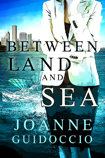
BetweenLandAndSea_highRes_105thecomingofarabella_100x150 (2)In Between Land and Sea, I introduced Barbara Davies aka Isabella of the Mediterranean Kingdom.

She will be returning as protagonist in The Coming of Arabella, to be released by Soul Mate Publishing on August 19.

Before and while writing Book 2 of the trilogy, I touched base with Barbara. Here’s what she had to say during the interview…

Continue reading on the Heroines with Hearts blog.


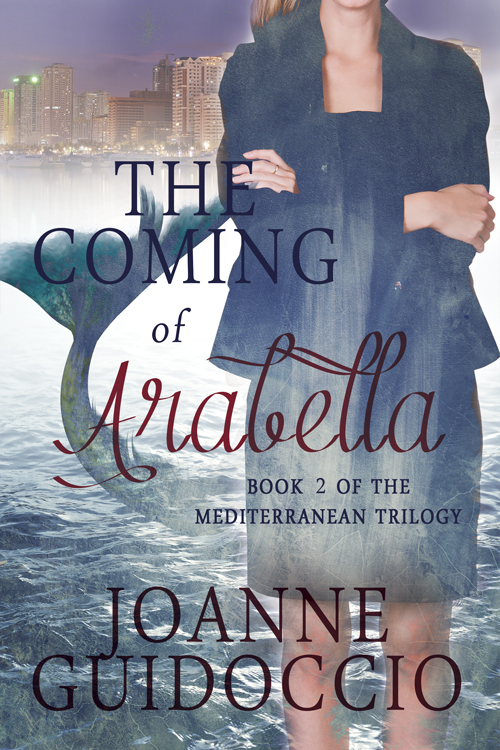
Cover Reveal: The Coming of Arabella

I am thrilled to share this cover with you today!

thecomingofarabella_500x750 (2)

Blurb

On the day of her engagement party, an ex-mermaid’s life is disrupted by the unexpected arrival of another mermaid—a sister she has never known. Under normal circumstances, Barbara Davies would be overjoyed, but her special day is already wrought with tension. While Barbara is not the first mermaid from the Mediterranean kingdom to settle in small town Ontario, she has yet to reveal her origins to her fiancé. So when Arabella, the gorgeous sister whose disturbing black eyes banished her to the island of Crete, saunters into her life, clutching the arm of Barbara’s discarded lover, a powder keg of emotion is released.

Relationships falter and careers stall as envy stirs in the hearts of the sisters. On the verge of meltdown after her fiancé leaves Canada for a teaching job in Vermont, Barbara flees to Arizona hoping for a reprieve. There, she finds solace at a retreat for ex-mermaids and a second chance at love with a charismatic preacher. As she contemplates a new life in the desert paradise of Sedona, shocking secrets emerge and tragedy strikes. A stronger and wiser Barbara rises up to face these new challenges and embrace the best parts of her mermaid heritage.

goodreads

Enter the Giveaway – You could win a $10 Starbucks gift card.

Coming August 19, 2015


Magic for a Mermaid

24646207_sWhile planning Between Land and Sea, I considered different fantasy elements.

What advantage could I bestow upon a beautiful mermaid who had given up her tail and lost her mermaid powers?

A magic wand came to mind, but I quickly dismissed a possibility often associated with fairy godmothers and benevolent elders. In this case, there was no such elder. Her grandmother (and chief elder of the Mediterranean Kingdom) had reacted quickly and savagely to her granddaughter’s defection, aging her thirty years and adding twenty pounds to her slender frame.

Continue reading on Bethany Averie’s blog.