Interview with Mary Lawlor

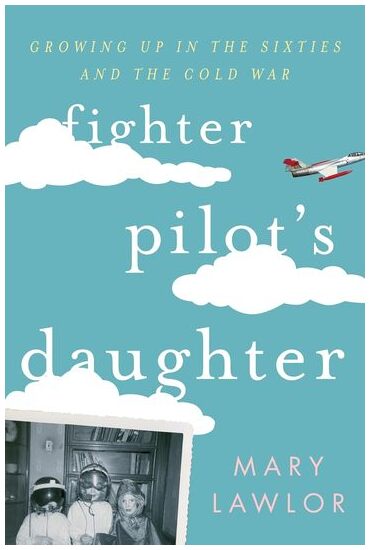
I’m happy to welcome multi-published author Mary Lawlor. Today, Mary shares her creative journey and new release, Fighter Pilot’s Daughter.

Here’s Mary!

What was your inspiration for this book?

I grew up in a military family. We moved every two years or so, according to the Defense Department’s demands—packed up every cup, plate, sweater and picture and put them in boxes. The movers would come and take everything out of the house, our furniture too, and there we’d be, in an empty house for a day or two until we drove or flew away to the next posting. We mostly lived in military quarters and never had our own home. My father was a pilot in the Marine Corps and the Army, so we had to go wherever the government determined he was needed—Miami, Alabama, North Carolina, California, and several other places. By the time I was ready for college, I’d been to 14 schools—a bewildering way to grow up.

Initially my mother thought it was an adventurous life—she was always meeting new people, and seeing different parts of the country. She felt there was a certain glamor to being a fighter pilot’s wife. Over time, she grew more frustrated with the moving and never having a house of her own. And our family was totally identified with my Dad’s work. Mom had a very strong personality, was well-read, smart and funny, but she couldn’t work, couldn’t have a career of any kind, and really had to follow the orders sent down from the Pentagon that determined my father’s moves. There was a lot of tension in our house because of that. And my father was away from home a lot of the time—on a ship off the coast of Guatemala waiting an invasion to begin, or in northern Turkey investigating a fly-over of the Soviet border, or somewhere close to the border with East Germany, keeping tuned to news from the Fulda Gap. In these and other situations too frightening for my sisters and I to know about, he kept us in suspense from far away. We were happy when he came home, but without meaning to, he frightened us. He’d walk through the door, his head nearly touching the ceiling, his blue eyes lit with a long-distance gaze. It was like he hadn’t really landed. He had gifts. He told stories. But he wasn’t really home yet, and we weren’t sure who he was.

Outside our household, the Cold War climate kept fear hovering in the air all the time. We were constantly afraid the Russians would invade or set of a nuclear weapon, and the earth would become a nightmare of emptiness, hunger, vicious competitions for survival. Of course, I grew out of those fears and away from the tensions between my parents. By the time I went to college, I no longer took my parents’ religious or social or political beliefs for granted. And college, in Paris, gave me the opportunity to develop and express different ways of thinking and seeing myself. I thought a great deal about the tremendous break I made from my parents. And I thought a lot about the ways their visions stayed with me, in spite of my efforts to lead a different kind of life.

I went to graduate school and got a PhD in literature, which I then taught at university for many years. Through all the phases of my career, the echoes of that upbringing stayed in the background but kept determining patterns in the foreground. I moved a lot. I had tense relationships with boyfriends. I wanted to express myself in writing but didn’t have the confidence. Finally, after studying narratives long enough, I felt I knew how to make one of my own. I needed to sort out my complicated past and make sense of it. The best way to do that was to write it, and thus Fighter Pilot’s Daughter was born.

Which authors have inspired you?

Everybody I read inspires me—the way they clip or supercharge a sentence, the subtlety of their characters’ gestures, the ability of some writers to draw out time and then pace the action so effectively. There’s magic in every book. I’ve learned a lot from two writers whose styles are really quite opposite: Henry James and Ernest Hemingway! James has a great way of detailing a single psychological moment in a character’s perception, while Hemingway knows how to clip language so its sound and rhythm work to make the idea he’s conveying very striking. In both writers, thought, you find a lot of interesting ambiguities—gray areas that make their characters seem all the more human.

More contemporary favorites of mine are Don DeLillo, an amazingly sharp literary artist; and I love the work of Anna Burns, the Irish writer who won the Booker Prize in 2018. She has this wonderful way of creating characters through distinctive voices and tells moving, frightening, instructive tales of life in Northern Ireland. My family heritage is pure Irish, and I’ve lately found myself curious about literature from the island. I’ve found a trove of wonderful writers there: Paul Murray, James Martin Joyce (note the middle name!), Niambh Boyce, Mary Dorcey and others.

Besides writing and reading, what are some of your hobbies?

I like to swim. Since I was very young I’ve been swimmer and still do laps as often as I can. It helps clear my mind and refreshes my body. Walking is another of my favorite things to do. I like to walk uphill for an hour or so at a time, to really get the breathing going. It’s great for thinking and figuring out problems with writing. When I swim, I don’t think. My mind really takes a break. But when I walk, I figure out all kinds of things. It’s a very important way for me to process my stories.

Any advice for aspiring writers?

If you want to write, there’s likely something in your brain that stores language and stories in playful, artful ways. Try to get to know that about yourself and trust it. Educate yourself by reading good writers and by practice. Keep at it, every day. Listen to the words that sail through your mind, however briefly or dimly. They’re worth listening to and using. Remember doubt is part of the process: don’t let it stop you or get you down.

What are you working on next?

I’ve just finished a historical novel called The Translators, based on the actual lives of two medieval priests who traveled from England and Croatia, respectively, to northern Spain in the 1140s. There they met and became intimate friends, learned Arabic and translated works in the libraries that once belonged to the emirs of al-Andalus (what the southern part of the Iberian Peninsula was called when it was Arab and Muslim). I’ve fictionalized much of the priests’ lives for the novel but relied on extensive research on the history of the time. A lot of the tension in the story arises from the Church’s attitude toward the books the priests translate for Christians to read. The climax involves the English priest’s sister, who escapes the chaos of home to meet her brother in France, where she helps him and his friend overcome their personal tensions and, indirectly, resolves their struggles with the Church.
Blurb

FIGHTER PILOT’S DAUGHTER tells the story of the author as a young woman coming of age in an Irish Catholic, military family. Her father, an aviator in the Marines and later the Army, was transferred more than a dozen times to posts from Miami to California to Germany as the government demanded. For her mother and sisters, each move meant a complete upheaval of ordinary life. The car was sold, bank accounts closed, and of course one school after another was left behind. Friends and later boyfriends lined up in memory as a series of temporary attachments. The story highlights the tensions of personalities inside this traveling household and the pressures American foreign policy placed on the Lawlors’ fragile domestic universe.

The climax happens when the author’s father, stationed in southeast Asia while she’s attending college in Paris, gets word that she’s caught up in political demonstrations in the streets of the Left Bank. It turns out her strict upbringing had not gone deep enough to keep her anchored to her parents’ world. Her father gets emergency leave and comes to Paris to find her. The book narrates their dramatically contentious meeting and the journey to the family’s home-of-the-moment in the American military community of Heidelberg, Germany. The book concludes many years later, after decades of tension that had made communication all but impossible. Finally, the pilot and his daughter reunite. When he died a few years later, the hard edge between them had become a distant memory.

Fighter Pilot’s Daughter is available at Amazon.

Here’s what readers are saying about Fighter Pilot’s Daughter!

“Mary Lawlor’s memoir, Fighter Pilot’s Daughter: Growing Up in the Sixties and the Cold War, is terrifically written. The experience of living in a military family is beautifully brought to life. This memoir shows the pressures on families in the sixties, the fears of the Cold War, and also the love that families had that helped them get through those times, with many ups and downs. It’s a story that all of us who are old enough can relate to, whether we were involved or not. The book is so well written. Mary Lawlor shares a story that needs to be written, and she tells it very well.” ―The Jordan Rich Show

“Mary Lawlor, in her brilliantly realized memoir, articulates what accountants would call a soft cost, the cost that dependents of career military personnel pay, which is the feeling of never belonging to the specific piece of real estate called home. . . . [T]he real story is Lawlor and her father, who is ensconced despite their ongoing conflict in Lawlor’s pantheon of Catholic saints and Irish presidents, a perfect metaphor for coming of age at a time when rebelling was all about rebelling against the paternalistic society of Cold War America.” ―Stars and Stripes
Book Excerpt

The pilot’s house where I grew up was mostly a women’s world. There were five of us. We had the place to ourselves most of the time. My mother made the big decisions—where we went to school, which bank to keep our money in. She had to decide these things often because we moved every couple of years. The house is thus a figure of speech, a way of thinking about a long series of small, cement dwellings we occupied as one fictional home.

It was my father, however, who turned the wheel, his job that rotated us to so many different places. He was an aviator, first in the Marines, later in the Army. When he came home from his extended absences—missions, they were called—the rooms shrank around him. There wasn’t enough air. We didn’t breathe as freely as we did when he was gone, not because he was mean or demanding but because we worshipped him. Like satellites my sisters and I orbited him at a distance, waiting for the chance to come closer, to show him things we’d made, accept gifts, hear his stories. My mother wasn’t at the center of things anymore. She hovered, maneuvered, arranged, corrected. She was first lady, the dame in waiting. He was the center point of our circle, a flier, a winged sentry who spent most of his time far up over our heads. When he was home, the house was definitely his.

These were the early years of the Cold War. It was a time of vivid fears, pictured nowadays in photos of kids hunkered under their school desks. My sisters and I did that. The phrase “air raid drill” rang hard—the double-A sound a cold, metallic twang, ending with ill. It meant rehearsal for a time when you might get burnt by the air you breathed.

Every day we heard practice rounds of artillery fire and ordinance on the near horizon. We knew what all this training was for. It was to keep the world from ending. Our father was one of many dads who sweat at soldierly labor, part of an arsenal kept at the ready to scare off nuclear annihilation of life on earth. When we lived on post, my sisters and I saw uniformed men marching in straight lines everywhere. This was readiness, the soldiers rehearsing against Armageddon. The rectangular buildings where the commissary, the PX, the bowling alley, and beauty shop were housed had fallout shelters in the basements, marked with black and yellow wheels, the civil defense insignia. Our dad would often leave home for several days on maneuvers, readiness exercises in which he and other men played war games designed to match the visions of big generals and political men. Visions of how a Russian air and ground attack would happen. They had to be ready for it.

A clipped, nervous rhythm kept time on military bases. It was as if you needed to move efficiently to keep up with things, to be ready yourself, even if you were just a kid. We were chased by the feeling that life as we knew it could change in an hour.

This was the posture. On your mark, get set. But there was no go. It was a policy of meaningful waiting. Meaningful because it was the waiting itself that counted—where you did it, how many of the necessities you had, how long you could keep it up. Imagining long, sunless days with nothing to do but wait for an all-clear sign or for the threatening, consonant-heavy sounds of a foreign language overhead, I taught myself to pray hard.

– Excerpted from Fighter Pilot’s Daughter by Mary Lawlor, Rowman and Littlefield, 2013. Reprinted with permission.

About the Author


Mary Lawlor is author of Fighter Pilot’s Daughter (Rowman & Littlefield 2013, paper 2015), Public Native America (Rutgers Univ. Press 2006), and Recalling the Wild (Rutgers Univ. Press, 2000). Her short stories and essays have appeared in Big Bridge and Politics/Letters. She studied at the American University in Paris and earned a Ph.D. from New York University. She divides her time between an old farmhouse in Easton, Pennsylvania, and a cabin in the mountains of southern Spain.

You can visit her website at https://www.marylawlor.net/ or connect with her on
X or Facebook.

Spotlight on Sally Brandle

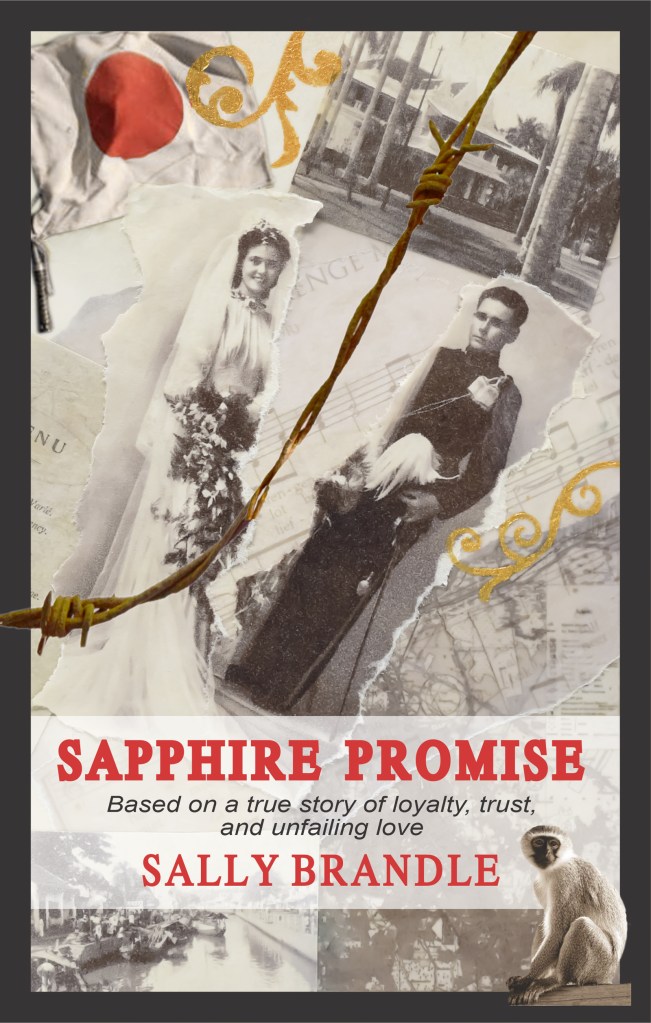
I’m happy to welcome back bestselling Amazon author Sally Brandle. Today, Sally shares her writing journey and recent release, Sapphire Promise.

Here’s Sally!

My writing journey began ten years ago with a dare on a Costa Rican vacation. I spent 95° afternoons on my brother’s porch in a hammock reading books I’d brought and ones I’d swapped for at the local cantina’s library shelf. Seven days and nine books in, I’d read several great romance stories and a couple of duds. “I could write this well,” I announced to my husband and waved one without likeable characters. Famous last words.

I contracted the first book I penned with Soul Mate Publishing in 2017 and am currently editing a fourth book in the contemporary series. The Hitman’s Mistake is the open story of the three published romantic suspense adventures set in fictional Emma Springs, Montana. In this genre, I write edgy, sweetly intimate, love stories. My tenacious heroines find deserving heroes, share an ample dose of sizzling attraction, and together are pitted against shadowy villains. I throw in folks enjoying small town life and clever animals for heartwarming, page-turning thrillers.

Last year I switched gears and wrote the enhanced memoir of a dear, Dutch-American friend, Iris. During our thirty-year friendship, I heard tales of her childhood in 1930’s Batavia (now Jakarta), Indonesia. How many young women ever shared a saddle with their pet monkey while riding through a jungle? Married at eighteen, due to the impending Japanese invasion, Iris never gave up hope of seeing her newlywed husband again after they were hauled off to different internment camps. Her command of five languages and beginning nursing training provided a reason for the Japanese to keep her and her mother alive. She remained positive throughout horrific challenges, and I couldn’t resist writing Sapphire Promise, her inspirational story. The challenge was to stay true to her life while portraying the colonial aspect in a sensitive manner. Research and consultations with a variety of experts proved invaluable.

I enjoy answering questions about any of my stories at Zoom book club meetings, so feel free to contact me. Inevitably, a discussion of Sapphire Promise encourages the members to share tidbits of history they’ve heard from friends and relatives. Many express hesitations at recording or writing them. I learned tips and tricks while prompting details from Iris’s memory and then created a document for others to get started. If you’d like a copy or to get in touch, here’s the link: http://www.sallybrandle.com/contact.html

Iris’s story is over ninety percent true, with a few scenes added for flow, all bearing her approval. The book is historically accurate, a sweet romance, and on sale in eBook and Audio versions for Women’s History Month. Here is the link for purchasing a discounted copy before April 7th. https://books2read.com/SPWomenHistoryMonth Print versions and Large Print versions are also available at regular price from multiple retailers. https://books2read.com/sapphirepromise

Here’s what reviewers are saying about Sapphire Promise:

…This would make a fantastic read for a book club!…Emerson Matthews, InD’tale Magazine

“This turbulent, complex and intense love story shifts from idyllic beginnings in Dutch-controlled Indonesia, pre-World War Two, through several years of brutal Japanese occupation, to possible new beginnings in an uncertain postwar era…Brandle paints a tapestry that vividly depicts the serenity of the region prior to occupation and the brutality of the aftereffects.” Jon G. Bradley, Historical Novel Society

“This coming-of-age story occurs during a time of great turbulence. The author takes such care in reminding the reader about what it means to be human, love, care, survive, and heal.” Jamie Stern-Member at Large, Director of Research, The Indo Project

Back Cover Teaser

Loyalty to family. Trusting instincts. The will to survive. These virtues are deeply embedded in a mature Dutch teenager, Annika Wolter. Her attributes prove useful as she navigates typical coming-of-age insecurities and a blossoming romance with a handsome lieutenant in 1939 Batavia, Java.

Nothing prepares her for the distress of Hitler’s attacks on European countries followed by Japan’s bombing of Pearl Harbor, toppling her idyllic life in the Dutch East Indies colonial society and separating her from the man she loves. Uplifting events from a true story showcase how determination, nursing basics, and language skills keep a young woman and her mother alive in the worst Japanese internment camp in the Pacific. If you admire clever women and unfailing love in a tropical wartime setting, you will be captivated by Sapphire Promise.

Excerpt

PROLOGUE CALIFORNIA 2021

Annika dropped a bag of Earl Grey tea into the porcelain teacup—her wrinkled, sun-spotted hand showing evidence of her earliest decades spent in the tropics. The sapphire ring on her right hand still glowed deep, deep blue, and without thinking, she pressed it to her heart. A lock of silvery hair fell across her forehead. She brushed it back, and touched the bumpy scar at her hairline, vaulting an eighty-year-old memory into play.

Her body tensed while she relived the horrible moment of the noontime heat, the smell of petrol on the street, but worst of all, the crisp vision—a jeep full of Japanese enemies slowing as it drove by her, the passenger soldier glaring, the brake lights flashing a warning. The driver veered in front of her bicycle and stopped. She swung the handlebar to the right, parked on the shoulder, pulled out her Mobile Nurse card, and then bowed. One soldier jumped out and walked around her while another one stepped to her side and yelled an angry order in Japanese. She remained bowed and prayed for God to protect her and Mamma from harm.

A rifle barrel whacked her knee from behind, pitching her forward until her kneecaps hit gravel. She thrust her hands out before face-planting. Keeping her head lowered and bare shins on the rough ground, she pressed her chest to her thighs. Was this enough groveling to stay alive? “Bow!” the ugly voice shouted. A saber rattled. A Please Lord, help me. She dropped her brow to the ground and stretched her shaking arms out ahead, palms down, as if prostrated in prayer.

“Bow!” he shouted again, and the sole of a boot pushed onto the back of her head and drove her forehead into sharp stones.

A whistling tea kettle jarred Annika back to the present. She slowly inhaled and exhaled and then poured steaming water over the teabag. The robust scent of the first brew brought a comfortable, calming warmth to her face.

Suffering brought enlightenment—a truth she’d read somewhere.

After sipping her tea and nibbling a cookie or two, she’d think back to the beginning—to the life she’d loved, the lessons she’d learned, and the wonderful people who had helped her through the toughest years of her life.

Bio and Links

Bestselling Amazon author Sally Brandle grew up as a tomboy alongside helpful brothers, which prepared her to work in a male-centric industry and raise respectful sons. Sally’s rescued Tuxedo cat, Shepherd dog, and Blue Heeler are her companions during long spells of writing or bouts of tormenting weeds in her garden. Afternoons she often spends riding on the wind with her thirty-one years young Quarter Horse.

Facebook | Blog | Instagram | Twitter | Goodreads | Pinterest

Honoring My Inner Sloth

For too many years, I subscribed to the busy bee myth: Complete all given tasks and start on tomorrow’s To-Do List. That was my modus operandi for the first fifty years of my life. Or, more precisely, the first forty-nine years, seven months, and seven days.
All that changed with a diagnosis that came out of nowhere: Inflammatory Breast Cancer, Stage IIIB. To be truthful, my body had tried to communicate with me many years before the diagnosis. Persistent colds and bouts of bronchitis. Slow-healing bruises. Bone-crushing fatigue. Determined to soldier on without taking advantage of sick days or lazy weekends, I chose to ignore those whispers. But I knew all about them from the Oprah shows.

Continue reading on the 2021 Authors Showcase here.

Excerpt Tour: Forgiveness

I’m happy to welcome author Laura Thorne. Today, Laura shares her memoir, Forgiveness: Your Key to Harmony and Inner Peace.

Blurb

FORGIVENESS: YOUR KEY TO HARMONY AND INNER PEACE by Laura Throne will take you on a fascinating journey through the author’s real-life experiences as she provides practical advice to achieve a more intentional, conscious and aware approach to life. It will show you how accepting change and facing the unknown can create wonderful new opportunities.

This memoir details the author’s own wake-up call about how she restored her emotional, mental and spiritual wellbeing after a devastating, miserable marriage, and regained her physical health after a chronic disease. Her story will help you discover small miracles in your everyday life you can be grateful for. See how difficult life situations and challenges can help your soul grow and evolve so you can reach your true potential.

FORGIVENESS will help you to remember that you are loved, worthy and complete. In the same way, you are valuable, powerful and significant in this world. Practicing forgiveness liberates your soul and sets you free, and kindness fills your heart with joy.

Excerpt

Being a stay-at-home mom is one of the most rewarding, wonderful, important and difficult jobs in the Universe. Sometimes I, like many women, felt less valued and judged. It is OK. Do what you think is the best for yourself and your children. Don’t let others decide for you. We are not less valuable just because we don’t have a career with promotions and a high salary. You and I raise the next generation that will shape our world and impact our future. That is how important our job is! No position, no career, no money, no business can match it! So be proud of what you are doing and don’t seek validation from other people. Women hold the family together, so it is important to find the right balance between paid and unpaid work, time with our families and time alone. If we feel off balance, which is often the case after the birth of a baby, it is important to make changes in our lives and ask for help to rebalance. If we are happy and balanced, everyone in the family is happy and balanced. If we feel overwhelmed, overworked and stressed, it will be reflected in the family. Taking good care of ourselves is just as important as taking care of others.

Website: https://laurathroneauthor.com/

Purchase Links

Amazon US | Amazon CA | Bookshop | Indigo | Barnes & Noble | Book Depository

Author Bio and Links

Laura Throne lived in four different countries between 2005 and 2020, and now resides in Canada with her two children. Forgiveness is her first book. By writing her memoir she hopes to inspire people to connect to their heart and soul. She hopes that her personal story will help you to remember that you are loved and worthy. In the same way, you are powerful and significant in this world. Practicing forgiveness liberates your soul and sets you free, and kindness fills your heart with joy.

Giveaway

Laura Throne will be awarding a $20 Amazon or Barnes & Noble gift card to a randomly drawn winner via Rafflecopter during the tour. Find out more here.

Follow Laura on the rest of her Goddess Fish tour here.

Inspired by Sue Williams

Yesterday, I attended the “Crafting of a Memoir” workshop facilitated by author Sue Williams at the University of Guelph. An occupational therapist with over thirty years of experience, Sue has written a memoir, Ready to Come About, the story of a mother’s sailing adventure on the high seas.

Sue’s Backstory

For most of Sue’s life, fibre arts (appliqué) was her primary creative outlet. In her fifties, she experienced a perfect storm of personal events, among them her husband’s health crisis and his sudden job loss, her sons’ tumultuous road to adulthood, and her struggle as a parent to let go.

Sue decided to help her husband realize his dream to cross an ocean. Together, they set sail for the North Atlantic. Toward the end of their journey, Sue realized she had a story to tell, one filled with drama, plot, emotion, and interesting people.

At yesterday’s meetup, Sue shared anecdotes and insights from her life-changing trip and advice about the memoir-writing process. A short Q & A period followed.

Here are eight nuggets that captured my interest:

• Take note of the difference between narrative nonfiction and creative nonfiction. Biographies and autobiographies are written using narrative nonfiction. This approach is fact-based and includes more telling. Creative nonfiction involves many of the elements—plot, imagery, setting, dialogue—used in novel writing. The writer can also inject personal thoughts, feelings, or opinions into the manuscript. This approach is recommended for memoir writing.

• Write from your real self, not how you would like others to see you. Include your strengths and insecurities. You must be believable if you want readers to relate to your story.

• At the editing stage, ask yourself: “Does it matter?” Sue took 30K words out of the first draft.

• Don’t repeat the same story twice. In the first draft, Sue shared details of all the storms encountered. After receiving input from a beta reader, Sue decided to limit herself to one “storm” story.

• Don’t write as a vanity project. Just because it’s true doesn’t mean it’s interesting.

• Use a journal if you need to vent about a failed marriage or other crisis. Get rid of the bitterness before writing the memoir.

• Prepare yourself to face the risks involved in writing a memoir. Do the opinions of others concern you? You may tick off the people who appear in your memoir and those who aren’t mentioned.

• Be patient and persistent. After six years and many drafts, Dundurn Publishing released Ready to Come About in May of 2019.

Blurb

Three hundred nautical miles from shore, I‘m cold and sick and afraid. I pray for reprieve. I long for solid ground. And I can‘t help but ask myself, What the hell was I thinking?

When Sue Williams set sail for the North Atlantic, it wasn’t a mid-life crisis. She had no affinity for the sea. And she didn’t have an adventure-seeking bone in her body.

In the wake of a perfect storm of personal events, it suddenly became clear: her sons were adults now; they needed freedom to figure things out for themselves; she had to get out of their way. And it was now or never for her husband, David, to realize his dream to cross an ocean. So she’d go too.

Ready to Come About is the story of a mother’s improbable adventure on the high seas and her profound journey within, through which she grew to believe that there is no gift more precious than the liberty to chart one’s own course, and that risk is a good thing … sometimes, at least.

Amazon (Canada) | Amazon (US) | Indigo | Dundurn Publishing

Memoirs Mentioned

Julie & Julia by Julie Powell
All the Wrong Moves by Sasha Chapin
Into Thin Air by Jon Krakauer
Precious Cargo by Craig Davidson
Angela’s Ashes by Frank McCourt
Swing Low by Miriam Toews
All My Puny Sorrows (a novel based on real life) Miriam Toews

Thanks to Karen Ralph and Vocamus Press for organizing this event.

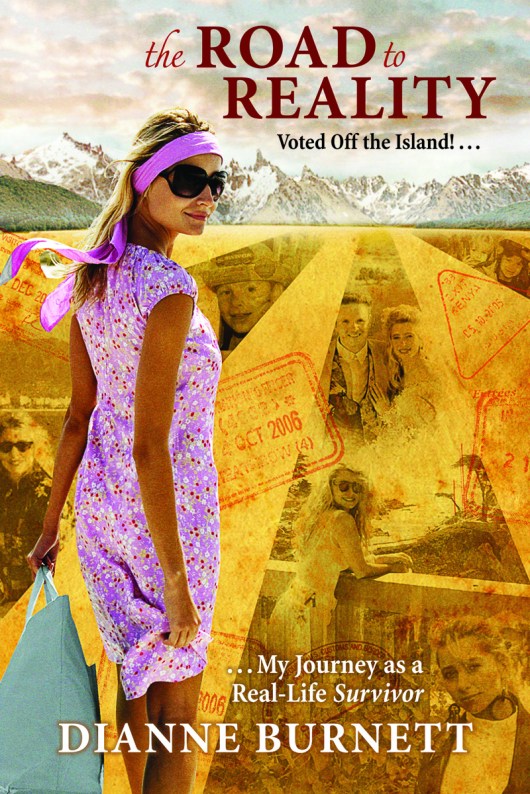
Spotlight on The Road to Reality

I’m happy to welcome author and producer Dianne Burnett. Today, Dianne shares her inspiring memoir, The Road to Reality.

Blurb

Get ready to laugh. Get ready to cry. Get ready for a whirlwind of an adventure. Settle in for a powerful, poignant story of inner strength and courage-and get a fascinating, behind-the-scenes look at the making of Survivor, the world’s most popular reality show.

Spinning their mutual love of exotic adventure into gold, Dianne Burnett and her former husband, TV producer Mark Burnett, co-created Eco-Challenge, an expedition-length racing event televised on Discovery Channel that catapulted them into the arena of reality TV and set the stage for Survivor-a modern-day Robinson Crusoe with a million-dollar prize. But Dianne and Mark’s fairytale marriage did not survive their Hollywood success . . . she found herself left behind, her contributions unrecognized. She lost her partner in life and began to lose her identity. In that experience, she found an opportunity to grow.

A fascinating, fast-paced, heart-warming “page-turner,” The Road to Reality takes readers on a roller-coaster ride-complete with a zesty romance, as well as the ups and downs of going for your dreams-while it imparts the lessons learned as Dianne discovers what really matters in life is something beyond fortune and fame.

Excerpt

What I learned writing The Road to Reality

I couldn’t be quiet anymore. That would have been the polite thing to do; zipping it was the societally-preferred course of action. Just smile and take it. For years I did just that.

We do, after all, have two wonderful sons. I didn’t want them to feel torn in what was happening between me and my husband, Mark Burnett. I smiled at dinner parties, showing up with guy friends, explaining my husband was “on location” with Survivor or attending another awards dinner in New York. I explained to the boys that Daddy had a new clubhouse where they could play and where he could work.

The impact of an absent husband no longer living at home, however, sent my world into new orbit. I went from “Does not compute” to the realization I had to find my own path again. The one I’d been on before I met Mark—who, like me, came from a modest background, but who took me gallivanting around the world–the handsome Brit with whom I had a synergy and shared a belief that we were unstoppable. And we were.

We had no background in doing what we were doing, no fancy degrees, no connections. We had nothing but sheer will, and the willingness to research, put together proposals and run through our pitches again and again. But we did it—first with Eco-Challenge, the world’s premiere endurance-adventure race. And then with the idea for a TV show, that was a modern-day Robin Crusoe story. I gave the name to the program that would catapult reality TV into new directions. “Survivor.” And my handsome hubby finessed the concept, developed it, and pitched it.

Nobody bit. Ever single network gave it a red light. But Mark kept honing his pitches and I kept coaching him and encouraging him—“Honey, I know it will fly!”

And it did.

But winning at the lottery machine of life destroyed our marriage. Nobody preps you for success, for the way your credit cards suddenly don’t have limits, and you cause a sensation walking into a room. We went from “aspiring” to “golden” in six months time. And after another year, the union that had defined me for over a decade was seriously unraveling.

The truth is I didn’t know my marriage was effectively over until radio host Howard Stern announced it to the 18-34 male listening demographic. As calls came flooding in from friends asking if Mark and I were divorcing I took it calmly, still believing we’d get back together, that our trial separation wasn’t permanent. But then, as another year, then another went by, with Mark and I both dating other people, I understood that I had to get back on my own road. I didn’t want to be defined by my relationships any more. I wanted to have my own life again.

It wasn’t easy. At first, I felt like Chevy Chase in Vacation, caught on the roundabout, trying to forge my own way, trying to find my road again. I could see where I wanted to be but I wasn’t yet there. Writing this book proved to be the ideal exit.

I began writing it when I realized that I couldn’t get to where I was going until I understood where I’d been. So I went back and traveled my past, back to Commack, Long Island and the talent shows we put on at the swimming pools, back when I dreamed of entering showbiz. I relived my life discovering a tale of making one own way, with a love story at the heart, and a lot of adventure in between.

I understood finally that it wasn’t the destination that mattered, it’s the journey. And as I wrote the last words of The Road to Reality on a balmy, palm-breezy evening in the Gothic Quarter in Barcelona, I turned off the computer, walked into the night and felt like at last I’d found my road again.

buynow

Author Bio and Links

Dianne Burnett is an author, producer, and actor of stage and screen. She is also a philanthropist and entrepreneur. Dianne and her ex-husband, Mark Burnett, joined their creative forces to invent Eco-Challenge, the impetus for Survivor, which kickstarted America’s reality-television show craze and went on to become the longest-running and most lucrative reality TV series of all time.

Following the success of Survivor, Dianne produced and acted in the stage play Beyond Therapy at the Santa Monica Playhouse, served as Executive Producer of the indie film Jam (which won Best Narrative Feature at the Santa Fe Film Festival), and acted in Everybody Loves Raymond. In memory of her mother, Joan, who lost her battle with esophageal cancer in 2010, Dianne formed Joan Valentine—A Foundation for Natural Cures, a nonprofit organization that serves as a resource for those seeking alternatives to traditional medicine.

She also recently launched a multimedia platform and social network: called theotherside.com, it explores alternative views on everything from relationships to health. Formerly of New York, Dianne now lives in Malibu, California, with her family.

Website | Facebook

All the elements are there—romance, adventure, betrayal, divorce—set against the backdrop of the world’s most exotic locales. The storyline alternates between the author’s childhood and adolescence on Long Island, New York and her globe-trotting adventures with television powerhouse Mark Burnett. An excellent storyteller, Dianne Burnett has provided an honest, often heart-wrenching, account of a fairytale marriage that didn’t survive the success and acclaim of the world’s most popular reality show. Intertwined with the narrative are the lessons and wisdom acquired on this extraordinary journey.

Definitely a survivor’s tale!

Giveaway

Dianne Burnett will award a $50 Amazon/Barnes & Noble gift card to a lucky winner via Rafflecopter. Find out more here.

Follow Dianne on the rest of her Goddess Fish tour here.

Inspired by Dr. Ross Pennie

This past Saturday, I attended the “Writing Your Life & Other Personal Stories” workshop facilitated by Brian Henry in Guelph. A book editor and professor, Brian teaches creative writing at Ryerson University in Toronto and has led workshops everywhere from Boston to Buffalo and from Sarnia to Saint John. You can find out more about Brian here.

In the morning session, Brian shared tips and techniques for writing creative non-fiction. In the afternoon, one of his star students—Dr. Ross Pennie—shared his fascinating writing journey.

A bit of history…

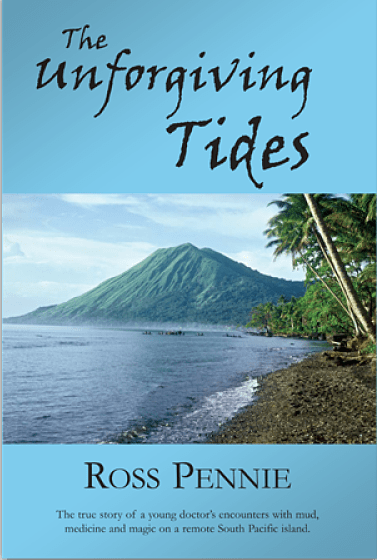
In 1977, at the age of twenty-five, Dr. Pennie set off for a two-year posting at a Catholic Mission on a remote island in the South Pacific. He spent his days dealing with tuberculosis, malaria and other infectious diseases. Evenings, he would read, write letters and update his diary.
At the end of his posting, he returned to Canada and spent the next twenty years working as an infectious-disease specialist and daydreaming about writing his memoirs.

Finally, he took action and signed up for creative writing courses and workshops. He also analyzed other memoirs, read books on writers’ craft, and joined a writing group. It took him two and a half years to complete The Unforgiving Tides, which was released in 2004.

The logline is a tantalizing one: A young doctor encounters mud, medicine, and magic on a remote South Pacific Island.

He then tried his hand at fiction and wrote the well-received Dr. Zol Szabo medical mysteries. The first of these, Tainted, came out in 2010 and won the Arts Hamilton Literary Award for Fiction. He followed up with three more medical mysteries: Tampered, Up in Smoke, and Beneath the Wake.

After 39 years of working as an intensive-care pediatrician and infectious-diseases specialist at McMaster and Brantford General Hospital, Ross retired.

But he is not retired from writing.

In a 2017 interview with Hamilton News, he shared his love of the creative process: “I love spending time with the characters. They seem very real … it’s almost as though they live with us. I also find writing meditative. I enjoy being on my own, so there is a meditative and reflective aspect to it.”

At Saturday’s workshop, Ross shared practical advice about the memoir process.

Here are ten nuggets that resonated with me:

• Dribble the dry facts gradually into your story so that any one page is not filled with a laundry list of details. Do not confuse the reader with too many characters and too much technical jargon.

• Keep the narrator humble, vulnerable, embarrassed, noble, quirky, smart, but never arrogant.

• Leave yourself open to memories that bubble up unexpectedly.

• Exaggerate your deficiencies. (You will probably be telling it like it is!)

• Imagine that your mother and Grade 8 teacher are never going to read your memoir. This leaves you free to add healthy naughtiness. Some examples of healthy naughtiness include embarrassing situations, swear words, family secrets, petty criminal acts, and sexual encounters.

• Break grammar rules with pizzaz. But first, learn the grammar rules.

• Show the action and dialogue up close. Don’t just talk about it from a distance.

• Punctuate your stories with newsworthy events. Make a dated list of earth-shattering events that occurred during the period of the memoir such as wars, elections, assassinations, and natural disasters. Include some of these events in the memoir.

• Write frankly without bitterness.

• And most important of all … Persistence Writes the Memoir.

Find more about Dr. Ross Pennie here.