Inspired by C.S. O’Cinneide

Sunday afternoon, I attended the “How to Write Frightening Fiction” workshop facilitated by author C.S. O’Cinneide (Carole) at the University of Guelph. A former IT business analyst with 25+ years of technical writing experience, Carole has written Petra’s Ghost, a novel that resonates with both literary and horror communities.

Carole’s Backstory

From an early age, Carole enjoyed writing fiction. While she liked her IT career, she hoped to write a novel someday. At midlife, Carole decided to seek inspiration and direction on the Camino di Santiago.

Her supportive husband looked after their two teenage daughters and a German exchange student while Carole was away.

Walking 30 kilometers each day, Carol completed the ancient five-hundred-mile pilgrimage that crosses Northern Spain in one month. During that time, a woman was abducted and killed on the Camino.

When Carole returned to Canada, she spent two years writing and editing Petra’s Ghost, a novel loosely based on that tragedy. Intrigued by the storyline, Dundurn Press offered Carole a contract within three days of receiving the manuscript.

At Sunday’s meetup, Carole shared information and advice in an entertaining and interactive session. A short Q & A period followed.

Here are seven nuggets that captured my interest:

• Terror and horror are not mutually exclusive—most scary fiction is a mixture of the two ends of the spectrum that has terror on one end and horror at the other.

• Horror gives people a safe place to face their fears. In one of the exercises, we were asked to list 10 things that frightened us. In the sharing session that followed, a number of “fears” emerged, among them sharks, earthquakes, and shame/embarrassment.

• Don’t terrify readers the entire time. Use a balance of light and dark to give the reader a break from the tension at regular intervals.

• Develop an inner struggle to match the external one. Publishers and readers want a deeper story to go with the thrills and chills.

• Make the threat real and present for the reader. Writing in the present tense can add to the immediacy of the danger.

• A “hook” is essential when writing frightening fiction. Write the first chapter and then find the place where the “hook” occurs (often halfway or near the end of the chapter). Rewrite, starting from the hook. The earlier prose can be reused as backstory or flashback.

• Speak the language to get your book published. Do your research and decide on the best descriptor (magical realism, psychological suspense, speculative fiction, etc.) for your manuscript.
Blurb

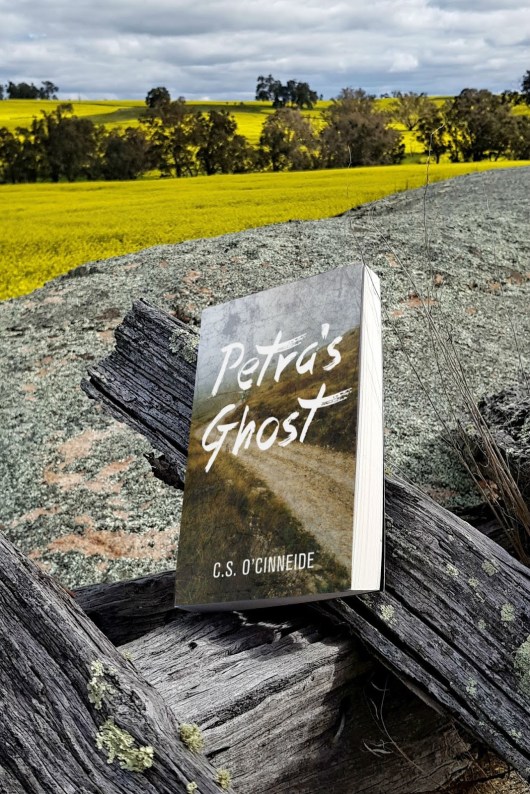
A man’s pilgrimage becomes something from his darkest nightmares when secrets arise and ghosts haunt his path.

A woman has vanished on the Camino de Santiago, the ancient five-hundred-mile pilgrimage that crosses northern Spain. Daniel, an Irish expat, walks the lonely trail carrying his wife, Petra’s, ashes, along with the damning secret of how she really died.

When he teams up to walk with vibrant California girl Ginny, she seems like the perfect antidote for his grieving heart. But a nightmare figure begins to stalk them, and Daniel’s mind starts to unravel from the horror of things he cannot explain.

Unexpected twists and turns echo the path of the ancient trail they walk upon. The lines begin to blur between reality and madness, between truth and the lies we tell ourselves.

Amazon (Canada) | Amazon (US) | Indigo | Barnes & Noble

Books on Horror

Danse Macabre (Stephen King)
Monster, She Wrote (Editors: Lisa Kröger, Melanie R. Anderson)
Horror: A Literary History (Xavier Aldana Reyes)
Writing Horror (Edo Van Belkom)

Helpful Links

Horror Writers Association (http://horror.org)
Ladies of Horror Fiction (https://www.ladiesofhorrorfiction.com)
Carole’s Website (https://www.shekillslit.com)

Thanks to Karen Ralph and Marion Thorpe for organizing this event.
Hold On and Don’t Give Up

On Wednesdays, I share posts, fables, songs, poems, quotations, TEDx Talks, cartoons, and books that have inspired and motivated me on my writing journey. I hope these posts will give writers, artists, and other creatives a mid-week boost.

Zen Buddhist monk Haemin Sunim shares his trademark spiritual wisdom in his latest bestseller, Love for Imperfect Things: How to Accept Yourself in a World Striving for Perfection.

Here’s one of my favorite passages:

Know that your continuous and accumulated efforts will eventually help to turn your circumstances around. The pitcher Chan Ho Park, the first Korean-born Major League Baseball player, once told me something that sums this up: Whether you are in a slump or riding high, whether fans are cheering or heckling, the only thing you can control is the ball you are about to throw. And though no single ball can do much on its own, taken together, all the balls you throw are enough to bring about a big change.

Your efforts, however small, are never in vain. Even the most vicious storm runs its course eventually; as long as your hold on and don’t give up, you’ll be able to see the sun come out again…We can do it, all of us!

Source: Love for Imperfect Things, p. 249


Spotlight on The Monday Book

I’m happy to welcome author Shari Ramming. Today, Shari shares her new release, The Monday Book.

Blurb

In the midst of pain, Shari Ramming saw an opportunity to learn and create The Monday Book to help others find themselves in their brokenness. With personal evaluations, she guides you to wholeness. Shari lays out steps to finding the treasure in the trauma of life: Acknowledge, Honor, Connect, Practice, and finally, Open to receive the gift of the lesson. Her simple straight-forward advice for fixing whatever feels broken is “begin and continue.” It seems hard in practice, but in showing up for yourself, you’ll find small ways to daily love yourself and become the cure for your own brokenness. Her message puts your problems outside so you can interact with them in a productive way. By seeing everything and everyone as a reflection of yourself, you’ll become more compassionate toward yourself and everyone else. Open yourself up to the true and best you.

Excerpt

Imagine this. A woman seemingly without doubts about her life. A wholesome and satisfying life filled with family, travel, friendships, children, and social activities. Her focus is on accomplishments, security, and home life. A life that is fast and full. Caught up in the way life seems to zoom when it is bursting with an abundance of three children, a few businesses, multiple homes, a crowded travel and social schedule, and the usual day-to-day duties.

I believed putting my family first was important, that coming in second (or third) for myself worked out okay. With that belief I lost myself and my own power. My passion and my uniqueness.

Life showed me where I was powerless, and also where my power was. My life, until that point of reckoning and painful loss, was ostensibly satisfying. What had guided me was being challenged.

What I had used previously needed some serious updating. I was being tested and I was being shown my darkness. I was meant to understand that I needed to let go of previous held beliefs that kept me going but were not evolved enough for where my life’s journey was taking me. All the change, death, disease, and dishonor was a fierce way of being shown a new path.


buynow

Author Bio and Links

Shari Ramming writes on a broad range of subjects. She feels there is a great intelligence that is not of the mind. Loving her three grown children fiercely she uses verve and wanderlust to make her home in Austin, Texas. She is still learning.
To learn more about Shari and her books, go to http://www.shariramming.com.

Facebook | Twitter | Goodreads | Amazon

Giveaway

Shari Ramming will be awarding a $15 Amazon/Barnes & Noble gift card to a randomly drawn winner via Rafflecopter during the tour. Find out more here.

Follow Shari on the rest of her Goddess Fish tour here.

It’s Time to Let GO

On Wednesdays, I share posts, fables, songs, poems, quotations, TEDx Talks, cartoons, and books that have inspired and motivated me on my writing journey. I hope these posts will give writers, artists, and other creatives a mid-week boost.

I receive a daily dose of inspiration from bestselling authors and coaches Marc and Angel Chernoff.

Here’s a thought-provoking segment from last week’s email:

Twenty years ago, when Marc and I were just undergrads in college, our psychology professor taught us a lesson we’ve never forgotten. On the last day of class before graduation, she walked up on stage to teach one final lesson, which she called “a vital lesson on the power of perspective and mindset.” As she raised a glass of water over her head, everyone expected her to mention the typical “glass half empty or glass half full” metaphor. Instead, with a smile on her face, our professor asked, “How heavy is this glass of water I’m holding?”

Students shouted out answers ranging from a couple of ounces to a couple of pounds.

After a few moments of fielding answers and nodding her head, she replied, “From my perspective, the absolute weight of this glass is irrelevant. It all depends on how long I hold it. If I hold it for a minute or two, it’s fairly light. If I hold it for an hour straight, its weight might make my arm ache. If I hold it for a day straight, my arm will likely cramp up and feel completely numb and paralyzed, forcing me to drop the glass to the floor. In each case, the absolute weight of the glass doesn’t change, but the longer I hold it, the heavier it feels to me.”

As most of us students nodded our heads in agreement, she continued. “Your worries, frustrations, disappointments, and stressful thoughts are very much like this glass of water. Think about them for a little while and nothing drastic happens. Think about them a bit longer and you begin to feel noticeable pain. Think about them all day long, and you will feel completely numb and paralyzed, incapable of doing anything else until you drop them.”

Think about how this relates to your life.

If you’ve been struggling to cope with the weight of what’s on your mind, it’s a strong sign that it’s time to put the glass down.

It’s time to let GO…

Note: I highly recommend subscribing to Marc & Angel’s website.

A Tale of Two Cats

On Wednesdays, I share posts, fables, songs, poems, quotations, TEDx Talks, cartoons, and books that have inspired and motivated me on my writing journey. I hope these posts will give writers, artists, and other creatives a mid-week boost.

A longtime fan of Wayne Dyer, I enjoy reading his books and watching his telecasts. I especially like listening to his rendition of the following tale:


Eight Ways to Recognize a Calling

On Wednesdays, I share posts, fables, songs, poems, quotations, TEDx Talks, cartoons, and books that have inspired and motivated me on my writing journey. I hope these posts will give writers, artists, and other creatives a mid-week boost.

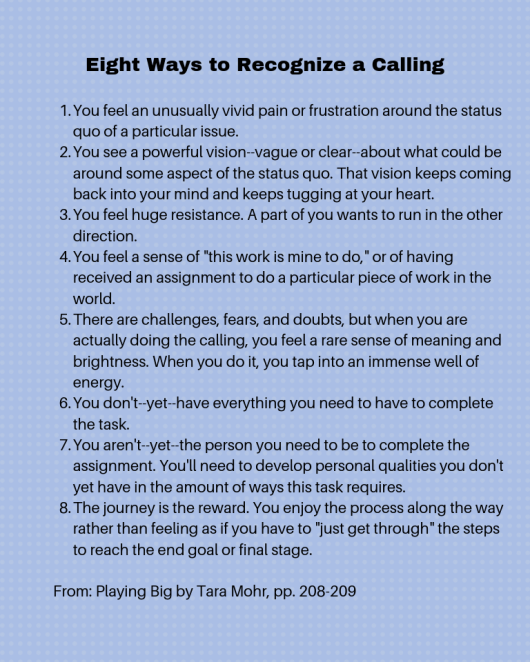
In her book, Playing Big, Tara Mohr describes a calling as “a longing to address a particular need or problem in the world.” Often elusive and buried deep within our consciousness, these callings can reveal themselves through the following patterns:


Inspired by Sue Williams

Yesterday, I attended the “Crafting of a Memoir” workshop facilitated by author Sue Williams at the University of Guelph. An occupational therapist with over thirty years of experience, Sue has written a memoir, Ready to Come About, the story of a mother’s sailing adventure on the high seas.

Sue’s Backstory

For most of Sue’s life, fibre arts (appliqué) was her primary creative outlet. In her fifties, she experienced a perfect storm of personal events, among them her husband’s health crisis and his sudden job loss, her sons’ tumultuous road to adulthood, and her struggle as a parent to let go.
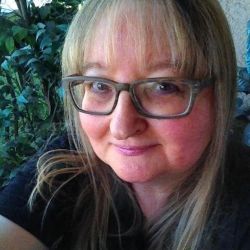
Sue decided to help her husband realize his dream to cross an ocean. Together, they set sail for the North Atlantic. Toward the end of their journey, Sue realized she had a story to tell, one filled with drama, plot, emotion, and interesting people.

At yesterday’s meetup, Sue shared anecdotes and insights from her life-changing trip and advice about the memoir-writing process. A short Q & A period followed.

Here are eight nuggets that captured my interest:

• Take note of the difference between narrative nonfiction and creative nonfiction. Biographies and autobiographies are written using narrative nonfiction. This approach is fact-based and includes more telling. Creative nonfiction involves many of the elements—plot, imagery, setting, dialogue—used in novel writing. The writer can also inject personal thoughts, feelings, or opinions into the manuscript. This approach is recommended for memoir writing.

• Write from your real self, not how you would like others to see you. Include your strengths and insecurities. You must be believable if you want readers to relate to your story.

• At the editing stage, ask yourself: “Does it matter?” Sue took 30K words out of the first draft.

• Don’t repeat the same story twice. In the first draft, Sue shared details of all the storms encountered. After receiving input from a beta reader, Sue decided to limit herself to one “storm” story.

• Don’t write as a vanity project. Just because it’s true doesn’t mean it’s interesting.

• Use a journal if you need to vent about a failed marriage or other crisis. Get rid of the bitterness before writing the memoir.

• Prepare yourself to face the risks involved in writing a memoir. Do the opinions of others concern you? You may tick off the people who appear in your memoir and those who aren’t mentioned.

• Be patient and persistent. After six years and many drafts, Dundurn Publishing released Ready to Come About in May of 2019.

Blurb

Three hundred nautical miles from shore, I‘m cold and sick and afraid. I pray for reprieve. I long for solid ground. And I can‘t help but ask myself, What the hell was I thinking?

When Sue Williams set sail for the North Atlantic, it wasn’t a mid-life crisis. She had no affinity for the sea. And she didn’t have an adventure-seeking bone in her body.

In the wake of a perfect storm of personal events, it suddenly became clear: her sons were adults now; they needed freedom to figure things out for themselves; she had to get out of their way. And it was now or never for her husband, David, to realize his dream to cross an ocean. So she’d go too.

Ready to Come About is the story of a mother’s improbable adventure on the high seas and her profound journey within, through which she grew to believe that there is no gift more precious than the liberty to chart one’s own course, and that risk is a good thing … sometimes, at least.

Amazon (Canada) | Amazon (US) | Indigo | Dundurn Publishing

Memoirs Mentioned

Julie & Julia by Julie Powell
All the Wrong Moves by Sasha Chapin
Into Thin Air by Jon Krakauer
Precious Cargo by Craig Davidson
Angela’s Ashes by Frank McCourt
Swing Low by Miriam Toews
All My Puny Sorrows (a novel based on real life) Miriam Toews

Thanks to Karen Ralph and Vocamus Press for organizing this event.

The “Lucky” Breakthrough

On Wednesdays, I share posts, fables, songs, poems, quotations, TEDx Talks, cartoons, and books that have inspired and motivated me on my writing journey. I hope these posts will give writers, artists, and other creatives a mid-week boost.

Whenever I feel like giving up on a goal or challenge, I reread this account of Leon Fleisher’s breakthrough in his seventies.

Leon Fleisher was at the height of his recording and performing career as a pianist in 1965 when two of his fingers curled as a result of a medical disorder called focal dystonia. Although he was only thirty-five years old, Fleisher’s career took a nosedive and he become unable to perform or use his right hand at all. Fleisher channeled his musical passion into teaching and conducting but never stopped looking for a cure, which he finally found after forty years of persistently trying everything from Rolfing to aromatherapy.

Shots of Botox in his hand freed up his clenched muscles, and Fleisher became a born-again star in 2004 when he released a comeback album entitled Two Hands. Although he could have given up on his forty-year search for a cure, Fleisher’s ambition, optimism, perseverance, and tenacity gave him the “lucky” breakthrough in his seventies that triumphantly returned him to the keyboard.

Source: Creating Your Best Life by Caroline Adams Miller & Dr. Michael B. Frisch, Page 143

Weighing In

I’m happy to welcome multi-published author Winona Kent. Today, Winona shares her wellness journey and new release, Notes on a Missing G-String.

Here’s Winona!

I’ve just turned 65. And in a few weeks, when I retire from my job, I’m looking forward to finally being a full-time writer, instead of juggling 12-hour workdays with my lifelong creative passion. I’ve got a clever countdown app on my phone that displays the months, weeks, days, minutes and seconds to that glorious moment. I am sooo ready for this massive change in my life!

But it’s not the only change I’ve been dealing with recently!

Two years ago I was encouraged to switch to a different writing genre by a very kind agent in New York, and also by my alpha reader, Brian, in England. Brian suggested that I think about having Jason Davey, my main character from Cold Play, as the hero of my next story.

The last time we’d seen Jason, he was a musician aboard a cruise ship in Alaska. What if he came ashore and got a gig playing guitar at a jazz club in London? What if he was now into solving mysteries?

I loved the idea. Jason Davey, professional guitarist and amateur sleuth, is asked to track down a missing musician, and all of the clues lead to northern Canada. The result was Disturbing the Peace, a novella that I published at the end of 2017.

Then, last year, I wrote Notes on a Missing G-String, a full-length novel in which Jason’s asked to investigate the theft of £10,000 from a dancer’s locker at a Soho gentlemen’s club. He initially considers the case unsolvable. But the victim, Holly Medford, owes a lot of money to London crime boss Arthur Braskey and, fearing for her life, has gone into hiding at a posh London hotel.

Jason’s investigation takes him from Cha-Cha’s and Satin & Silk (two Soho lapdancing clubs) to Moonlight Desires (an agency featuring high class escorts) and finally to a charity firewalking event, where he comes face to face with Braskey and discovers not everything Holly’s been telling him is the complete truth.

As he becomes increasingly drawn into the seamy underside of Soho, Jason tries to save Gracie, his band-mate’s 14-year-old runaway daughter, from Holly’s brother Radu, a ruthless pimp, while at the same time protecting Holly herself from a vengeful Braskey—nearly losing his life, and Gracie’s—in the process.

The outline for the novel literally burst out of me – and it provided enough of a boost to my confidence that I decided to tackle something else – losing weight.

I’m a Type 2 diabetic – I was diagnosed in 2009, around the same time that I was hitting menopause. My version of the disease turned out to be particularly aggressive and within a couple of years I was on four different diabetes meds, including 55 units of insulin nightly.

Unfortunately, one of the side effects of insulin is weight gain, which works against you when prevailing medical knowledge suggests that if you modify your lifestyle, get regular exercise, adjust your eating habits and, most importantly, lose some weight, you’ll go a long way towards improving your blood glucose levels and, in some cases, partially or fully reversing your diabetes.

By the time I asked my endocrinologist for a referral to a medically-supervised weight loss program, I was about 80 pounds overweight. I was referred to the Medical Weight Management Program in Coquitlam, BC. The program considers the full impact your excess weight has on your health, your psychological well being and your mobility and involves intensive lifestyle modification where the bulk of the visits take the form of in-person group interactive medical visits. The main philosophy is that your best weight is the weight you can realistically and healthfully sustain and be comfortable with.

I’ve been with the MWM program for a year and a half now and I’ve lost 34 pounds. I’m still dropping. It’s a slow process, but it’s meant to be. The lifestyle changes I’m working on are meant to be lifelong and permanent.

I faithfully use a food journal. I never feel deprived – for instance, I haven’t given up chocolate at all. I’ve learned to treat myself and to be aware of how much of that treat I’m having.

I’ve learned some other great tricks – for instance I adore the savoury scones at JJ Bean but one entire scone is worth more than 400 calories. So I buy three at a time and take them home and chop them into quarters and freeze them. Then I have one of those quarters as part of my afternoon snack every day. Yes, it takes a certain amount of willpower. But if you know you’re going to have a tasty treat at 3pm every afternoon, it’s a lot easier to tell yourself that you don’t have to eat the entire thing right now.

I’ve learned to plan in advance. I have breakfast at home but I take three small meals to work with me every day: a morning snack, lunch, and an afternoon snack. The snacks include things like cubed cheese, spicy roasted chickpeas, exotic Japanese and Chinese pickles, chopped celery, sliced orange peppers, wasabe peas…anything that satisfies that need for something tasty and satisfying to put into my mouth. I weigh it all out and stick to my eating plan.

And I’ve learned to be a “mindful” eater. My food used to disappear so quickly I didn’t even realize I‘d eaten it. Now, I stop to actually taste and enjoy what I’m putting in my mouth instead of mindlessly chucking it down.

Aside from being 34 pounds lighter – which has had a positive influence on nearly everything in my life, from dropping a couple of clothing sizes to just feeling better physically and having more energy – I’ve managed to reduce my nightly insulin dose to just 5 units. The plan is that, after I’ve lost a few more pounds, I should be able to stop using it altogether.

I love my newfound hero, Jason Davey, and I can’t wait to see how Notes on a Missing G-String is received.

And I’m still counting the days ‘til my retirement. Now that I only have 21 days, 9 hours, 17 minutes and 52 seconds left, I’m very much looking forward to the next chapter in my life (and the next chapter in Jason Davey’s sleuthing career)!

Buy Links

Amazon (Canada) | Amazon (US) | Amazon (UK)

I read this book in two sittings and had trouble putting it down. Ms. Kent has a way of drawing me into her stories and keeping me hooked until the end. It helps to have an intriguing protagonist like Jason Davey, who has a knack for stumbling into high-stakes crime scenarios. Like the first installment—Disturbing the Peace—Notes on a Missing G-String is a fast-paced novel filled with plot twists, exotic and ruthless characters, a teenage runaway, and a love child…all set against the seamy underside of Soho.

Next, please!

Where to find Winona

Website | Twitter | Facebook | Instagram