
Category Archives: Inspiration
Set Clear Boundaries
On Wednesdays, I share posts, fables, songs, poems, quotations, TEDx Talks, cartoons, and books that have inspired and motivated me on my writing journey. I hope these posts will give writers, artists, and other creatives a mid-week boost.

A long-time fan of bestselling authors and coaches Marc and Angel Chernoff, I look forward to reading their emails and blog posts. Here’s an excerpt from a recent post:
We all have ongoing opportunities and obligations, but a healthy and productive routine can only be found in the long run by properly managing your yeses. And yes, sometimes you have to say “no” to really good opportunities and obligations. You can’t always be agreeable — that’s how people take advantage of you. And that’s how you end up taking advantage of yourself too. You have to set clear boundaries!
You might have to say no to certain favors, work projects, community associations, volunteer groups… coaching your kid’s sports teams, or some other seemingly worthwhile activity. I know what you’re thinking: it seems unfair to say no when these are very worthwhile things to do — it pains you to say no! But you must, because the alternative is that you’re going to do a half-baked, poor job at each one, be stressed out, feel like you’re stuck in an endless cycle of busyness, and eventually you’ll reach a breaking point.
Truth be told, the main thing that keeps so many of us stuck in a debilitating cycle of overwhelm is the fantasy in our minds that we can be everything to everyone, everywhere at once, and a hero on all fronts. But again, that’s not reality. The reality is you’re not Superman or Wonder Woman — you’re human and you have limits. So you have to let go of that idea of doing everything, pleasing everyone, and being everywhere.
In the end, you’re either going to do a few things well, or everything poorly. That’s the truth.
Note: I highly recommend subscribing to Marc & Angel’s website.
10 Lessons Learned from a Published Author
On Wednesdays, I share posts, fables, songs, poems, quotations, TEDx Talks, cartoons, and books that have inspired and motivated me on my writing journey. I hope these posts will give writers, artists, and other creatives a mid-week boost.
I enjoy receiving a weekly dose of inspiration from a British writer and blogger named Lucy Mitchell. She has a delightful blogging voice that brings a smile and a thought-provoking pause to my day. Here’s an excerpt from a recent blog post:
My first book was published in 2023 with Bloodhound books.
Here I am today, with five published books behind me, and I am ready to share the lessons I have learnt.
1. Every book teaches you something different. It could be plot, character, setting or something about yourself. Book ideas don’t always come to you because they are meant to be turned into books. Most ideas come to teach you something.
2. Every book will break you in some way. It’s true. They will either break you emotionally or mentally. At some point you will want to lie down by your desk, curl up in a ball and weep. Every book of mine has done this to me. Some break me at first draft stage, some second draft however most break me when I have to make harsh changes like deleting characters, large chunks of my plot and my book no longer feels like the one I first wrote.
3. Editors are wonderful people. They are the unsung heroes of the book world,
4. A book is never finished. I still think about my 5 books and what I would do to improve them.
5. Promoting books never gets easier. To be an author you have to find new ways of promoting your book and you will have to be okay when your carefully crafted social media posts don’t perform.
6. Reading is your rocket fuel. If you can’t write – read!
7. Writer’s block is more likely to be due to tiredness, exhaustion, stress, burnout. Always try resting or taking a break first before you try and alleviate your writer’s block.
8. Honest beta readers are invaluable. If you can find honest beta readers you are onto something good.
9. Rejection never goes away. This is true. Rejection still happens even when you are an established author.
10. Conflict. It’s all about the conflict. This is the secret sauce for any book. If you want to write a good book – add a good spoonful of conflict,
And I still feel like a beginner when it comes to writing a book.
The Passion Factor
On Wednesdays, I share posts, fables, songs, poems, quotations, TEDx Talks, cartoons, and books that have inspired and motivated me on my writing journey. I hope these posts will give writers, artists, and other creatives a mid-week boost.
On Fridays, I receive Hope Clark’s newsletter, Funds for Writers. Here’s a thought-provoking essay from a recent email:
In the gym today, my trainer advised that if you want to improve and build muscle (i.e., get strong), you push the last three reps/times such that you think you’ll fail at any moment. In other words, you push to failure. You push, seeking that point when you just can’t.
He said he’s had clients get frustrated when he tells them they left effort out there unused, and then walk out. But they usually walk back in the next day after they’ve had a look-in-the-mirror moment.
Once they learn to lift like that, and once they learn to come back day after day and not just when they can work it in, they are lifting with passion.
Only then is when you see success.
Your brain will try to tell you to take the path of least resistance in most anything. It will tell you to stop before it gets too hard. But you do not improve unless you push past that.
In writing, you write/publish/submit to the point of failure. Writers who opine about the pain of rejection, in my opinion, don’t write with passion. They write for fun. They write to feel good. They do not write with passion.
Passion is doing something beyond the level of “can’t.” Beyond the level of shaking muscles. Beyond the fear of rejection. Beyond the trepidation of having to do something you aren’t sure will work. Beyond the concern of being embarrassed.
Those who excel, who succeed, who achieve something different than the masses, are doing so with passion. Passionate writers write through all the noise, voices, criticism, demands, and obstacles in their path. They write until it hurts.
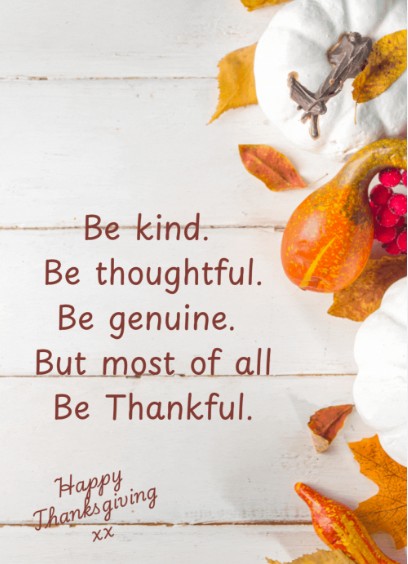
Happy Thanksgiving!
How to Take Criticism
On Wednesdays, I share posts, fables, songs, poems, quotations, TEDx Talks, cartoons, and books that have inspired and motivated me on my writing journey. I hope these posts will give writers, artists, and other creatives a mid-week boost.
In a recent post on the Writer Unboxed blog, author Jeanne Kisacky shared advice on accepting and processing criticism. Here’s an excerpt from that post:
When you receive the critique, don’t just dive in as soon as you get it. Set aside a quiet chunk of time, sufficient to get through all the critique in one session (if possible), and then just read the comments. You will feel emotions while you read the reviewer’s responses; some positive, but many possible negative ones as well. I have been angry, delighted, depressed, affronted, despondent, entertained, even incensed after reading criticism. It’s normal. Criticism is hard to take. Tackling edits while in the thrall of that emotional response is a great way to get off track and subvert the tone of the writing.
Once you’re done reading the comments, set them aside and do something, anything, other than re-reading your draft or trying to start revising. Go for a walk. Do the dishes. Do some gardening. Do whatever activity lets your mind wander. Do this for a day or two, or for as long as it takes for your brain to process the criticism. Let the criticism sink in, let it percolate. This breathing space lets you weigh what you wanted the book to be against what you just found out wasn’t working. It also gives you the chance to refine your own understanding of your work, so that you don’t lose the heart and soul of it while revising based on someone else’s comments. In my experience, if you jump right into revisions, chances are you are going to go some wrong directions, because you need the time to internalize their comments and figure out how to fix the stated problem your way, not their way.
Honoring Dr. Jane Goodall
Dr. Jane Goodall, the renowned primatologist and conservationist, passed away yesterday at the age of 91.
From a young age, she was fascinated by animals, dreaming of living in Africa and studying wildlife. In 1960, without formal scientific training, she traveled to Gombe Stream National Park in Tanzania to observe wild chimpanzees under the mentorship of anthropologist Louis Leakey. Her discoveries revealed astonishing behaviors: chimpanzees use tools, show emotions, and live in complex social groups.
She later earned a Ph.D. from the University of Cambridge, becoming one of the few people at the time to do so without an undergraduate degree. Over the decades, Dr. Goodall shifted her focus from observation to global advocacy, raising awareness about habitat destruction, animal welfare, and environmental sustainability. She founded the Jane Goodall Institute and created Roots & Shoots, a program that empowers young people to address environmental and humanitarian issues.
She has traveled the world, inspiring audiences with her message of hope, responsibility, and respect for all living beings.

My favorite quotations from Dr. Jane Goodall:
What you do makes a difference, and you have to decide what kind of difference you want to make.
The greatest danger to our future is apathy.
Every individual matters. Every individual has a role to play. Every individual makes a difference.
You cannot get through a single day without having an impact on the world around you.
Hope is what enables us to keep going in the face of adversity. It is what keeps us motivated.
The least I can do is help people see the interconnectedness of all life.
Chimps, more like us than any other creature, have helped us to understand what it means to be human.
You cannot share your life with a dog or a cat and not know perfectly well that animals have personalities and minds and feelings.
My mission is to create a world where we can live in harmony with nature.
We still have a window of time. Nature is amazingly resilient. If we give her a chance, she will recover.
Let the Storms Pass
On Wednesdays, I share posts, fables, songs, poems, quotations, TEDx Talks, cartoons, and books that have inspired and motivated me on my writing journey. I hope these posts will give writers, artists, and other creatives a mid-week boost.
Here’s a thought-provoking reflection from international speaker and bestselling author Joyce Meyer:
We all face storms in life—some are like the quick afternoon storms that are common in summer and some seem like hurricanes. But one thing is true about all storms: They don’t last forever.
Thoughts and feelings run wild in the midst of our personal storms, but those are exactly the times we need to be careful about making decisions. Decisions are best made in our quiet times with God, not in the midst of a storm.
Instead of drowning in worry and fear, get in touch with God, who sees past the storm and orchestrates the big picture. God makes sure everything that needs to happen in our lives happens at the right time, moves at the appropriate speed, and causes us to arrive safely at the destinations He has planned for us.
Source: Quiet Times with God by Joyce Meyer
Read | Listen | Reflect
Today is National Day for Truth and Reconciliation, a day set aside to honour the children who never returned home and the survivors of residential schools, as well as their families and communities.
This day was established by the Canadian federal government in 2021, in response to Call to Action #80 from the Truth and Reconciliation Commission of Canada (TRC). This Call recommended a statutory holiday for public commemoration.
People across the country will wear orange, participate in healing walks, attend ceremonies, and listen to the voices of Indigenous peoples. It is a day of truth-telling, but also one of commitment—to learn, to support, and to walk alongside Indigenous communities in the ongoing journey of reconciliation.
Today, take time to read, listen, and reflect.
Every voice matters. Every action counts. Every child matters.
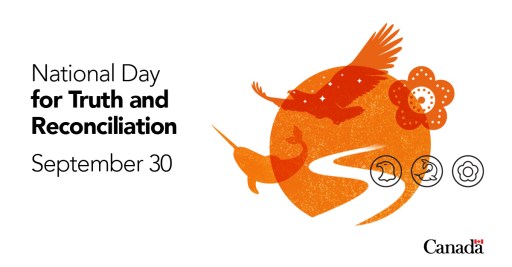
This visual brings together symbols of the three Indigenous groups across Canada: the eagle for First Nations, the narwhal for Inuit, and the beaded flower for the Métis. At the centre is a circle which symbolizes unity and the spirit of reconciliation. The pathway running through it represents the journey of reconciliation. The stars symbolize the children who never returned home from residential schools. The orange colour represents truth-telling and healing.
Achieving the “Impossible”
On Wednesdays, I share posts, fables, songs, poems, quotations, TEDx Talks, cartoons, and books that have inspired and motivated me on my writing journey. I hope these posts will give writers, artists, and other creatives a mid-week boost.
A long-time fan of bestselling authors and coaches Marc and Angel Chernoff, I look forward to reading their emails and blog posts. Here’s an excerpt from a recent post:
When I was a high school freshman, a 260-pound freshman girl showed up for track and field tryouts right alongside me. Her name was Sara, and she was only there because her doctor said her health depended on it. But once she scanned the crowd of students who were on the field, she turned around and began walking away. Coach O’Leary saw her, jogged over, and turned her back around.
“I’m not thin enough for this sport!” Sara declared. “And I’ll never be! It’s impossible for me to lose enough weight. I’ve tried.”
Coach O’Leary nodded and promised Sara that her body type wasn’t suited for her current weight. “It’s suited for 220 pounds,” he said.
Sara looked confused. “Most people tell me I need to lose 130 pounds,” she replied. “But you think I only need to lose 40?”
Coach O’Leary nodded again.
Sara started off as a shot-put competitor, but spent every single afternoon running and training with the rest of the track team. She was very competitive, and by the end of our freshman year she was down to 219 pounds. She also won 2nd place in the countywide shot-put tournament that year. Three years later, during our senior year, she won 3rd place in the 10K county run. Her competitive weight at the time was 132 pounds.
There was a time when Sara was convinced that it was impossible to lose weight because, in her past experience, it had never worked out the way she had hoped. She had failed a few times and eventually lost faith in herself. But with consistency — with the right daily habits and willingness to try again — she restored her faith and achieved the “impossible.” And when Sara showed up to my poolside birthday party in Miami recently, I smiled when I overheard another guest compliment her on her bathing suit and physique.
Of course, Sara still works really hard — she chooses wisely — every single day to maintain what she has achieved.
And, so do I…
Note: I highly recommend subscribing to Marc & Angel’s website.
 Joanne Guidoccio