Inspired by Two Francescas

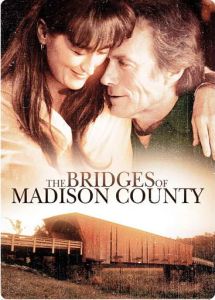
In June of 1995, I sat with eyes glued to the big screen as Meryl Streep assumed the role of Francesca Johnson, an Italian war bride, in the romantic drama The Bridges of Madison County. Based on the best-selling novel by Robert James Waller, the film focuses on a four-day love affair between two middle-aged lovers, Francesca and Robert Kincaid, a National Geographic photojournalist brilliantly played by Clint Eastwood.

Having spent years in a passionless marriage, Francesca falls deeply in love with Robert. She contemplates leaving her loyal husband and teenage children.

Continue reading on the Soul Mate Authors blog.

Write Your Way Whole

On Wednesdays, I share posts, fables, songs, poems, quotations, TEDx Talks, cartoons, and books that have inspired and motivated me on my writing journey. I hope these posts will give writers, artists, and other creatives a mid-week boost.

In a recent post on Writers Unboxed, author and coach Kathleen McCleary shared excellent advice for dealing with writer’s block. Here’s an excerpt from that post:

Charles Dickens started writing an autobiography when he was 33 and already famous for writing Oliver Twist and A Christmas Carol. He found writing truthfully about the dark years of his childhood to be so painful that he abandoned his autobiography and instead, at 37, started writing David Copperfield. In it he explored all the memories that were too much to process in reality: working in a factory as a child while his father was in prison, attending school with a sadistic headmaster, his relationship with his wife. It was his favorite of all his books.

Nora Ephron wrote her first novel, Heartburn, after discovering that her husband was cheating on her while she was pregnant with their second child. The main character at one point says she tells stories “Because if I tell the story, I control the version. Because if I tell the story, I can make you laugh, and I would rather have you laugh at me than feel sorry for me. Because if I tell the story, it doesn’t hurt as much. Because if I tell the story, I can get on with it.”

So, what are some ways to write yourself whole? You know better than I do, but here are a few ways to get started:

◆ Write the childhood you wish you’d had.

◆ Write the thing you wish you’d said.

◆ Write the ending you wanted or want for your marriage, career, friendship, life.

◆ Write who you’d be if you’d chosen to take that flight to San Francisco for a job instead of staying in D.C., or whatever that pivotal life decision was.

◆ Write who you’d be if you’d said “yes” instead of “no.”

◆ Write the Band-aid for the hole in your heart and psyche that haunt you.

◆ Write your secret. Write your deepest longing. Write your starkest truth.

◆ Write in a different voice than you’ve ever written before.

Do this not in journals or memoir but in fiction, in telling stories that give you the distance to have a better understanding of and more compassion for the person experiencing those things, making those choices, failing and flailing.

The English critic G. K. Chesterton wrote about his experience of reading David Copperfield, “[Dickens] has created creatures who cling to us and tyrannize over us, creatures whom we would not forget if we could, creatures whom we could not forget if we would, creatures who are more actual than the man who made them.” In other words, creatures who are whole, who restore us, the readers to wholeness, as well as the author who created them. I’d say that’s a pretty fine thing to do.

Source: Writer Unboxed

Start Subtracting

On Wednesdays, I share posts, fables, songs, poems, quotations, TEDx Talks, cartoons, and books that have inspired and motivated me on my writing journey. I hope these posts will give writers, artists, and other creatives a mid-week boost.

A long-time fan of bestselling authors and coaches Marc and Angel Chernoff, I look forward to reading their emails and blog posts. Here’s an excerpt from a recent post:

When you discover something that nourishes your soul and brings you joy — something that truly matters to you — care enough about yourself to make room for it in your life. And if you find that you don’t have enough time for what matters, stop doing things that don’t. In other words, start subtracting what isn’t working for you.

Every time you subtract negative from your life, you make room for more positive. Let that sink in. When things aren’t adding up in your life, begin subtracting. Life gets a lot simpler and more enjoyable when you clear the emotional and physical clutter that makes it unnecessarily complicated. And there’s so much you can let go of in life without losing a thing. It’s called growth. Letting go of the old makes way for the new. Letting go of what isn’t working makes way for what will. When the pain of holding on is worse than the pain of letting go, it’s time to let go and grow.

Note: I highly recommend subscribing to Marc & Angel’s website.

When You Want to Give Up, Remember This

On Wednesdays, I share posts, fables, songs, poems, quotations, TEDx Talks, cartoons, and books that have inspired and motivated me on my writing journey. I hope these posts will give writers, artists, and other creatives a mid-week boost.

In her book, Let It Be Easy: Simple Ways to Stop Stressing & Start Living, life coach Susie Moore shares insightful gems. Here’s one of my favorites:

I love the story of a tribe in Africa that is always called on when there is a drought because, somehow, they can always make it rain with their dancing rituals. It confused anthropologists. How can dancing create rain? Surely not. But they were reported to have a 100 percent success rate.

They did nothing that the other tribes in the region didn’t do: they offered the same prayers, the same incantations, the same moves. All the rituals were very similar to those of the tribes around them. And like all the other tribes, they would dance for days or weeks. But this tribe opened the skies and the rain came down.

A member of the tribe was interviewed and asked the question: “How do you always make it rain? It seems impossible!”

He answered something that I repeat to myself whenever I want to give up.

“Oh, we dance until it rains.”

Persistence wins. It’s not glamorous or magical, which is good news. Anyone can do it, if they’re willing.

Source: Let It Be Easy, p. 242

Honoring Dr. Martin Luther King

martinlutherking

Today is Martin Luther King Day, an American federal holiday that marks the birthday of an inspirational clergyman, activist, and leader who is best known for his role in the advancement of civil rights in the United States.

My favorite quotations from Dr. Martin Luther King…

The ultimate measure of a man is not where he stands in moments of comfort and convenience, but where he stands at times of challenge and controversy.

Faith is taking the first step even when you don’t see the whole staircase.

Our lives begin to end the day we become silent about things that matter.

We must accept finite disappointment, but never lose infinite hope.

Life’s most persistent and urgent question is, “What are you doing for others?”

We must build dikes of courage to hold back the flood of fear.

Love is the only force capable of transforming an enemy into friend.

We must learn to live together as brothers or perish together as fools.

We may have all come on different ships, but we’re in the same boat now.

The time is always right to do what is right.


Focus on Distance Traveled

On Wednesdays, I share posts, fables, songs, poems, quotations, TEDx Talks, cartoons, and books that have inspired and motivated me on my writing journey. I hope these posts will give writers, artists, and other creatives a mid-week boost.

In his recent release, Hidden Potential, organizational psychologist and best-selling author Adam Grant shares the character skills and motivational structures that can help people realize their potential. Here’s a thought-provoking excerpt:

You can’t tell where people will land from where they begin. With the right opportunity and motivation to learn, anyone can build the skills to achieve greater things. Potential is not a matter of where you start, but of how far you travel. We need to focus less on starting points and more on distance traveled.

For every Mozart who makes a big splash early, there are multiple Bachs who ascend slowly and bloom late. They’re not born with invisible superpowers; most of their gifts are homegrown or homemade. People who make major strides are rarely freaks of nature. They’re usually freaks of nurture.

Neglecting the impact of nurture has dire consequences. It leads us to underestimate the amount of ground that can be gained and the range of talents that can be learned. As a result, we limit ourselves and the people around us. We cling to our narrow comfort zones and miss out on broader possibilities. We fail to see the promise in others and close the door to opportunities. We deprive the world of greater things.

Source: Hidden Potential by Adam Grant, pp. 5-7

Start with a Gateway Habit

On Wednesdays, I share posts, fables, songs, poems, quotations, TEDx Talks, cartoons, and books that have inspired and motivated me on my writing journey. I hope these posts will give writers, artists, and other creatives a mid-week boost.

In his best-selling book Atomic Habits, James Clear shares practical strategies for habit formation. Here’s an excerpt from the “Make It Easy” section of the book:

Even when you know you should start small, it’s easy to start too big. When you dream about making a change, excitement inevitably takes over and you end up trying to do too much too soon. The most effective way I know to counteract this tendency is to use the Two-Minute Rule, which states, “When you start a new habit, it should take less than two minutes to do.”

You’ll find that nearly any habit can be scaled down into a two-minute version:

“Read before bed each night” becomes “Read one page.”

“Do thirty minutes of yoga” becomes “Take out my yoga mat.”

“Study for class” becomes “Open my notes.”

“Run three miles” becomes “Tie my running shoes.”

The idea is to make your habits as easy as possible to start. Anyone can meditate for one minute, read one page, or put one item of clothing away. This is a powerful strategy because once you’ve started doing the right thing, it is much easier to continue doing it. A new habit should not feel like a challenge. The actions that follow can be challenging, but the first two minutes should be easy. What you want is a “gateway habit” that naturally leads you down a more productive path.

You can usually figure out the gateway habits that will lead to your desired outcome by mapping out your goals on a scale from “very easy” to “very hard.” For instance, running a marathon is very hard. Running 5K is hard. Walking ten thousand steps is moderately difficult. Walking ten minutes is easy. And putting on your running shoes is very easy. Your goal might be to run a marathon, but your gateway habit is to put on your running shoes. That’s how you follow the Two-Minute Rule.

People often think it’s weird to get hyped about reading one page or meditating for one minute or making one sales call. But the point is not to do one thing. The point is to master the habit of showing up. The truth is, a habit must be established before it can be improved. If you can’t learn the basic skill of showing up, then you have little hope of mastering the finer details. Instead of trying to engineer a perfect habit from the start, do the easy thing on a more consistent basis. You have to standardize before you can optimize.

Source: Atomic Habits by James Clear, pp. 162-164.

The Sum of This Year

On Wednesdays, I share posts, fables, songs, poems, quotations, TEDx Talks, cartoons, and books that have inspired and motivated me on my writing journey. I hope these posts will give writers, artists, and other creatives a mid-week boost.

In A Year of Writing Dangerously, author and teacher Barbara Abercrombie shares anecdotes, insights, and solutions. She ends the book with the following advice:

You have some stories or essays now, or your first draft in some stage of completion. Or maybe you have a pile of scribbled pages or notebooks, or a computer full of notes.

Give yourself credit for anything you’ve written this year. Turn on your sweetheart voice, and let it tell you how brave you’ve been to write anything at all.

And then figure out what you’re going to do with your manuscript or notes.

Don’t give yourself the excuse of feeling overwhelmed. You’ve come this far; now get on with it.

Source: A Year of Writing Dangerously

A Timely Message

On Wednesdays, I share posts, fables, songs, poems, quotations, TEDx Talks, cartoons, and books that have inspired and motivated me on my writing journey. I hope these posts will give writers, artists, and other creatives a mid-week boost.

Last week, Norman Lear died. A visionary, he wove social commentary into mainstream comedy and revolutionized the sitcom genre. While reading many of the tributes, I came across a letter that he wrote in the late 1970s. A man named Michael Hurwitz approached and asked if Norman could write a letter to his infant niece, Lisa—a message she could open on her 21st birthday. Here’s the letter:

February 2, 1978

Dear Lisa:

The first thing you must know is that you have a remarkable uncle in the person of Michael Hurwitz. That he would be thinking about your 21st birthday while you are still in your second year, makes him very special indeed.

You’re special, too, Lisa. There is only one of you, one only in all the world, and that fact is among the things I would want you to know.

Another is an ancient definition of happiness which has meant a lot to me: “Happiness is the exercise of one’s vital abilities along lines of excellence in a life that affords them scope.”

Actually, that means two things, Lisa. First, it means that you will be happy if you are doing your thing — not necessarily achieving excellence, simply reaching for it — in a life that allows you to do so. But, it also means that happiness is something we all deliver to ourselves. No man can deliver happiness to you. No amount of loving children. No money, no status, etc. Only Lisa can make Lisa happy — and then all those wonderful alternatives like husbands, and children and money and other material things, however important they may be (and I do not mean to minimize their importance) are all extras. I repeat that I don’t mean to minimize the love of a mate or a child. I intend only to emphasize that you cannot accept that love until you deliver the essence of happiness to yourself.

There is a hope that I have for you, too. It is the hope that you go through life trusting and not wary. If you go through life trusting, you may get hurt just a little bit more, but you will never miss any of the action. If you go through life a little too wary, you may not get stepped on here and there, but you will miss far more than you will avoid.

The last thing that I would like to offer you, at the invitation of your uncle, is to remember that success is a question of how you collect your minutes. From the time you wake up each morning and do the first thing you promised yourself you would do last night, you are dealing with success or failure. For example, you promise yourself that you would get up promptly at eight and you do it. Success! Tell yourself that, immediately upon arising, you will do ten minutes of calisthenics, and you don’t. Failure! Try to make the successes outnumber the failures — and most important, count them all. If you start each day counting all the tiny successes — they have a way of adding up. Each one takes you to another plateau and so you climb through your days, your successes escalating all the while.

Have a good, happy, healthy and productive life, Lisa.

Sincerely,
Norman Lear

Source: Letters of Note website