It’s my eleventh Wednesday on tour with Goddess Fish.
Stop by and visit for a while. Enter the Rafflecopter giveaway and qualify to win a $25 Amazon gift card.
Today’s stop – LibriAmoriMiei
It’s my eleventh Wednesday on tour with Goddess Fish.
Stop by and visit for a while. Enter the Rafflecopter giveaway and qualify to win a $25 Amazon gift card.
Today’s stop – LibriAmoriMiei
Welcome to my Second Acts Series!
Today, we have Canadian author Winona Kent sharing triumphs and challenges during her multi-act life.
Here’s Winona!
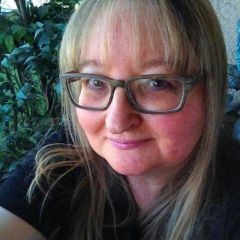 Thank you, Joanne, for inviting me to contribute to your blog! I’m very honoured to share my story with so many accomplished people.
I had an interesting conversation with my ophthalmologist the other day. He’s elderly, and I wondered when he was going to retire. He told me that he was thinking about it, but he couldn’t quite bring himself to actually do it. I revealed I could hardly wait to retire from my full-time job in 2019, so I could become a full-time writer instead. But my doctor confessed he was afraid to give up his practice, because he wasn’t sure he would know what to do with himself. He had defined himself in terms of his career, and he was afraid that if he gave up his career, he would lose his entire sense of identity.
I’ve never had an issue with my sense of identity. I knew I wanted to be a writer when I was 12, and handing out chapters of my first epic novel to my classmates at recess. But I also knew I likely wouldn’t be able to make a living as a novelist. I decided very early on that if I had to work for a living, I would take jobs that had absolutely nothing to do with writing. My logic was twofold. One, I would keep my creative brain for myself, and not allow it to be used up by an employer. And two, I hoped I’d find interesting jobs that would fuel my writing, and give my characters an authentic place in their world.
So, I suppose, my First Act, after university, was to become a travel agent. I cheated a bit – my dad managed a travel agency and he hired and trained me. He also fired me five times for insubordination. I was always hired back by the Assistant Manager, who pleaded with me to stop getting into arguments with my dad, because they actually relied on me to do ticketing and bookings. After I met my husband I moved to Winnipeg, but I continued in the travel business. I also continued writing stories in my spare time – “practice novels”, I called them, because I knew they weren’t good enough to be published – but I was working on that.
My Second Act happened when I was 28. I was burning out of the travel industry, and I was also suffering from a serious clinical depression. I decided the best thing I could do for myself was to go back to university. I wanted a degree that did exactly the opposite of my BA in English, which had involved the forensic dissection of literature. I applied to, and was accepted by, the University of British Columbia. I moved halfway across Canada, to the west coast, and emerged, three years later, in 1985, with an MFA in Creative Writing. It was one of the best decisions I’d ever made, and it led to my Third Act.
 My Third Act was very long, but incredibly productive. I found a full-time job at a communications company, whose head office was just down the street from where I lived. It was fantastic. No commuting, five minutes to get to work and home again, and, best of all, it didn’t tax my creative energies. The start of my Third Act was marked by the publication of my first novel, Skywatcher. Unfortunately, it was a spy story, and spy stories in 1989 were in a very bad way. Because of the fall of the Berlin Wall, the entire Cold War scenario was being rewritten in front of us. My brave little novel had dismal sales, and I wouldn’t be able to recover from that for many years.
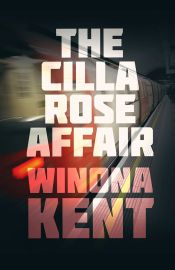 But I persevered at Telus… I moved from their Word Processing department, to Learning Services, where I wrote and edited teaching materials – yes, I know I swore I’d never get a job that involved writing, but I needed to know my creative skills actually did count for something. While I was working in Learning Services, I wrote The Cilla Rose Affair, which was the sequel to Skywatcher. Frustrated that I couldn’t find a publisher, I self-published it in 2001, and then began working on what would eventually turn out to be my third novel, Cold Play.
And then, in 2003, after 18 years with Telus, in four different departments, I embarked upon Act Four of my life. The company was downsizing and offered me an enormous sum of money to leave. At first I hesitated…and then, once I realized what an opportunity this presented, I accepted. On a fine Friday in May, 2003, I walked out of the main doors for the last time…and on the following Monday, I walked through the doors of Vancouver Film School where, at the age of 49, I was going to spend a year learning how to write screenplays.
 My major writing project at VFS was my third novel, Cold Play, which I adapted into a feature length script. I couldn’t have chosen a more difficult path, as novels and screenplays really have very little in common, and turning one into the other was a daunting task. I was also the oldest student in the writing program.
But Act Four turned me into a much better writer than I’d been before. After VFS I worked on a number of projects, some spec scripts for potential TV programs, some original screenplays. But I had to find a way to make a living, and so I landed at my old Alma Mater, the University of British Columbia, where I became a Program Assistant in one of the schools in the Faculty of Medicine. I revisited Cold Play, and in 2012 it became my third novel, and the second to be self-published.
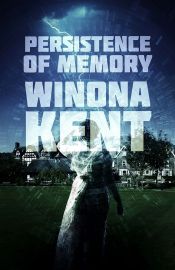 The end of Act Four was marked by the 2013 publication of my fourth novel, Persistence of Memory, by Fable Press. I have no idea where this accidental time-travel story came from, other than to suggest it was percolating in my creative brain for a number of years, and that it emerged, first as a screenplay, and then as a novel, at exactly the right time. In a way, it was like the closing of a circle. The failure of Skywatcher all those years ago was forgotten. A publisher had decided to take a chance on me, and it was the most successful novel I’d ever written.
But my excellent progress was not to last. Last year, as I was writing my fifth novel, In Loving Memory, Fable Press went out of business. I was left with two choices – to self-publish yet again, or to aggressively seek out a new publisher. Surely, I thought, my four previous novels had to count for something. And I wasn’t wrong. I landed with a New York company, Diversion Books, who not only wanted to publish In Loving Memory – they also wanted to reissue my backlist, with new covers and a new “branding” image for me. Those four books – Skywatcher, The Cilla Rose Affair, Cold Play and Persistence of Memory – were republished this past July, as ebooks and paperbacks.
And so, at the age of 61, I have now embarked upon a glorious Act Five. A new publisher, a new look for my books, new sales to a new readership…a contract for In Loving Memory, which is due out in July 2016…and publication of all the following stories in my accidental time-travel series.
Will there be an Act Six? Oh I do hope so! To go back to the conversation I had with my ophthalmologist…in 3 years, 10 months and 2 days time, I’m looking forward to retiring from my job at UBC and, finally, becoming the full-time writer I’ve always dreamed about.
Do I have advice for anyone planning to pursue a second act? Or a third, fourth, fifth and sixth act? Yes! First and foremost, to quote the wonderful Galaxy Quest, never give up, and never surrender. Be persistent. Never accept the idea that you’re too old, or not talented enough, or not clever enough. Never stop learning.
And never stop trying.
Buy Links
Amazon | Barnes & Noble | Kobo
Where to find Winona…
Website | Blog | Personal FB Page | Writer FB Page | Twitter | Google+ | LinkedIn | Instagram | Pinterest
Joanne here!
Wow!! Winona, Thanks for sharing your inspiring journey. Best of luck with all your literary endeavors.
It’s my tenth Wednesday on tour with Goddess Fish.
Stop by and visit for a while. Enter the Rafflecopter giveaway and qualify to win a $25 Amazon gift card.
Today’s stop – Lisa Hazelton’s Reviews
I’m thrilled to welcome Guelph author Alison Bruce to the Power of 10 series. Today, Alison shares ten interesting features of her latest release, Deadly Season.
Here’s Alison!
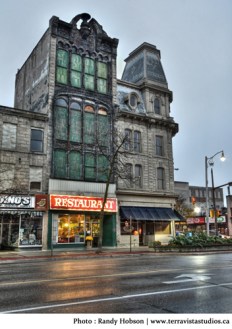 1. The City in Deadly Season is never mentioned by name but it’s based on Guelph Ontario. You can find clues in the books. There are lots of differences, but they are all based on things that might have happened at the time I started the Deadly Legacy.
2. The offices of Carmedy & Garrett Investigations are in the Petrie Building in downtown Guelph. I have it gutted and renovated so that it maintains its historical façade. The only problem is I can’t count. I gave the building an extra floor. I suppose, in another section of the multiverse, it could have an extra floor…right?
3. Carmedy & Garrett Mysteries were set twenty years in the future when I started writing them. Now they are only three years in the future. Why set them in the future at all? I wanted to fairly use the kind of technology we see in shows like Bones and CSI. (Most police officers will tell you that those shows might as well be science fiction.)
4. Back when I started, I anticipated the development of the Smart Phone. I called them eComs and they were a cross between existing technology, projected technology and Star Trek’s Tricorders.
5. My mother inspired the motive for murder in Deadly Legacy.
6. Deadly Season started off as a short story call The Christmas Cat Killer Caper.
7. Kate Garrett and Jake Carmedy came to me in a dream. Their adventures in my dream form the basis of Deadly Games—the next C&G book. (I’m leaving out the teleporting informant and alien waitress that showed up in the dream version.)
8. In Deadly Season Nelly the cadaver dog (more properly known as a Human Remains Detection dog) is named for and looks like my uncle’s golden retriever. Unfortunately, the real Nelly is no longer with us but C&G’s Nelly is alive and well and I hope will return.
9. One of my crises of credibility was whether or not police would use consulting detectives. One of my police sources said no. Most cops don’t trust most private investigators. Another police source said yes. He worked as a consultant since retiring from a career as a homicide detective. Since the precedent for detective working with the police was pretty firmly established in fiction, I knew readers would accept Carmedy & Garrett. However, I used my experts’ advice to inform how police characters would react to them.
10. Kate’s father Joe, who is an important character despite being dead, is based on an old joke my father told me. This guy Joe was so well known that he was invited to the Vatican. In a news report the co-anchor asked about him. The news anchor replied: “I don’t know about the guy in the robes, the man next to him is Joe.”
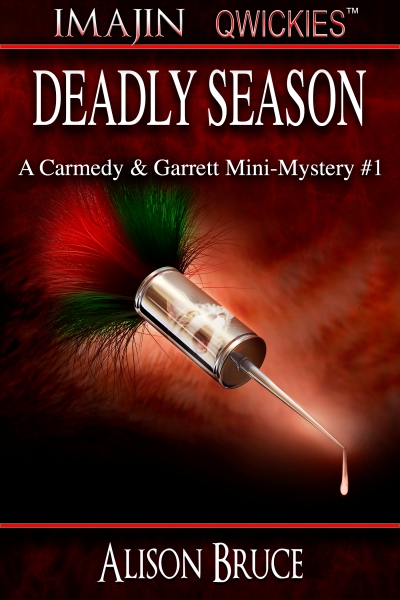
Blurb
Last month Kate Garrett was a Police Detective. Now she’s a Pet P.I.?
Kate recently inherited half her father’s private investigation company and a partner who is as irritating as he is attractive. Kate has been avoiding Jake Carmedy for years, but now her life might depend on him.
Kate and Jake are on the hunt for a serial cat killer who has mysterious connections to her father’s last police case. Kate’s father had been forced to retire when he was shot investigating a domestic disturbance. Is the shooter back for revenge? And is Kate or Jake next?
Buy Links
Amazon (Canada) | Amazon (US) | Kobo | Chapters/Indigo | Smashwords | Google Play
Bio
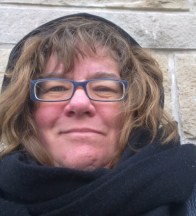 Alison Bruce has had many careers and writing has always been one of them. Copywriter, editor and graphic designer since 1992, Alison has also been a comic store manager, small press publisher, webmaster and arithmetically challenged bookkeeper. She is the author of mystery, romantic suspense and historical western romance novels. Three of her novels have been finalists for genre awards
Where to find Alison…
Author/Business Website | FB Author Page | FB Personal Page | Author Blog | Twitter | Pinterest
It’s my ninth Wednesday on tour with Goddess Fish.
Stop by and visit for a while. Enter the Rafflecopter giveaway and qualify to win a $25 Amazon gift card.
Today’s stop – Dena Garson’s blog
 I’m visiting with Sharon Bell Buchbinder and chatting about my writing journey and A Season for Killing Blondes.
If you have a few minutes, drop by her blog.
It’s my eighth Wednesday on tour with Goddess Fish.
Stop by and visit for a while. Enter the Rafflecopter giveaway and qualify to win a $25 Amazon gift card.
Today’s stop – Rachel Brimble’s blog
It’s my seventh Wednesday on tour with Goddess Fish.
Stop by and visit for a while. Enter the Rafflecopter giveaway and qualify to win a $25 Amazon gift card.
Today’s stop – Unabridged Andra
Welcome to my Second Acts Series!
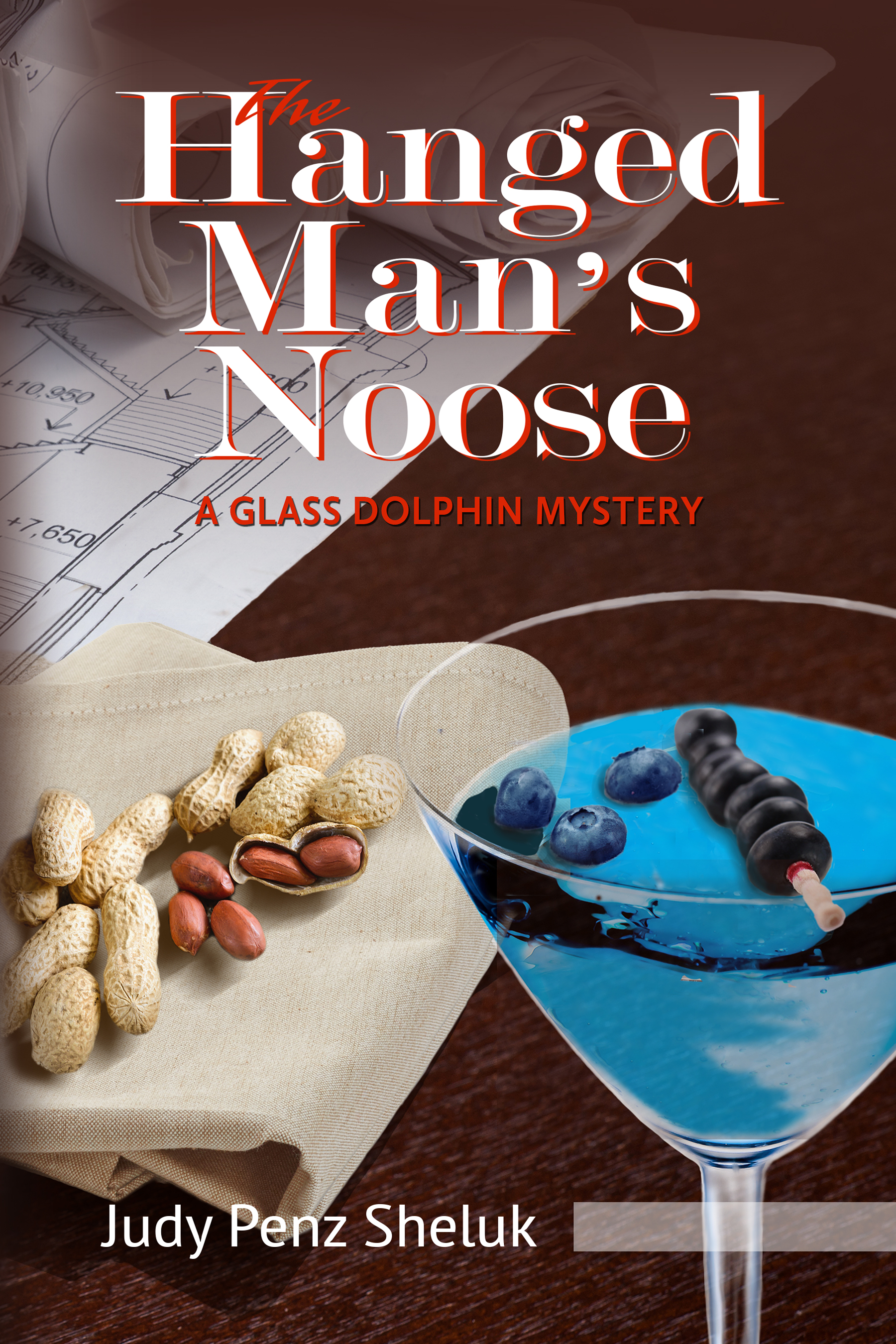
Today, we have Canadian author Judy Penz Sheluk sharing insights from her multi-act life and introducing her debut novel, The Hanged Man’s Noose.
Here’s Judy!
Act One: Childhood Dreams
I can remember reading Emily Climbs by L.M. Montgomery when I was about eight. It’s the story of Emily Starr of New Moon, Prince Edward Island, and her quest to become a writer/journalist. I remember thinking, “That’s what I want to be when I grow up. I want to be a writer.”
It wasn’t outside of the realm of possibility. I was an avid reader from an early age (my main fare was Nancy Drew; in high school I graduated to Agatha Christie, Ngaio Marsh, and John D. MacDonald. I had good marks in English. I had a plan. Even better, I had a dream.
Act Two: Credit and Collections
The plan changed. Instead of going to school to study journalism, I went to work in the credit department of a major insurance company and took college night classes in business administration and accounting. I worked my way up the corporate ladder, becoming the youngest Division Credit Manager in the company’s history. I still thought about writing, emphasis on thought. I didn’t actually do any writing—unless you count composing collection letters as writing.

I didn’t stay with that insurance company (I wanted to move back to Toronto), but I did stay in the Credit and Collections field, going from company to company as the recession hit and middle management jobs were “right-sized.” I eventually landed at a company two miles from my house. The commute was great. The job was mind-numbingly boring. I started thinking about writing again.
Act Three: Creative Writing Courses
My husband, Mike, bought me a PC and enrolled me in an online Creative Writing school. I whizzed through the 20 course units. Entered and won first prize in a writing contest for beginning writers. Sold a magazine feature article for the princely sum of $75.
That’s when fate intervened. The day I received the check for $75 I received the news that my mind-numbingly boring job was being made redundant. I thought about the job-hopping over the past ten years and I knew I just couldn’t do it any longer.
Mike encouraged me to try freelance writing for a year. If I could earn something—not what I had been earning but at least enough to put food on the table—we’d look at year two.
That was May 2003. I’ve never looked back.
Act Four: Finding Fiction
My freelance writing career took off in leaps and bounds. Before long I was writing regularly for AntiqueWeek, Antique Trader, New England Antiques Journal, Antiques and Collectibles Showcase Canada. Worried I’d be pigeon-holed into writing only for the antiques market, I attended a home building conference in Toronto and landed a few freelance assignments for a handful of home building associations, including Ontario Home Builder and Home Builder Canada. I specialized in “green” building and energy efficiency. Those led to some features in other trade publications. Before long I was writing about farming innovations (I grew up in Toronto, Canada), travel in Manitoba (have never been there) and a host of other things.
In 2007, I was offered the position of Senior Editor for New England Antiques Journal (www.antiquesjournal.com), a job I still have and love. In 2009, I was offered the position of Editor for Home Builder Canada (www.homebuildercanada.com). That took some thought. It would mean giving up some of the freelance work. Then again, it was a sure thing. I accepted the job and continue with it to this day. The bonus of both these gigs is that I work from home and can work my own hours. As long as the work gets done, no one cares WHEN it gets done.
Along the way, I kept taking creative writing courses, both online and in workshop format. I wrote a few short stories, mostly bad, managed to get a couple published. But there was nothing of consequence. And then on Christmas Eve, 2012, I had an ah-ha moment. If I didn’t start writing my novel, it would never get written.
Act Five
With time off between Christmas and New Year’s from all my jobs, the time was right. I started writing The Hanged Man’s Noose on Christmas Eve 2012 and wrote seven days a week until I finished the first draft a few months later. I used to joke that if I was a plumber in my day job it might have been easier. After all, at the end of the day, a plumber (or whatever the job is) looks upon writing as an escape. I went from writing to writing. And yet, The Hanged Man’s Noose was an escape. The world and the characters I created became real to me, and I couldn’t wait to revisit them.
It took the help of a developmental editor and a copyeditor, along with two beta readers to get The Hanged Man’s Noose to the point where it was worthy of sending out for publication. Yes, the editors cost me, but I looked upon the expense as another creative writing course, and the investment was worth every penny. Not only did I polish up the manuscript, I learned what to do (and not do) for the future.
It wasn’t easy, but I landed a contract with Barking Rain Press in July 2014. More editing (this time paid for by the publisher) and in July 2015, The Hanged Man’s Noose was released to the world. You can read all about my publishing journey on my blog. Simply click on the archives, select One Writer’s Journey, and the subhead My Publishing Journey. Start at the beginning, if you dare. It’s all there, the hopes, the dreams, the cheers, the tears…
Blurb
Small-town secrets and subterfuge lead to murder in this fast-moving, deftly written tale of high-stakes real estate wrangling gone amok.
Journalist Emily Garland lands a plum assignment as the editor of a niche magazine based in Lount’s Landing, a small town named after a colorful 19th century Canadian traitor. As she interviews the local business owners for the magazine, Emily quickly learns that many people are unhappy with real estate mogul Garrett Stonehaven’s plans to convert an old schoolhouse into a mega-box store. At the top of that list is Arabella Carpenter, the outspoken owner of an antiques shop, who will do just about anything to preserve the integrity of the town’s historic Main Street.
But Arabella is not alone in her opposition. Before long, a vocal dissenter at a town hall meeting about the proposed project dies. A few days later, another body is discovered, and although both deaths are ruled accidental, Emily’s journalistic suspicions are aroused.
Putting her reporting skills to the ultimate test, Emily teams up with Arabella to discover the truth behind Stonehaven’s latest scheme before the murderer strikes again.
The Hanged Man’s Noose is available at all the usual suspects, including Amazon.
You can also read the first four chapters free here.
Connect with Judy
Sign up for Judy’s blog, where she interviews other authors and blogs about the writing life.
Sign up for Judy’s quarterly newsletter here. The next newsletter is “sometime” in mid-late November.
Find Judy on Facebook, Twitter and Pinterest .
Joanne here!
Wow! I’m in awe of your diverse talents and inspiring journey. Best of luck with all your literary endeavors.
It’s my sixth Wednesday on tour with Goddess Fish.
Stop by and visit for a while. Enter the Rafflecopter giveaway and qualify to win a $25 Amazon gift card.
Today’s stop – Jacquie Biggar’s blog
 Joanne Guidoccio