When You Forget Why You Started

On Wednesdays, I share posts, fables, songs, poems, quotations, TEDx Talks, cartoons, and books that have inspired and motivated me on my writing journey. I hope these posts will give writers, artists, and other creatives a mid-week boost.

On Fridays, I receive Hope Clark’s newsletter, Funds for Writers. Here’s a thought-provoking essay from a recent email:

When a measure becomes a target, it ceases to be a good measure.” – British economist Charles Goodhart (Goodhart’s law)

This quote says that basically, when you set a goal, and you become hard focused in meeting that goal, you can easily forget what drove you to set the goal in the first place. The measure, so to speak, becomes the details in the goals instead of the original mission.

Metrics, for instance. When you set goals in terms of hours, dollars, sales, hits, reviews, and followers, and that’s what you get up in the morning to which to give your attention, you begin chasing the metrics. Your original goal turns murky.

In another instance, you may notice what’s popular and think, I can do that. That applies not just to books but also to short pieces, even journalism. You see what is getting attention, say on sites like Medium.com or popular blogs. Or in terms of books, you see the best-selling genres and shift gears to write those instead of what you originally started writing.

You are chasing success. You are trying to find the easier road, or at least the road someone else has cut out ahead of you.

My first mystery series is The Carolina Slade Mysteries. Many New York agents replied saying nobody wanted to read about an amateur sleuth like her, especially from the South, especially rural. Good writing, they said, but they didn’t like the protagonist enough nor her setting. I, however, loved her. I developed her, fleshed her out, and eventually I sold her, quickly learning that strong female mystery protagonists were my thing.

I’m so glad I didn’t detour and write about vampires.

Sign up to receive Hope Clark’s newsletter here.

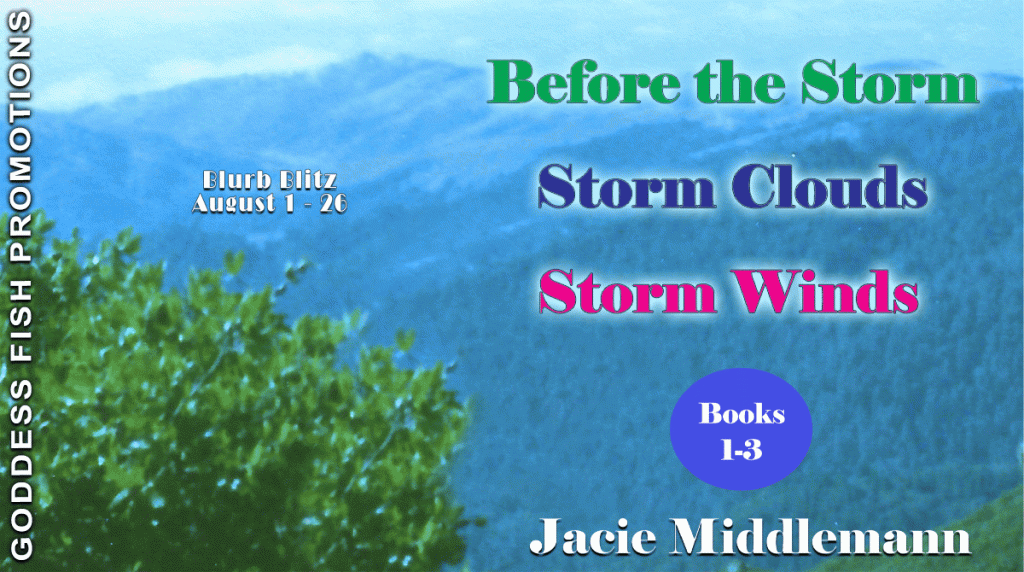
Blurb Blitz: Home to Clare Harbor Box Set

I’m happy to welcome author Jacie Middlemann. Today, Jacie shares her box set, Home to Clare Harbor.

Blurb

They started out as strangers…but didn’t stay that way for long…

A devoted granddaughter willing to do whatever it takes to keep everyone safe. Strangers who meet during the worst of conditions and become friends in the midst of chaos. Unexpected romance under the most unlikely circumstances. A puzzling mystery with its roots in historical events that took place centuries ago. And a storm that hides an ominous purpose that could change all their lives forever.

Sara knows before she walks into her grandparent’s home that her grandmother’s greatest fear will never be the storm or the threat it poses but instead the unknown that lays just beyond her front door. She knows too its cause and grieves that there is nothing she can do to change it.

Throughout the years of his career John has covered numerous battlefields including those that are a result of nature’s unyielding tempest. He fears this might be the worst one yet.

Mel didn’t expect to spend more than a few days in the large house where they’d taken refuge. She figured the storm would pass by and then they’d be off to their next assignment. The last thing she expected was David Payne.

Despite the fact that Lance was the bane of her teenage years, Tish knows that without the help of her father’s assistant, that the trip to North Carolina likely would have been a lot more challenging than it was. She’d been unequivocally terrified but his presence gave her strength she didn’t realize she had. She wasn’t certain how she felt about that…or him…or that he no longer irritated her the way he used to.

When Gary arrived at his family’s home in the mountains of North Carolina, he’s relieved that Sara and her grandparents along with their elderly friends are already there. But he is unable to take an easy breath until Tish finally arrives with Lance…and is not at all surprised at what he hears from Lance about their trip and the potential dangers they’d just barely been able to avoid.

He’s determined to do everything he can to keep their location safe…and unknown. Their knowledge, skills, and ingenuity are their greatest defense. For a time they would have to depend on themselves…it hadn’t take long to discover that the storm was never their greatest threat…but what is could change all their lives for the immediate future…or longer.

If you enjoy uplifting and heartfelt women’s fiction, young and older heroes and heroines filled with courage and compassion as they share joys and triumphs, and united they face and overcome tremendous challenges and tragedy, this book is for you.

Excerpt

“I’m so sorry, dear. I know I’m being foolish,” Maisie said quietly.

“No one could ever accuse you of being foolish, Grandma,” Sara said meaning every word. “We’re in a scary situation that none of us have ever been in before. You’d be far more foolish if you claimed it didn’t bother you.”

“It’s not just the storm,” Maisie admitted slowly but she kept her eyes steady on those of the young woman sitting next to her.

“Tell me, Grandma,” Sara asked softly. She knew sometimes if her grandmother was able to give voice to her fears it helped to diminish them.

Lord only knew that she’d talked with enough professionals to learn ways that could successfully help her grandmother to cope with the many fears that too often held her in their grip. She knew at the moment the primary one came from not being in familiar surroundings…not being in her own her home. Everything else was peripheral to that.

But at the moment there was little she could do to remedy the greatest of her fears.

“I won’t be able to go home, will I?”

The trembling voice that was filled with so much more than just fear broke Sara’s heart. She knew it was the exact same fear of so many others who were her grandmother’s age.

“Oh, Grandma.” She wrapped her arms around the frail shoulders that had once been so strong and sturdy. They had been her buffer against the world for so many years during her childhood and all the years after. She could do no less for her now.

********The box set is on sale for $0.99********

Author Bio and Links

Jacie Middlemann lives in Texas with her husband and a couple of cats who believe they rule…and sometimes they do.

When she’s not watching classic sitcoms or working on a needlework project for one of her kids, she loves to read women’s fiction and sometimes a good mystery suspense.

Amazon | Goodreads | Amazon Buy Link

Giveaway

Jacie Middlemann will be awarding a $50 Amazon/Barnes & Noble gift card to a randomly drawn winner via Rafflecopter during the tour. Find out more here.

Follow Jacie on the rest of her Goddess Fish tour here.

Stories Don’t Die Easily

On Wednesdays, I share posts, fables, songs, poems, quotations, TEDx Talks, cartoons, and books that have inspired and motivated me on my writing journey. I hope these posts will give writers, artists, and other creatives a mid-week boost.

In A Year of Writing Dangerously, author and teacher Barbara Abercrombie shares anecdotes, insights, and solutions. Here’s one of my favorite stories:

Let’s say you’re growing tomatoes. Some of you will keep a very tidy garden, and you’ll secure your plants on poles with little wire twists, feed and water your tomatoes regularly, and be alert for pests who want to eat them. Finally, one warm summer day, you’ll harvest some delicious tomatoes.

Others of you will not be so tidy, and things might get out of control. Maybe your vines will creep where they’re not supposed to, the poles will collapse, a few evil green worms will appear and scare the daylights out of you, and you’ll have a tomato jungle on your hands. But tomato plants are hardy, and one warm summer day, you’ll harvest some delicious tomatoes.

This is not unlike writing stories. Stories don’t die easily, and we all go about writing them in our own way.

Source: A Year of Writing Dangerously, p.220

When It’s Time to Dig Deeper

On Wednesdays, I share posts, fables, songs, poems, quotations, TEDx Talks, cartoons, and books that have inspired and motivated me on my writing journey. I hope these posts will give writers, artists, and other creatives a mid-week boost.

In a recent post on the Writer Unboxed blog, author Jan O’Hara shared the following advice:

When we put a story out in the world, we are competing for attention with intrinsically compulsive media in a boundless landscape of fiction.

We are also competing with our own readers’ sophisticated imaginations. Readers understand story structure, if only at an intuitive level. They perceive the value of high stakes. They thirst for deep themes. And we must respect their skills and strive to be at our best, else our story will be overlooked for superior fan art.

Whether in outlining or in revision, at some point we must ask ourselves the following:

Do our characters want something meaningful?

On the path to their goals, do they face true opposition?

Will there be significant consequences if they fail?

If we can’t honestly say yes to the above, it’s time to dig deeper, using whatever tools best speak to our inner craftsperson, whether that means books or conferences, critique partners or beta readers, editors and agents—or all the above.

This is what it means to respect our audience. This is what it means to grow our skills. This is where our gratifying challenge lies—if we’ll but accept it.

Source: Writer Unboxed

Honoring Olivia Newton-John

A pop culture icon and activist for environmental and animal rights, Olivia Newton-John bravely shared her three-decade battle with cancer.

Olivia was born in England and emigrated to Australia as a child. She achieved early success in music competitions and sold an estimated 100 million records worldwide, making her one of the best-selling artists of all time. She shot to global fame when she was cast as Sandy in the musical Grease.

After receiving a diagnosis of breast cancer, Olivia became a leading advocate for cancer research. In addition to promoting plant-based treatments and spearheading fundraising walks, she created the Olivia Newton-John Cancer and Wellness Centre in Melbourne, Australia.

Her philanthropic efforts were recognized by Queen Elizabeth in 2020.

Dame Olivia Newton-John passed away yesterday at the age of 73.

My favorite quotations from Olivia Newton-John:

I believe love is what makes the world go round. No matter how old or young, love is why we are here. It is the very essence of one’s being.

I love that quiet time when nobody’s up and the animals are all happy to see me.

I do have high standards, but I don’t expect anything from anyone that I don’t expect from myself.

We wake up and are grateful for the day. Not taking away from the pain, because the pain will be there. But you live on.

I look at my cancer journey as a gift: It made me slow down and realize the important things in life and taught me to not sweat the small stuff.

My biggest mistake was my best lesson…you don’t learn anything when everything is going perfectly.

My memories are inside me – they’re not things or a place – I can take them anywhere.

To ‘be loved’ is the most basic of human needs. Like a flower, it waters the human soul. But ‘to love’ is a true blessing.

Cancer got me over unimportant fears, like getting old.

Once you face fear, nothing is ever as hard as you think.

My favorite song

Interview with Janie Emaus

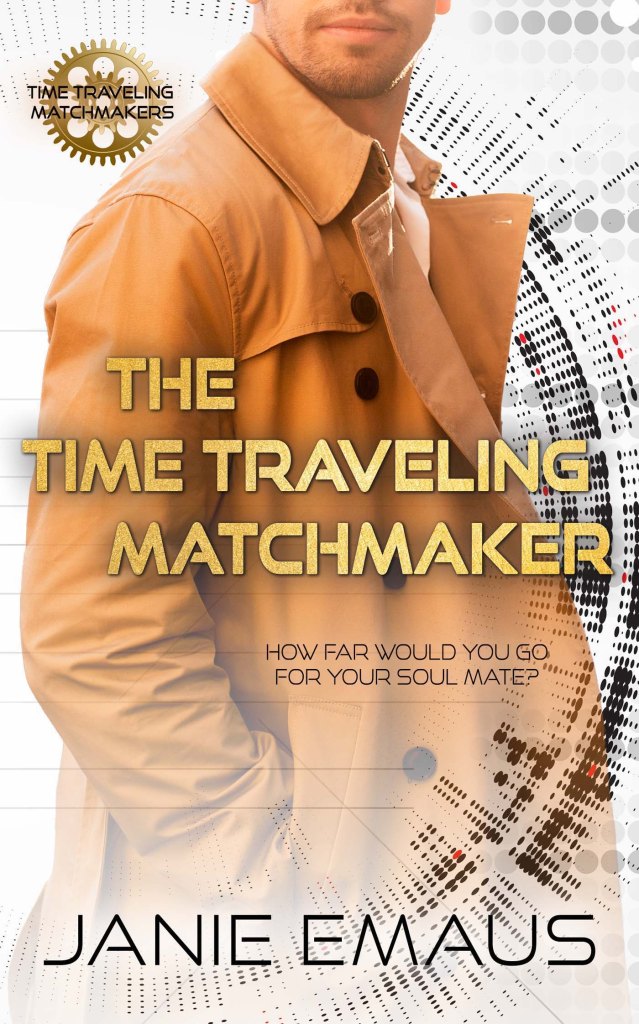
I’m happy to welcome Wild Rose Press author Janie Emaus. Today, Janie shares her creative journey and new release, The Time Traveling Matchmaker.

What was your inspiration for this book?

I’m a sucker for a happy ending. After hearing several news stories about missing people, I thought what if they weren’t being held against their will or in danger. What if they had been picked up by the Time Traveling Matchmakers and were living with their soul mate in a different time? And thus, The Time Traveling Matchmakers organization was founded.

What’s the best part of being an author? The worst

I love it when readers enjoy my books, blogs and essays. I don’t like the marketing and promotion part that is necessary so those readers know about my books.

Describe your writing space.

My office is “organized chaos! I write on a laptop which sits on an old desk. I’m surrounded by books and lots of photos. There is also a guest bed and a piano in the room, leaving a small path that leads to my desk. And when my characters join me, it gets very crowded. But it’s my favorite room in our house.

Besides writing and reading, what are some of your hobbies?

I love walking and swimming. Not only do they release the endorphins, but stories come to me while I’m doing laps or throwing a ball to my crazy lab.

Any advice for aspiring writers?

Perseverance. I sold my first book, Latkes for Santa Claus, after twenty years of trying. I gathered hundreds of rejections, but never lost faith in my story or myself. Shortly after that sale, I sold The Time Traveling Matchmaker. Also, join a critique group, read, and don’t be too hard on yourself if you don’t feel like writing every day.

What are you working on next?

I’m working on a women’s fiction book. Here is a short blurb. An aging rock star searching for an heir. Three women hiding from the past. A young girl searching for her identity. And the biographer with the power to write their futures. Will his quest be destructive or lead them back to The Notes Between Them?

As I said above, I’m going to persevere until I get this book into the world. My first husband was a drummer and I’ve always wanted to delve into that world.

Blurb

In The Time Traveling Matchmaker, love takes on a new meaning when soul mates are brought together through time and space.

Like every goal-oriented twenty-something, Jessica Singleton, an aspiring filmmaker, is obsessed with finding her future as quickly as possible. What she doesn’t know is that the future is obsessed with finding her, too. Renn Porter, an agent with Time Traveling Matchmaker’s Inc, blasts back in time – and into her life- in order to transport Jessica to the soul mate who has paid for this service…in the future. But things turn dangerous when it’s revealed that Renn has been sent after his own soul mate.

Caught between two times, Jessica and Renn must struggle to stay alive. Falling in love is the biggest risk either of them has ever taken – because, as they are destined to learn, the very existence of Time Traveling Matchmakers, Inc. rests in Jessica’s hands.

Excerpt

Ever was a word that didn’t do well alone. It goes much better with happily and after. The way my life used to be. The way I thought it never would be again after David, and then along came Renn. And the world opened up, even better than before.

His lips. His touch. His eyes. His voice. There wasn’t room in my mind for thoughts of anything else.

It didn’t matter that he claimed he came from the future. Maybe he did. So many things in this world defy logic. Especially love.

Please, God, bring him back to me.

My stomach growled. I opened the fridge again and picked up the healthiest looking apple, one without any bruises.

The apple tasted sour. I spit the skin into my hand and tossed the whole thing in the trash. The fabric in my pocket grew warm.

“Jessica.”

I spun around. Renn leaned against the wall, his trench coat open to expose a silky blue shirt. His lemony scent drifted into the room.

“It’s you,” I said, stating the obvious and feeling foolish for doing so.

His smile filled me with lightness.

“It’s me,” he said, as if he’d just returned from the store. In fact, he held a bag of donuts.

Donuts! He vanishes out of the bathroom and materializes out of thin air the next day with donuts?

A second later, the bag fell to the ground, and I was in his arms, kissing him. Putting the ever back into my life.

Buy Links

Amazon | Barnes & Noble | Bookshop

Author Bio and Links

Janie Emaus believes when the world is falling apart, we’re just one laugh away from putting it together again. The Time Traveling Matchmaker is her debut adult novel. She is also the author of the blended holiday picture books, Latkes for Santa Claus, and the forthcoming Matzo Balls & Easter Eggs. Her essays, stories and articles have been published in numerous magazines, anthologies, and websites. In 2016 she won an honorary mention in the Erma Bombeck Writing competition.

Facebook | Twitter | Website | Instagram | Blog

Giveaway

Janie Emaus will be awarding a $50 Amazon or Barnes and Noble gift card to a randomly drawn winner via Rafflecopter during the tour. Find out more here.

Follow Janie on the rest of her Goddess Fish tour here.

10 Things I’ve Learned About Training Service Dogs

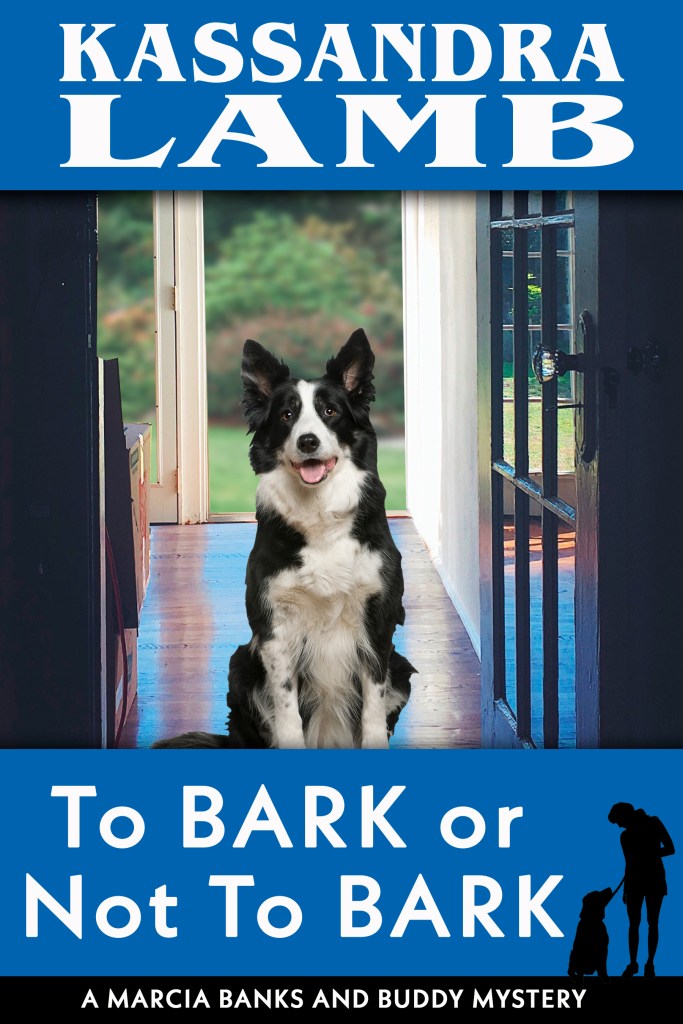
I’m happy to welcome back psychotherapist and author Kassandra Lamb. Today, Kassandra shares interesting information about training service dogs and her new release, To Bark or Not to Bark.

Here’s Kassandra!

When I set out to write a cozy mystery series about a service dog trainer, I didn’t quite realize what I was getting myself into. I assumed that, between my psychology background and having trained my own pets through the years, I’d be able to wing it when describing the tasks the dogs do and how my protagonist, Marcia (pronounced Mar-see-a, not Marsha) trains them.

I quickly discovered that, while my knowledge of behavior modification helped, I would need to do a considerable amount of research. Now, 12 books later, I’ve learned quite a lot about training service dogs, although I’m still far from an expert. Here are 10 things I’ve learned about training these dogs:

1. Pick the right dog.

Not just any dog can be a good service dog. The dogs need to have certain personality traits. They need to be intelligent, people-oriented and eager to please. But they cannot be easily distracted, particularly territorial, nor at all aggressive toward other dogs or strangers. Some service dog trainers, like my protagonist Marcia, prefer mixed breed dogs because they are often healthier and live longer. Otherwise, the breed usually depends on the needs of the eventual owner.

For example, Marcia trains dogs for military veterans, some of whom also have physical challenges. So she usually picks larger breeds that are strong enough to help a person who has fallen down and needs help getting up.

2. Teach/review basics like sit, lie down, come, and stay.

Of course, a service dog needs to have good manners, and teaching/reviewing these basics will give the trainer a sense of how easily the dog will learn the more complicated tasks.

3. Teach the on-duty signal.

First and foremost, the dog needs to know when they are on duty and should be paying close attention to their handler. The on-duty signal may be repeated at times to refocus the dog if s/he seems to be getting distracted.

For Marcia and the fictitious agency she trains for, I’ve borrowed the on-duty signal used by K9 for Warriors in Jacksonville, Florida—hand held parallel to the ground, palm down. The dog touches their nose to the palm to acknowledge that they are on duty.

4. Start with something dogs do naturally.

Dogs love to chase things, play tug-of-war, etc. Activities like these can be used as a jumping-off point when teaching a new task.

For example, to teach a dog to open cabinet or refrigerator doors, the trainer might tie a rope in a loop on the handle and encourage the dog to grab it and pull, giving a verbal command such as “open,” followed by a reward each time the dog pulls the door open. Then the trainer shortens the rope a little bit at a time, and repeats this whole process again, until the rope is wrapped tightly around the handle. Eventually, the trainer removes the rope and says, “Open.” A bright dog will grab the cabinet or fridge handle itself at this point.

5. Chunk it down.

More complicated tasks are broken down into sub-tasks and the dog is trained to do each of those. For example, Dolly, the dog in my new release, has been trained to “clear” a room and identify who is in the room, friend or stranger, before her phobic veteran enters.

Marcia and her assistant first taught Dolly to run into the room and around its perimeter, then come back to the door and sit. (The actual training of this dog occurred in the last book, One Flew Over the Chow-Chow’s Nest.) Next, they taught her to sit down in front of anyone who is in the room. Then they added a second person and taught her to sit for a few seconds, then go to the second person and sit there.

The toughest part of the task was getting Dolly to bark if she didn’t recognize the person’s scent. First, Carla, Marcia’s assistant, taught her to bark once on command. Then they had to recruit people the dog had never met to sit in the room. They gave the command to “bark” when the person was a stranger to her, but withheld that order when it was someone Dolly knew.

Since she is a border collie—thought to be the brightest of dog breeds—she eventually got it that she should only bark when she didn’t know that person’s scent.

6. Repetition, repetition, repetition.

As you can imagine, it would take a lot of repetition for Dolly to get that idea. But lots of repetition is also necessary so that the response to the commands becomes automatic for the dog (and later for his/her owner; the humans have to be trained, also, in how to work with the dog).

7. Always be clear about when the dog is on duty and when they are not.

The owner/handler needs to make a very clear distinction here. The dogs are taught a release signal that tells them they are off-duty, and the handler needs to expect the dog to be all-business until such time as that release signal is given.

But it’s also very important that the handler not allow the dog to be treated like a pet when they are on duty.

That is why one shouldn’t approach a service animal and try to pet or play with them. If you do that, you are making the owner/handler’s life more difficult, because they then have to work harder to keep the dog focused.

8. Make sure you are using the right rewards.

A word or two about rewards. Often the reward used is a food treat, but there may be other things used as well.

A lot of trainers use clickers. They teach the dog to associate the clicking sound with a treat, and over time, the click itself becomes a reward for the dog. I don’t have Marcia use a clicker because I honestly don’t know that much about them. Rather than make a mistake, I opted to have Marcia train for a woman, Mattie Jones, who is old-fashioned and doesn’t like clickers. (You can avoid all kinds of pitfalls when writing fiction, because it is fiction—you get to make stuff up.)

Some dogs do not respond well to food treats, believe it or not. Then the trainer has to figure out what else will motivate them. In one of my books, I decided to have Marcia make a mistake (to make her more realistic) and pick a dog that is not all that teachable. His name is Rocky and she decides it’s an apt name, since he seems as dumb as a rock.

But, as all too often happens when writing fiction, the characters took over and wrote that scene a little differently than I’d intended. Marcia is trying to teach Rocky the on-duty signal by holding a treat against the palm of her hand with her thumb.

This gets the dog to initially touch her palm. After several repetitions, the palm is held out without the treat and a bright dog will almost always touch it anyway. Then she gives the dog a treat with her other hand.

Rocky, however, took the treat from under her thumb initially but then lost interest and did nothing the next time she held out her hand. I don’t know if what happened next was Marcia’s idea or Rocky’s—but she held her hand out without a treat, and lo and behold, he touched it. She quickly praised him and he wagged his tail furiously.

Every time, she held out her hand, let him touch the palm, then immediately praised him, he was delighted. Eureka! Rocky wasn’t dumb, he was just more motivated by praise then by food treats.

9. Do not give rewards other than when the dog does a desired task.

Whatever reward the dog responds to best should only be given when the dog is on duty and does a desired task. Again, this is to avoid confusion.

If the reward is a food treat, then those treats are only given under these circumstances. Never randomly at other times. In Rocky’s case, Marcia had to be careful that she only told him he was a “good boy” when he was on duty.

10. Make the rewards intermittent.

This is something I already knew about behavior modification. After the desired behavior is deeply ingrained, the trainer only rewards it some of the time, not all of the time.

Why is this? Because, believe it or not, intermittent reinforcement works better than constant reinforcement.

If the dog is used to getting a treat every time they do something, then the treat is not forthcoming for several times, they will stop doing the task. But if the dog only receives a reward some of the times they do the task, then they come to expect that a reward will eventually appear if they keep doing the task.

This new book is the next to the last in the series, and I’m going to miss these characters (two- and four-legged). But I’m also going to miss learning more about service dogs and their training. To me, it is a truly fascinating subject.
Blurb

Service dog trainer Marcia Banks tackles a locked room mystery in a haunted house, while training the recipient of her latest dog.

The border collie, Dolly has been trained to clear rooms for an agoraphobic Marine who was ambushed in a bombed-out building. But the phantom attackers in his psyche become the least of his troubles when Marcia finds his ex-wife’s corpse in his master bedroom, with the door bolted from the inside.

Was it suicide or murder? Marcia can’t see her client as a killer, but the local sheriff can.

Then the Marine reports hearing his ex calling for him to join her on the other side of the grave. Is his house really haunted, or is he hallucinating?

Bottom line: Marcia has lost a client to suicide before. She’s not going to lose another!

Buy Links

Amazon | Nook | Apple | Kobo | Google Play

Author Bio and Links

In her youth, Kassandra Lamb had two great passions—psychology and writing. Advised that writers need day jobs—and being partial to eating—she studied psychology. Her career as a psychotherapist and college professor taught her much about the dark side of human nature, but also much about resilience, perseverance, and the healing power of laughter. Now retired, she spends most of her time in an alternate universe populated by her fictional characters. The portal to this universe (aka her computer) is located in North Central Florida where her husband and dog catch occasional glimpses of her.

Website | Blog | Facebook | Instagram | Pinterest | Amazon Author Page |
BookBub | Goodreads
Life Tips from Dandelions

On Wednesdays, I share posts, fables, songs, poems, quotations, TEDx Talks, cartoons, and books that have inspired and motivated me on my writing journey. I hope these posts will give writers, artists, and other creatives a mid-week boost.

Here’s a thought-provoking perspective from the Mind Fuel Daily Blog:

We can’t think of a few plants as famous as the dandelion. Who as a child didn’t blow on its soft puffball and watch the seeds float away? Unfortunately, dandelions don’t have the greatest reputation and are considered a nuisance by countless landscapers and gardeners.

But once you get to learning about dandelions, you’ll find they have a number of lessons to offer. Whether you find this plant a pesky presence or just another a beautiful part of nature, we’ve rounded up all the surprising life tips this flower has to teach.

Weeds…or Wishes?

Sometimes, the only difference between a flower and a weed is a matter of perspective. Some people look at dandelions and see a weedy menace. Others smile at its yellow blossom and look forward to making wishes with its puffy seeds. With dandelions, as in life, your attitude shapes everything. Choose to see the flower that grants wishes instead of weeds.

Be Useful

The dandelion is incredibly versatile. From stem to root, it’s entirely edible. Not only that, but it’s also been used for everything from folk medicine to dye. Dandelions also improve soil quality, leaving behind nitrous and other nutrients. Not too shabby for such a common plant, huh? The dandelion teaches us no matter how unassuming or ordinary we may seem; we actually have a whole lot to contribute to the world.

Adapt

Dandelions adapt easily and are able to grow in all sorts of soil types and conditions. And not just grow but flourish. This is partly why they’re so prevalent. In fact, dandelions are “pioneer plants”, those plants that are among the first to repopulate the soil after it’s been disturbed (like after a wildfire). In other words, dandelions make do even in the roughest situations. We know you can too.

Embrace Change, Let Go When Necessary

So many are familiar with the dandelion’s evolution from a yellow blossom to a white puffball. Once that soft tuft appears, the dandelion will soon release its seeds into the wind. Dandelions know that change is simply part of life, and just as important, they know when to let go.

Travel Far

Did you know? Dandelions seeds can travel up to five miles in the wind. That may not seem like much, but it’s pretty impressive when you learn that dandelions have nearly conquered the world. A brief history of this flower reveals they were once exclusive to Eurasia. Now? They grow on six different continents. Take a cue from the dandelion: go far and be willing to take on any new terrain.

Be Tenacious

Of course, dandelions are so commonly known as weeds because they are so pervasive and persistent. If you mow or cut them, they simply come back. Rip their roots out, and any remaining roots will simply grow more dandelions. While some might see this as a nuisance, we think this a prime lesson in determination! Be like the dandelion, be tenacious.

Source: Mind Fuel Daily Blog

Happy August!

In the original Roman calendar, the month of August was called Sextilis, meaning “the sixth month” in Latin. In 700 BC, January and February were added to the calendar, moving Sextilis to eighth place. The month was later renamed Augustus in honor of the first emperor of Rome, Caesar Augustus.

Here are ten more interesting facts about August:

1. The Anglo-Saxons called August “Weod Monath,” (Weed Month). During this month, weeds and plants grow the fastest in the northern hemisphere.

2. Most vegetables are ready to be harvested during this month. Tomatoes, peppers, cucumbers, and peas are at their freshest and most bountiful in August.

3. In a standard year, no other month begins on the same day of the week as August. In a leap year, August begins on the same day of the week as February.

4. August has two birth flowers: gladiolus and deep crimson poppy. The vibrant gladiolus flower represents generosity, strength of character, and deep sincerity, while the poppy flower is a sign of imagination, eternal sleep, and oblivion.

5. August has three birthstones: peridot, spinel, and sardonyx. Sardonyx, a stone that ranges from amber to bright green in color, was the original August birthstone. Due to its similar coloring, peridot was often mistaken for sardonyx, and was eventually adopted as the second August birthstone. Spinel was added as an alternate gemstone in 2016.

6. People born between August 1 and August 22 fall under the sign of Leo, while those born later in the month fall under Virgo. Leos are proud and display leadership qualities while Virgos are analytical and hardworking.

7. Famous people born in August include Barack Obama (August 4, 1961), Neil Armstrong (August 5, 1930), Lucille Ball (August 6, 1911), Viola Davis (August 11, 1965), Coco Chanel (August 19, 1883), and Warren Buffett (August 30, 1930).

8. August has been designated as National Panini Month, Peach Month, Sandwich Month, Harvest Month, National Water Quality Month, National Immunization Month, and Get Ready for Kindergarten Month.

9. The first sandwich was created on August 6, 1762. In the middle of a gambling game (he did not wish to interrupt), the Earl of Sandwich requested a dish involving meat between two pieces of bread.

10. On August 28, 1963, Martin Luther King Jr gave his famous “I Have a Dream” speech to 250,000 people on the steps of the Lincoln Memorial in Washington, D.C. Dr. King called for the end of racial discrimination and equal rights for all.