Stumbling Onto Success

dancing1

“If you stumble, make it part of the dance.”(Author Unknown)

When I came across this quotation on my Pinterest travels, I immediately pinned it and within minutes, others were repining and liking it. I also shared this message with my friends, many of whom tend to fixate on each snafu in their lives, often ignoring the bigger picture.

I recall one friend who spent almost an hour listing everything that had gone wrong at a recent event she had chaired. When I read the glowing write-up in the paper, I couldn’t believe it was the same event. No mention was made of the last-minute menu changes or frantic scramble to replace the emcee who had come down with the flu. Without realizing it, my friend just kept stumbling on and everything turned out for the best.

Much like what happened with many well-known inventions that were accidents stumbled upon by sloppy, distracted, and temperamental professionals.

Fried to a Crisp

As head chef at Carey Moon Lake House in Saratoga Springs (1853), George Crum catered to a wealthy clientele. One day, a customer complained about his potatoes and sent them back to the kitchen several times, suggesting they be cut thinner and fried longer. Crum lost his temper and decided to get back at the customer. He cut the potatoes extra thin, fried them until they were crisps, and salted them. To everyone’s surprise, the customer asked for a second helping. The news spread quickly about these Saratoga chips which later become known as potato chips.

saratoga1

All Covered in Goo

In 1879, chemist Constantin Fahlberg was experimenting with new uses for coal tar. He became so engrossed in his research that he forgot about his supper. Hungry and tired, he rushed out of the lab, forgetting to wash his hands. While eating, he noticed that his bread tasted unusually sweet. When he wiped his mustache with a napkin, he found the napkin tasted sweet as well. Curious, he stuck his thumb in his mouth and tasted more of the sweetness. He returned to the laboratory where he tasted every beaker and dish until he found the one that contained saccharin.

artificial-sweeteners.jpg

Unwashed Dishes

In his haste to leave for a long overdue vacation, Alexander Fleming did not bother washing any of the dirty petri dishes stacked up at his workstation. When he returned from his holiday, he discovered that most had been contaminated. While dumping the dishes in a large vat of Lysol, one dish caught his eye. The dish was practically all covered in colonies of bacteria, except for one area where a blob of mold was growing. After close examination, he saw that the mold had blocked the bacteria from growing. He concluded that this mold—later called penicillin—could be used to kill a wide range of bacteria.


penicillin2

Movie Review: The Zookeeper’s Wife

Based on the bestselling book by Diane Ackerman, this movie chronicles the efforts of Antonina Zabinski, brilliantly played by Jessica Chastain, and her husband Dr. Jan Zabinski (Johan Heldenbergh) to save 300 Jews during WWII. They ran a covert operation in which Jews were smuggled out of the Warsaw ghetto and into their basement hideout, where they were hidden in cages and tunnels. Later, they were transported to safety.

While Dr. Zabinski fits the profile of a classic resistance fighter, Antonina demonstrates a different kind of heroism. Each day, she had to ensure the German soldiers surrounding the zoo didn’t suspect their operation. She was also forced to cultivate an uneasy relationship with Lutz Heck (Daniel Bruhl), the chief zoologist for the Nazi regime.

Antonina took her rescuer role several steps further, helping her guests survive emotionally, with their dignity intact. Each evening, after the soldiers left the zoo, she would sneak them into the house for piano concerts, dinner, and conversation.

Jessica Chastain delivers an Oscar-worthy performance, capturing the essence of Antonina—from her Polish accent to her intuitiveness. Some of my favorite scenes involve Antonina interacting with the animals: nursing lion cubs and bicycling alongside a young camel.

Director Niki Caro and cinematographer Andrij Parekh have succeeded in recreating the authenticity of the period, meticulously attending to all details from the bombings to the ghetto conditions to the effects of war on the zoo animals.

A must-see film!


Another Sneak Peek…

Last Friday, I shared the first part of the prologue of Too Many Women in the Room. You can read it here.

Here’s Part 2 of the Prologue:

He forced himself to slow down and hoped she would catch up, maybe even overtake him. Before making a move, he wanted to get a lay of the land. No point putting on the moves if she didn’t measure up. Though lately, he’d been less discerning.

Twenty years ago—heck even ten years ago—women in their twenties and thirties returned his winks and smiles, often boldly and with no qualms about what followed. But turning fifty-five had brought those encounters to a virtual standstill, and he had tired of the chase. Was this a harbinger of what old age would look like?

Within seconds, a flash of black appeared at his side. He counted to ten and then gave her a sideways glance. A frown replaced the smile.

Definitely in shape, but she had always taken care of herself, not allowing an extra morsel of food to cross her lips and sticking to a daily exercise regimen. Her face…well, her face showed the passages of time. And tonight, without a trace of makeup, she appeared older than her years. Forty-five. No, fifty. More than fifty. He struggled with the math and gave up.

Head-to-toe black did nothing for her. Once upon a time he would have volunteered that information, but tonight he hesitated. He couldn’t be sure how she would react, especially after the debacle at dinner. He tried to recall what she had said, but nothing came to mind. Perhaps she had said nothing at all. It would be like her to hide behind her passive-aggressiveness.

He forced a smile. “I didn’t expect to see you.”

No response, just a constant gaze and an expressionless face that was starting to worry him. He tried to look away but couldn’t escape those odd-colored eyes. A muddy green with hints of amber. Had she worn contacts in her younger days?

Buy Links

Amazon (Canada) | Amazon (US) | Kobo | Indigo | The Wild Rose Press


Inspiration…Blowing in the Wind

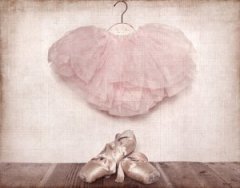
Pink tutus and pointe shoes.

Walls of mirrors and hours of practice.

The Nutcracker and Swan Lake.

These are the images that come to mind whenever we think of little girls and their ballerina dreams.


A world away and a world apart from Mabinty Bangura.

Born in Sierra Leone during the Civil War, Mabinty was orphaned at three years of age after her father was shot by rebels and her mother starved to death. Suffering from vitiligo, a skin condition that produced white freckles on her neck and chest, she was called a “devil’s child” by the other girls and women at the orphanage. Known as Number 27, Mabinty ranked at the very bottom of the orphanage’s ranking system. Her only companion was Mia, Number 26, who was shunned for being left-handed.

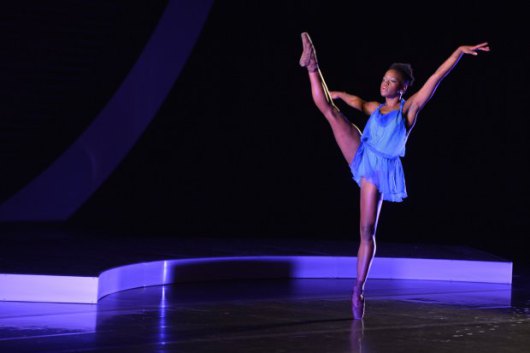
On a windy day, a magazine swept up against a fence in the orphanage yard. Fascinated by the beautiful young girl on the cover, Mabinty quickly tore it off and hid it under her clothes. Later she explained: “She was in this beautiful tutu and she was on pointe. And she looked so happy to me at the time, and it was perfect timing because I was going through so much and she gave me hope to keep going.”

When a couple from New Jersey arrived to adopt Mia, they decided to also adopt her defiant friend. Away from Sierra Leone, Mabinty realized she was finally in a safe place. She took out the magazine photo and showed it her new mother, who enrolled her in dance school.

Following the dream wasn’t always easy.

After preparing to play Marie in The Nutcracker, she was told that someone else would get the part because the world was not ready for a black Marie. Another instructor commented that she did not have the classic ballet body. At five feet four and a half inches, she was considered too short and her feet did not have that coveted classical line. And the pink and white standard colors for ballet wear clashed with her ebony complexion.

Undaunted, Mabinty (now known as Michaela DePrince) pressed on and worked hard to give her feet a classical line. Her mother hand-dyed her costume straps and pointe shoes a deep brown. At one point, Michaela did consider quitting ballet, but changed her mind after seeing black dancer Heidi Cruz perform with the Pennsylvania Ballet.

In 2012, eighteen-year-old Michaela De Prince became the youngest member of the acclaimed Dance Theater of Harlem. At eighteen, she joined the Dutch National Junior Company as a second-year member and apprentice to the main company. Three years later, Michaela was promoted to the rank of Grand Sujet for The Dutch National Ballet’s main company.

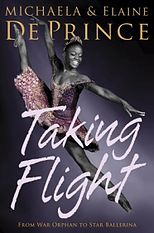
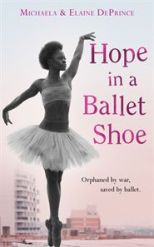
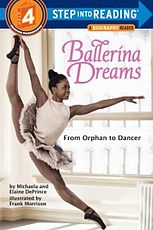
In 2013 Michaela collaborated with her mother to write her memoir, Taking Flight. The mother-daughter team has also worked together on Hope in a Ballet Shoe and Ballerina Dreams, a Step-into-Reading book for young readers between the ages of six and eight years old.


This amazing young woman, who radiates poise and quiet confidence, hopes to inspire other girls to purse ballet. In a recent interview, she said: “I take what’s in my past and put it in my body. My life is proof that no matter what situation you’re in, as long as you have a supportive family, you can achieve anything.”


Taking a Sneak Peek…

It’s official!

The Wild Rose Press will release Too Many Women in the Room on Friday, May 19, 2017. Today, and for the next two Fridays, I will share sneak peeks of the Prologue.

While the rest of the novel is written in the POV of the protagonist (Gilda Greco), the Prologue is written in the victim’s POV.

Here’s Part I of the Prologue:

He couldn’t believe he was following his wife’s advice. After twelve years of paying lip service to deep yoga breaths, mindfulness, and all the other New Age crap she espoused, he had finally found a use for it. His midnight run usually sorted out all the stress, but tonight was different. He still couldn’t shake the venom that had been directed his way.

To make matters worse, it had come from eight women, eight very different and very annoying women. He had bedded four, but right now he couldn’t imagine having sex with any of them. As for the untouched four, well, only one interested him, and it had nothing to do with her feminine wiles and everything to do with her healthy bank account.

He would have to take something to get through the night, something a lot stronger than his wife’s herbal teas. The remnants of an old Percocet prescription came to mind. Two capsules might do the trick. The thought of a panacea, albeit a chemical one, calmed his racing thoughts. A good night’s sleep would make a world of difference. And tomorrow, he would sort it out.

The light patter of feet distracted him. Definitely a woman’s gait. Her breath was even, neither shallow nor panting. Younger, maybe in her thirties. His pulse quickened, and a smile spread over his features. A welcome distraction. Just what he needed to erase the built-up stress. To hell with deep breathing, affirmations, and Percocet.

Buy Links

Amazon (Canada) | Amazon (US) | Kobo | Indigo | The Wild Rose Press


Life Lessons from Noah’s Ark

While writing this post, I’m enjoying a cup of my favorite tea–Flora Echinacea Elderberry with Cranberry and Rooibos–and smiling contentedly as I contemplate not going out in the rain. When it rains several days in a row, I prefer to stay warm and dry indoors.

The cool, wet weather motivates me to plan and work ahead. These past two days, I’ve filed and decluttered, cleaned my condo, written several posts and reviews, and worked on the launch of my upcoming cozy, Too Many Women in the Room. But improved work habits aren’t the only benefits to be gained from rainy days or the anticipation of rainy days.

Here are 9 life lessons from Noah’s Ark:

1. Plan ahead. It wasn’t raining when Noah built the Ark.

2. Stay fit. When you’re 60 years old, you may be asked to do something really big.

3. Remember that we are all in the same boat.

4. Don’t miss the boat.

5. Build your future on high ground.

6. For safety’s sake, travel in pairs.

7. Speed isn’t always an advantage. The snails were on board with the cheetahs.

8. When you are stressed, float awhile.

9. Remember, the Ark was built by amateurs; the Titanic by professionals.

Source: Inspirational Jokes

Happy National Find a Rainbow Day

Today is National Find a Rainbow Day, a time to reflect upon the beauty and magnificence of those multicolored arcs that remind us of the hope and possibilities that exist in Nature and in our own lives.

Here are my 10 favorite “rainbow” quotes:

Try to be a rainbow in someone’s cloud. Maya Angelou

There comes a point in your life when you realize your hardest times are your best times, too—you will see the rainbow of your life. Roy Bennett

And when it rains on your parade, look up rather than down. Without the rain, there would be no rainbow. G.K. Chesterton

If you want to see a rainbow you have to learn to see the rain. Paulo Coelho

When you reduce life to black and white, you never see rainbows. Rachel Houston

The way I see it, if you want the rainbow, you gotta put up with the rain.
Dolly Parton

One can enjoy a rainbow without necessarily forgetting the forces that made it. Mark Twain

Rainbows apologize for angry skies. Sylvia Voirol

My heart leaps up when I behold
A rainbow in the sky…
William Wordsworth

Don’t miss all the beautiful colors of the rainbow looking for that pot of gold. Author Unknown

Do you have a favorite “rainbow” quote?