10 Favorite Holiday Traditions

I’m happy to welcome author Linda Bradley to the Power of 10 series. Today, Linda shares her favorite holiday traditions and her latest release, A Montana Bound Christmas.

Here’s Linda!

1. A Fir Tree is the only tree for me. I love the mossy color, short soft needles, and woodsy aroma.

2. Decorate with loving care. My collection of ornaments includes vintage glass, handmade crafts my boys created as youngsters, a crocheted Santa that was my mother’s favorite childhood ornament, an eclectic brood of snowmen, a moose, and a ceramic disc depicting a girl catching snowflakes on her tongue. This ornament is on my latest book cover and was a gift. It reminds me of childhood dreams and pristine snowflakes that make winter shine.

3. Hang boughs of greens lit with white twinkle lights. White lights remind me of candlelit services, starry heavens, sleigh rides, and wonder.

4. Wrap the gifts in simple paper and rustic ribbon.

5. Give to the less fortunate. Donate clothing and toys for families in need.

6. Carry on traditions from my childhood. Cookies and letters for Santa, socks, underwear, new pajamas for little ones on Christmas Eve, and pecan sticky buns on Christmas morning.

7. Watch the original, cartoon version of How the Grinch Stole Christmas. My favorite scene is when the Grinch straps antlers on his dog. So comical! I don’t think my Maisey would go for that.

8. Watch A Charlie Brown Christmas. Love the music and the speech Linus gives.

9. Light a candle and say a prayer for peace.

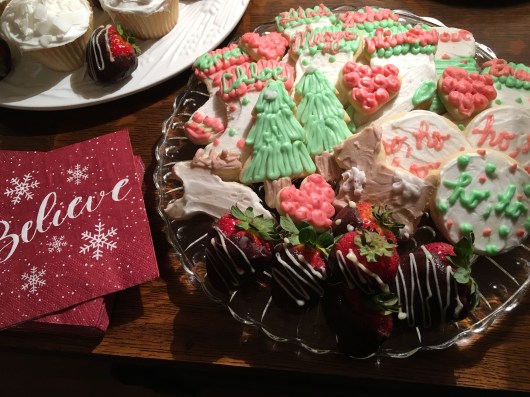
10. Bake cookies. And lots of them! I make the recipes my mom made with me as a child. Some of the family favorites are Humpty Dumpty Sugar Cookies, Shortbread, and Chocolate Chow Mein Cookies. This is a platter of cookies I baked for my A MONTANA BOUND CHRISTMAS: Ho, Ho, Home for the Holidays! book release party. This batch is complete with character names and book details.
Sugar Cookie Recipe from Humpty Dumpty Magazine

This recipe is most near and dear to my heart. My mother made these cookies every year. It meant staying up past bedtime and baking with the woman I loved most. Fond memories of unwrapping sticks of butter, measuring sugar, sniffing the scent of vanilla, the sound of my mother’s wedding ring clanking against the yellow glass bowl as she mixed, and the anticipation of Santa on Christmas Eve haven’t faded even though the recipe card has.

*I was unable to locate the Humpty-Dumpty Magazine issue this recipe came from. I believe it to be circa late 1950’s or early 1960’s.

Cream together:
½ cup butter
¾ cup granulated sugar

Beat in:
1 egg
1 teaspoon vanilla

Add and alternate:
1 Tablespoon milk
Dry flour mixture

Dry Flour Mixture:
Mix these ingredients in a separate bowl.
2 cups sifted flour
1½ teaspoons baking powder
½ salt

Chill overnight before rolling out and doing cut-outs.

Oven 400 degrees. Lightly greased cookie sheet. I prefer parchment paper. Bake 6-8 minutes.

Frosting
Cream together:
½ cup Crisco
1 teaspoon almond
½ teaspoon vanilla

Add 1-pound confection sugar. Add ice water until it’s the consistency you want. I add coloring and use piping bags to decorate the cut-outs.

*This frosting recipe came from a friend.

Several of my holiday traditions appear in A Montana Bound Christmas. White lights symbolize the spirit of Chloe McIntyre’s late grandmother. Maggie Abernathy and her mother Glad, love sugar cookies and I imagine they’d adore the recipe above. Grandfather, Winston Ludlow McIntyre wraps his gifts in Sunday funnies adorned with twine. Chloe’s father, John gets sentimental when he unwraps ornaments he’d made with his mother as a child. No one ties antlers to Bones’ thick head, but I suspect Chloe may contemplate the act.

The holidays have a way of sneaking into my heart when I least expect it. Regardless the weather and hustle and bustle…somehow I’m always reminded to Believe!

Blurb
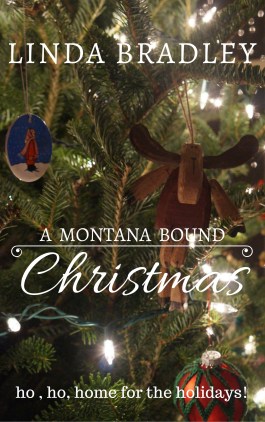
Chloe and John McIntyre await Maggie Abernathy’s arrival at the 617 Ranch, but snowfall has halted flights from Michigan to Montana. While Maggie and her mother prepare for a delayed departure, eight-year-old Chloe prepares for disappointment by inviting her Hollywood mother to the ranch in hopes of filling the void. Brook’s unexpected acceptance raises the stakes for John who longs for the perfect Christmas. This cast of misfits bands together in true Montana Bound style when unexpected guests arrive and a curious dog goes missing.

Here’s a five-star review I received on Amazon: “What fun! From the first chapter to the last, this story is a like a warm hug. Linda Bradley weaves the different worlds of each of the characters together in a rich tapestry that mirrors the story line itself. This could easily become a beloved holiday movie classic, if it were given the chance. Maggie, John and Chloe will feel as much like family to you as they do to each other. Open a wonderful gift of the holidays, when you open A Montana Bound Christmas.” – Annette Rochelle Aben, Amazon.com Bestselling Author

Excerpt

CHAPTER 1

John

“DAD, WHEN’S MAGGIE going to get here?” Chloe’s breath fogged up the picture window. Her gaze scanned the snowy Montana mountains. “I hope she makes it in time for Christmas.”
Ruffling Chloe’s dishwater-blond mane, I prayed like hell Maggie and her mother, Glad, would get here soon. Traveling had come to a halt across the country thanks to the winter storm, but at least Maggie and Glad were safe at home and not sleeping on some airport floor like the many interviewed on the news.

Feeling anxious, I massaged my temples. Wrapping my arms around Maggie and kissing her lips were the only Christmas presents I needed.

“Not sure, Pumpkin. Depends on the flights.”

Crossing paths with Maggie the summer before last was like finding a rose bush on top of a mountain while searching for gold. As much as she resisted, her heart finally won. We all won. Acquiring Glad in the deal was a bonus. Without hesitation, she’d taken a special liking to Chloe. They’d bonded instantly through their love of mischief. Glad was like the grandmother Chloe never had, and her sense of humor cut to the quick. Glad wore her heart on her sleeve and was the only one capable of giving Maggie a run for her money when Maggie needed a challenge. Glad was Maggie’s mother first and foremost, but their relationship—built on sarcastic wit, middle-naming, and genuine love—was most unique.

“Maggie has to get here.” Chloe drew a heart in the moisture on the frosty glass pane. She wrote her initials above Maggie’s, then she added a plus sign. “The snow is so thick you can barely see through it.” Chloe hummed a holiday tune between thoughts. “Just think, Dad, next year at this time, I’ll be nine and Maggie will have been here a whole year.”

Nudging the hat back from my brow, I thought about the woman who’d stolen my heart. I never dreamed in a million years I’d fall head over heels for my Michigan neighbor lady, Maggie Abernathy. Living in Grosse Pointe hadn’t been on my agenda originally, but the picture was crystal clear why I’d established residency in the Great Lake State before coming back to Montana. If I didn’t believe in fate before, I did now, and I wanted Maggie to get here as much as Chloe.

We had big plans of starting a life together and this was only the beginning.

“Why couldn’t Maggie and Glad come earlier?” When Chloe spoke, deep lines appeared along the bridge of her nose.

“I told you, Chloe, Maggie’s settling things with her house. Remember when we sold our house in Grosse Pointe? It takes time. Papers have to be signed, things need to be packed, and besides Maggie wanted to spend some extra time with her momma. You can understand that, right? When Christmas is over, Glad’ll fly home. I don’t think Maggie has ever really been apart from her momma.”

I lifted Chloe’s chin with my index finger. My daughter’s soul shimmered behind her green stare. Hope should’ve been Chloe’s middle name because my girl never gave up when the chips were down.

“Glad’s house is where Maggie grew up. Maggie’s saying her last goodbye.”

Chloe’s expression tugged at my heart like the snap of a lasso when wrangling a wild pony.

“I know what you mean. I don’t think I’ve ever gotten used to being apart from my momma, but maybe that’ll change someday. Hollywood sure is a far way away.”

Chloe’s momma was nothing like Maggie, and I wondered if I’d ever shed the guilt from our failed marriage that had left my daughter living with her old man. Chloe longed for a normal household, whatever that was in this day and age. Smiling at Chloe, I wished she’d see the well of hope I carried myself.

“I guess so, but I want Maggie to be here. It’s almost Christmas. We have so much to do.”

“I want Maggie here, too, Peanut, but it is what it is.” Resting my hands on Chloe’s thin shoulders, I prayed for the skies to clear so our Maggie’s arrival was sooner than later.

“Maggie promised she’d make cookies with me. Christmas will be here before you know it. This is our first Montana Christmas, and I want it to be perfect.” Chloe leaned her forehead against the window, closed her eyes then whispered in the sweetest of voices, “Please Lord, it’s me, Chloe. I know I can be kind of a pain, but can you please help Maggie and Glad get here, and fast?”

“Come here, Peanut.” Opening my arms, I scooped my little girl up. My cheek grazed hers. Nothing compared to her soft touch when pangs of disappointment bristled.

On the outside, my daughter was as tough as they come, but on the inside, she was soft and cuddly. Chloe rested her head against my shoulder, her warm breath like butterfly kisses upon my neck.

“Are you going to marry Maggie?”

“Without a doubt.” My heart pounded as I imagined sharing life with the woman I loved. “Don’t you worry.”

“Good,” Chloe whispered. “I can feel your heartbeat against mine. I think we both love her.”

“This is where Maggie needs to be, Peanut.” Holding my daughter tight, I breathed her in. She was a wee one, but something told me the years would pass in a blink of an eye if I wasn’t careful.

“I love you, Daddy.”
“I love you, too, Munchkin.”
Outside, heaping mounds of snow grew deeper with each passing hour. If Maggie and Glad couldn’t get to the 617 Ranch before Christmas morning this was going to be some Montana-bound holiday.

Where to find Linda…

Website | Amazon | Twitter | Facebook

Leave a comment – you could win an e-book of A Montana Bound Christmas.


At the Creative Spark Winter Market in Guelph

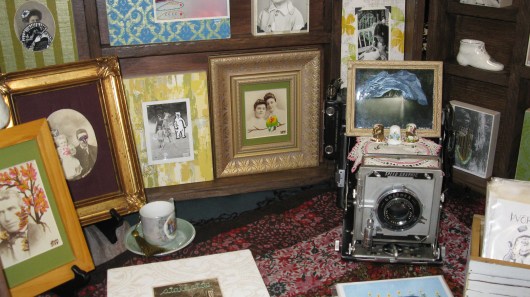
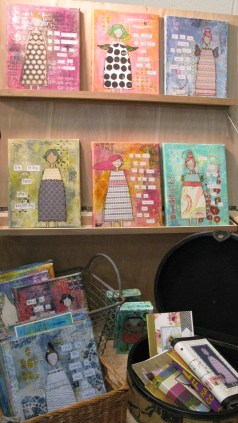
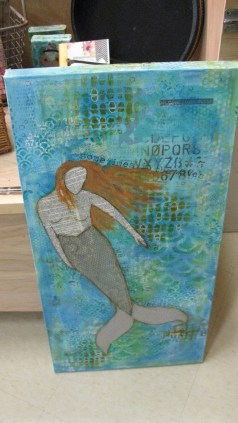
Yesterday, I treated myself to an artist date at the Creative Spark Winter Market. In its fifth year of operation, this annual event showcases the handcrafted goods of thirty-five local artists and artisans.

I was impressed by the wide variety of crafts featured, among them glass art, eco-friendly hair and body products, pottery, woodworking, paintings, and purses.


Everything You Always Wanted to Know About Gothic Suspense

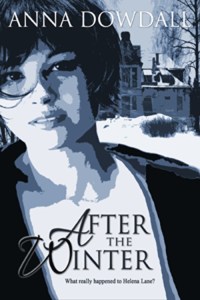
I’m happy to welcome Canadian mystery author Anna Dowdall to the Power of 10 series. Today, Anna shares her extensive knowledge of Gothic suspense and her novels, After the Winter and The Au Pair.

What the heck is it anyway?

Everybody knows this type of story! It often features a decaying mansion, an isolated yet curious heroine, family secrets, sometimes a child in peril, dramatic weather, disguise and switched identities, and let us not forget menacing and/or intellectually-compromised lower orders. The book covers usually capture at least some of these things. As for what it’s all about, Gothic suspense, says Stephen Knight in Crime Fiction since 1800, “has powerful appeal as a genre speaking about—and validating—individual feeling, including fear and horror… It… makes central the female experience of powerlessness and oppression, and links these emotive forces to places redolent of the past, the obscure, the mysterious…” Nowadays the Gothic heroine is enterprising, she rises to the threat. She’s a brave inquirer into toxic secrecy and domestic chaos. She perceives danger where others are oblivious. She’s no shrinking violet either, her determination to act is the means of resolving the mystery. Which is why I reward her with a handsome and marriageable man sometimes, along with other desirable things such cold hard cash.

What’s the crossover with this domestic noir thing you keep reading about?

I think it was the American editor Sarah Weinman (check out her book Troubled Daughters, Twisted Wives) who coined the term domestic noir, to describe some wonderful and under-recognized mid-century women writers who mix suspense and dangerous domestic scenarios and a female protagonist to tremendous effect. Writers like Ethel Lina White and Charlotte Armstrong. You have to go back a ways to discover that books like Gone Girl are really just standing on the shoulders of, imho, better antecedents. Lots of these domestic noir books are just saturated with Gothic mood, in a far from hokey way.

Why do you gravitate to it as a writer? What do you achieve with it?

Crime fiction is full of delicious cliches but some of the characters, especially in traditional hard-boiled tough-guy fiction, are pretty sexist. I want my Gothic ingenues, the ones wandering around the uncanny old house and picking up the “something is wrong” vibe, to have plenty of intellect as well as intuition. Also, I’ve taken the dangerous (because powerful) femme fatale cliche from old-school hard-boiled crime fiction and, after leading the reader down the garden path for a few hundred pages, turned it upside down. Plus, in my books femme fatales are actually allowed to live, they’re usually killed off! In fact, I like to mix up bedroom-eyed ingenues and soulful femme fatale types so you might have trouble distinguishing them by the time the book finishes. Sally Ryder in After the Winter might seem at first like just another ingenue on a romantic binge. But it’s her willingness to bend the rules and substitute other secrets for the ones she’s investigating that in the end gives her choices and decisions symbolic importance and moral weight, I hope.

How can escapist fiction be serious?

These conventions of the Gothic novel are perfect to explore the dangers that lurk within women’s domestic lives, and what is more serious and timely than that? Crime fiction in general allows writers to explore justice questions: questions like who really pays and who gets away with what. You can invest a fairly restrictive crime plot with as much social and moral significance as you want, for example by bending the conventions and changing the typical outcomes. You can present ideal revenges and undercut status quo justice outcomes that further victimize. That’s as good as Yann Martel and his talking tiger any day. What’s serious fiction anyway?

How does Canada lend itself to Gothic suspense?

Lots of bad weather (we know how to work those terrible winter storms), isolated countryside, brooding nature, big cities with seedy underbellies, ugly and/or suppressed history, and women on a mission.

What other writers flirt with its elements?

So many writers who are considered serious and literary have delved into the Gothic: all the Brontes, even Jane Austen in Northanger Abbey, our own Margaret Atwood and Nobel laureate Alice Munro. There’s that whole Ontario Gothic aspect in Munro, that atmosphere that’s creepy and clings. Although my books are so far situated in Quebec, I think I will have to mine that Ontario mood at some point, it’s just so rich.

You’ve described your genre as Gothic Cozy. Where does Cozy come into things?

That was probably a slightly playful description, but it’s meant to hit on a mix of things I go after. If I cited the British director Sally Wainwright, known to us all via Netflix, as an example of “feminist cozy,” people might question my judgment. But think of how her female victims find almost superhuman warrior strength to fight back, for example in Happy Valley. Or how Last Tango in Halifax presents a woman living happily ever after, with a certain light disregard for the spot of murder in her past. What’s cozier than that? My books After the Winter and The Au Pair explore the worst possible things that can happen to women and then contrive in the conclusion to leave most of the women characters in a much better place, for them if not for justice norms. That’s downright utopian in some respects, and in stark contrast to the real world. What I say, to myself and to readers, is this: let’s examine those unlikely outcomes, let’s indulge in the solace of dreaming about them as at least logically possible.


So where does romance fit in?

Sometimes the terms romantic suspense and Gothic suspense are used almost interchangeably, and there’s usually a romance plot in Gothic suspense. The novel without sex and love is pretty rare, but as a writer of Gothic suspense I note a certain unstated or semi-stated distinction out there between “good” noir crime stories, that take a suitably cold and manly approach to romance and women in general, and allegedly sappy romance-based stories. All I can say is this: in so many instances of good Gothic suspense that I’ve read, while there are pro-forma romantic endings which usually symbolize the resolution of the mystery plot, the underlying themes often have little to do with romance. And the heroine in many cases seems to me to be less motivated by romance and interest in men than by other things—work, self-respect, children and their safety, relationships with other women, cats, revenge, money, equality, sticking her nose in where it doesn’t belong, exorcising demons, her place in the world. You just have to dig down a little. Take Daphne Du Maurier’s Rebecca as an example: is the theme the triumph of love or is it a book about exacting justice across the grave?

Where is your writing going?

A very kind and old friend, who happens to be a professor of English at UC/Irvine, is convinced that I will write a dozen of these playfully dark little feminist genre novels and that over time I will delve so deeply into the Gothic and its possibilities that I will write myself out the other side. That could be. I have told myself however that I would write a half dozen. And even as I wander through the conventions, savouring, twisting and discarding as I go, it’s just as likely I’ll end up in some other type of light genre fiction as anything that would qualify as serious. When I think of my characters, I realize my effort is to make them mixed. I want them to have characteristics of their stereotype (I do love my genre), but also a certain mutability, with traits that defy and contradict the stock type. For example, Ashley Smeeton, my PI and series heroine beginning with The Au Pair, is likeable in a quirkily aloof way—she’s meant to be a foil to the emotional Gothic suspense plots she finds herself in. So far, so standard. But then, unlike stock detectives who never change, I find she’s far from impervious to contact with the uncanny. So I’m not entirely sure where she’s headed. I can say though that in book three Ashley’s unlikely to escape a psychic wound. Does that mean my writing is getting “weightier?” Maybe in the sense of number of words, because the third book seems well on the way to becoming a longer book.

What are your final words on the Gothic?

I invite you to check out my website at http://www.annadowdall.com, where I muse about everything Gothic-related, from Kim Novak’s charm as a femme fatale and Hillary Clinton’s appetite for escapist crime fiction, to the unknown western side entrance, down dark and little-noticed steps, to Toronto’s High Park, scene of the Margaret Millar 1945 classic The Iron Gates.

Bio

Anna Dowdall was born in Montreal and currently lives in Toronto. She’s been a reporter, a college lecturer and a horticultural advisor, as well as other things too numerous to mention/best forgotten. She was semi-finalist for the US Katherine Paterson YA prize and for Canada’s Arthur Ellis Award in the unpublished category. She reads obscure fiction in English and French and thinks Quebec is an underrecognized mise en scène for mystery and the Gothic. AFTER THE WINTER and THE AU PAIR are the first two books in her new suspense series, The Ashley Smeeton Files.

In the Final Stretch

On Wednesdays, I share posts, fables, songs, poems, quotations, TEDx Talks, cartoons, and books that have inspired and motivated me on my writing journey. I hope these posts will give writers, artists, and other creatives a mid-week boost.

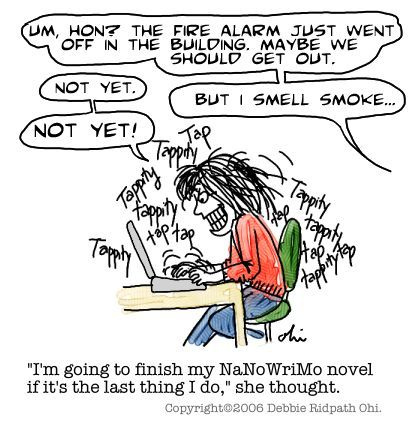
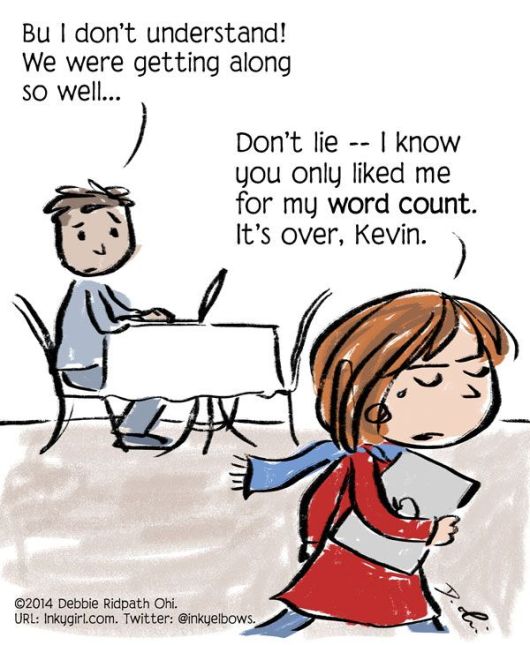
Tomorrow is the last day of the NaNoWriMo challenge. While some of us have achieved (and maybe even surpassed 50K words), others are in the final stretch, working hard to reach that final goal. Wherever you are on the NaNoWriMo journey, take some time to have a three-minute laughter vacation.


More #NaNoWriMo Success Stories

Last week, I shared four spectacular NaNoWriMo successes on the Sisterhood of Suspense blog. With only three days left in the challenge, I thought I would boost everyone’s morale with these additional success stories. I was inspired and motivated by the advice and takeaways from their NaNoWriMo journeys.

Alan Averill wrote the first chapter of The Beautiful Land several months before NaNoWriMo and then put aside the manuscript. When he learned that his friends were planning to participate in NaNoWriMo, he decided to join them. He wrote 60 percent of the novel and finished the rest in January. He credits the experience with helping him create a fast-paced book: “One of the great things about NaNo is that you don’t have time to think about what you’re doing. You’re basically a Writer Shark, and if you don’t keep swimming forward at all times, you’re going to die.”

In 2008, Marissa Meyer (author of Cinder) heard about a contest in which the Seattle-based writer who clocked in the most words during November would win a walk-on role in an upcoming episode of Star Trek. A chronic overachiever, Marissa took on the challenge and ended up writing three novels: Cinder (70,000), Scarlet (50,000), and Cress (30,000). Unfortunately, she didn’t place first but finished three novels that she polished over a two-year period. While much of the original material was scrapped, Marissa has no regrets: “I may not produce anything of quality during NaNoWriMo, but I always come away with a great road map.” She had offers of representation from three agents, and when the series went to auction, Macmillan’s Feiwel & Friends placed the winning bid.

Carrie Ryan started writing The Forest of Hands and Teeth during NaNo 2006. During that month, Carrie wrote between 20,000 and 30,000 words and then kept on writing afterward, finishing the first draft in April 2007. Later in 2007, Carrie sold the rights. The first of a trilogy, the book became a New York Times best-seller, and the film rights have been optioned by Seven Star Pictures. Carrie’s advice: “If you want to sell a book, you have to write a book. And if NaNo is what it takes to motivate you, then jump in with both feet. If you fail, the key is not to give up—the key is to keep writing.”

Stephanie Stuve-Bodeen wrote the first draft of The Compound during NaNo 2005. It then took six months to edit and polish the manuscript. The book sold to Feiwel and Friends in July 2006 and then went through another fourteen months of editorial revisions before final publication in late 2007. A long journey, filled with ups and downs, but definitely worth the wait. Seven more Young Adult books followed. Stephanie’s take-away: “This book is a symbol of how never giving up helped me realize a dream.”

ONWARD ♦ AVANTI ♦ EN AVANT ♦ WEITER ♦ ADELANTE


Keep Your Dream Alive

On Wednesdays, I share posts, fables, songs, poems, quotations, TEDx Talks, cartoons, and books that have inspired and motivated me on my writing journey. I hope these posts will give writers, artists, and other creatives a mid-week boost.

During my teaching years, I collected and shared inspirational and motivational literature. I have kept those files and refer to them often, especially during prolonged bouts of writer’s block. The following real-life success story from Monty Roberts is one of my all-time favorites. Monty shared this story with a group of visitors to his ranch.

A boy’s high school career was continually interrupted. He was the son of an itinerant horse trainer, who would go from stable to stable, race track to race track, farm to farm, and ranch to ranch, training horses.

During his senior year in high school, the boy was asked to write a paper about what he wanted to be and do when he grew up.

That night, he wrote a seven-page paper describing his goal of someday owning a horse ranch. He wrote about his dream in great detail and he even drew a diagram of a 200-acre ranch, showing the location of all the buildings, the stables, and the track. Then he drew a detailed floor plan for a 4,000-square-foot house that would sit on a 200-acre dream ranch.

He put a great deal of his heart into the project and the next day he handed it into his teacher. Two days later he received his paper back. On the front page was a large red F with a note that read, “See me after class.”

The boy went to see the teacher after class and asked, “Why did I receive an F?”

The teacher said, “This is an unrealistic dream for a young boy like you. You have no money. You come from an itinerant family. You have no resources. Owning a horse ranch requires a lot of money. You have to buy the land. You have to pay for the original breeding stock and later you’ll have to pay large stud fees. There’s no way you could ever do it.” Then the teacher added, “If you will rewrite this paper with a more realistic goal, I will reconsider your grade.”

The boy went home and thought about it long and hard. He asked his father what he should do. His father said, “Look, son, you have to make up your own mind on this. However, I think it is a very important decision for you.”

Finally, after sitting with it for a week, the boy turned in the same paper, making no changes at all.

He stated, “You can keep the F and I’ll keep my dream.”

Monty then turned to the assembled group and said, “I tell you this story because you are sitting in my 4,000-square-foot house in the middle of my 200-acre horse ranch. I still have that school paper framed over the fireplace.” He added, “The best part of the story is that two summers ago that same schoolteacher brought 30 kids to camp out on my ranch for a week.” When the teacher was leaving, he said, “Look, Monty, I can tell you this now. When I was your teacher, I was something of a dream stealer. During those years, I stole a lot of dreams. Fortunately, you had enough gumption not to give up on yours.”

Moral: Don’t let anyone steal your dreams. Follow your heart, no matter what. No Dream is too big or too small when one works hard to live it. One should always try making dreams come true no matter what.

Source: Moral Stories


Sharing #NaNoWriMo Success Stories

Completing 50,000 words in thirty days is a major achievement, one that hundreds of thousands of NaNoWriMo participants have set as their November goal for the past eighteen years.

While the end result will be part unreadable, part unfinished, and more than likely, error-ridden, the process often continues well beyond November. Many published books–including some very successful ones–started off as NaNoWriMo projects.

Continue reading on the Sisterhood of Suspense blog.