 Since July of 2013, I have shared the reinvention stories of over 100 women from across three continents. The eight women featured today have launched second acts as writers.
Continue reading on the Soul Mate Authors blog.
Since July of 2013, I have shared the reinvention stories of over 100 women from across three continents. The eight women featured today have launched second acts as writers.
Continue reading on the Soul Mate Authors blog.
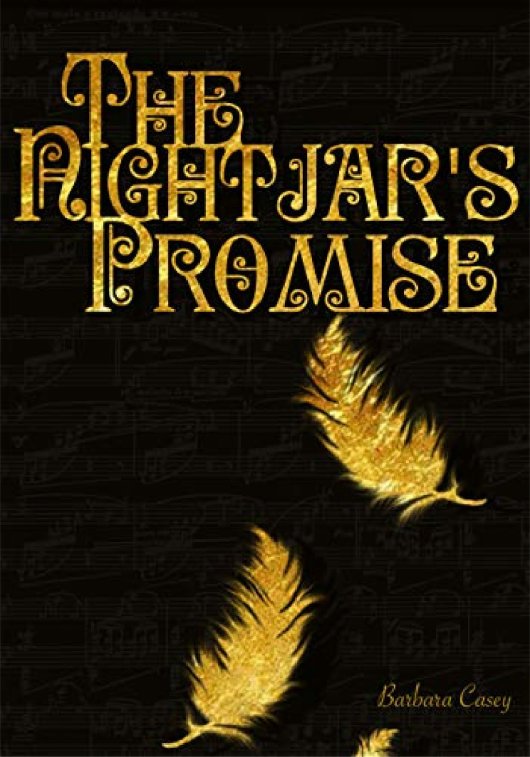
I’m happy to welcome author/agent/publisher Barbara Casey. Today, Barbara shares her latest release, The Nightjar’s Promise.
Blurb
Jennifer Torres, one of the three FIGs (Females of Intellectual Genius) who is a genius in both music and art, is the last to leave the closed rehearsal for her upcoming performance over Thanksgiving break at Carnegie Hall when she hears something in the darkened Hall. Recognizing the tilt of the woman’s head and the slight limp of the man as they hurry out an exit door, she realizes it is her parents who were supposedly killed in a terrible car accident when she was 15 years old.
Devastated and feeling betrayed, she sends a text to Carolina and the other two FIGs—THURGOOD. It is the code word they all agreed to use if ever one of them got into trouble or something happened that was too difficult to handle. They would all meet back at Carolina’s bungalow at Wood Rose Orphanage and Academy for Young Women to figure it out.
As soon as they receive the text, because of their genius, Dara starts thinking of words in ancient Hebrew, German, and Yiddish, while Mackenzie’s visions of unique math formulae keep bringing up the date October 11, 1943. That is the date during World War II when the Nazis—the Kunstschutz—looted the paintings of targeted wealthy Jewish families and hid them away under Hitler’s orders. And as Carolina waits for the FIGs to return to Wood Rose, she hears warnings from Lyuba, her gypsy mother, to watch for the nightjar, the ancient name for the whip-poor-will.
As they search for “The Nightjar’s Promise” and the truth surrounding it, Carolina and the FIGs come face to face with evil that threatens to destroy not only their genius, but their very lives.
Excerpt
Right on time, the guard arrived at the front gate and unlocked it. Once he drove away, Jas slipped unnoticed through the entrance into the cemetery. When he had first been given the assignment, the cemetery bothered him, especially the mausoleum. Unfamiliar sounds and smells, being surrounded by cold stones and even colder death, made his imagination work overtime so that by the end of each day when he left—just before the guard locked the gate—he would be nervous and irritable; at night, unable to sleep. Now, after all this time doing the same thing day in and day out, he was used to it. In fact, he sort of enjoyed it—thinking about the dead and all the different ways their lives might have come to an end. Lately, his imagination had taken a more brutal turn. More violent and macabre.
Ignoring the hundreds of grave sites that stretched in every direction, he quickly made his way toward the mausoleum. Having already been there many times before, he knew exactly where he wanted to go and what he needed to do.
Ten Interesting Things About My Protagonists
1. Dara Roux – abandoned when she was 7 years old by her mother. Exceptionally gifted in foreign languages. Orphan.
2. Mackenzie Yarborough – No record of her parents or where she was born. Exceptionally gifted in math and problem-solving. Orphan.
3. Jennifer Torres – Both parents killed in an automobile accident when she was 16. Exceptionally gifted in music and art. Orphan.
4. Carolina Lovel – Discovers on her 18th birthday that she was adopted. This fact helps her gain the trust and confidence and love of the three F.I.G.s when she is hired by the headmaster at Wood Rose Orphanage and Academy for Young Women to “keep the F.I.G.s on a short leash.”
5. The abandoned train car where Carolina and the F.I.G.s eventually find Dara’s mother in Book 2, The Wish Rider, actually exists beneath the train tracks underground at Grand Central Terminal in New York City.
Dara is the physically strongest and the most adventurous of the F.I.G.s. It is Dara who comes up with their “creative expressions” that keeps them in trouble with Headmaster Thurgood Harcourt. She also is more mentally equipped to accept those things over which she has no control. When she finally learns why her mother left her in the candy shop and never returned, she is able to find inner peace and move forward with her life.
6. In The Clock Flower, Mackenzie’s insecurities, such as her lisp when she becomes nervous or upset and her fear of rejection, become even more pronounced when she moves out of the protective stone walled environment of Wood Rose and away from close contact of Dara, Jennifer, and Carolina. As the answers to why she was placed in an orphanage at birth come to light, Mackenzie becomes a more confident young woman, and her insecurities disappear.
7. The Nightjar’s Promise connects Jennifer directly to that evil dark time in history when the Nazis plundered priceless works of art. This theme is based on my research into that period. The references to the music Jennifer creates, and to her art, are also based on correct musical and art terms and historical fact.
8. Carolina discovers that her biological parents are Gypsies. In fact her mother, Lyuba, is a choovihni—a wise woman, an exalted and envied position among gypsy women. The gypsy potions, herbs, and medicinals I talk about in The Cadence of Gypsies come from old books referencing gypsy customs and culture.
9. Probably one of my favorite characters in The F.I.G. Mysteries is Jimmy Bob Doake, the custodian and night watchman at Wood Rose Orphanage and Academy for Young Women. A simple man who only completed the 8th grade, he is a caring person and loyal employee who enjoys creating poetry during the “witches hours” when everyone is supposed to be asleep. That caring and loyalty extend into his natural love for animals.
10. When we first meet the F.I.G.s in Book 1, The Cadence of Gypsies, they are full of mischief, causing disruption and turmoil on the campus of Wood Rose, and intimidating the professors who teach there as well as the staff. With each book in the series, The Wish Rider, The Clock Flower, and The Nightjar’s Promise, Dara, Mackenzie, and Jennifer learn the truth about their lives, and they also develop a maturity and ability to survive away from the stone walls of Wood Rose and in a world where they are different. It is a journey that takes them into young adulthood, but not so much that they lose their spontaneity to create havoc. After all, they will always be the F.I.G.s!

Author and Bio Links
 Originally from Carrollton, Illinois, author/agent/publisher Barbara Casey attended the University of North Carolina, N.C. State University, and N.C. Wesleyan College where she received a BA degree, summa cum laude, with a double major in English and history. In 1978 she left her position as Director of Public Relations and Vice President of Development at North Carolina Wesleyan College to write full time and develop her own manuscript evaluation and editorial service. In 1995 she established the Barbara Casey Agency and since that time has represented authors from the United States, Great Britain, Canada, and Japan. In 2014, she became a partner with Strategic Media Books, an independent nonfiction publisher of true crime, where she oversees acquisitions, day-to-day operations, and book production.
Ms. Casey has written over a dozen award-winning books of fiction and nonfiction for both young adults and adults. The awards include the National Association of University Women Literary Award, the Sir Walter Raleigh Literary Award, the Independent Publisher Book Award, the Dana Award for Outstanding Novel, the IP Best Book for Regional Fiction, among others. Two of her nonfiction books have been optioned for major films, one of which is under contract.
Her award-winning articles, short stories, and poetry for adults have appeared in both national and international publications including the North Carolina Christian Advocate Magazine, The New East Magazine, the Raleigh (N.C.) News and Observer, the Rocky Mount (N.C.) Sunday Telegram, Dog Fancy, ByLine, The Christian Record, Skirt! Magazine, and True Story. A thirty-minute television special which Ms. Casey wrote and coordinated was broadcast on WRAL, Channel 5, in Raleigh, North Carolina. She also received special recognition for her editorial work on the English translations of Albanian children’s stories. Her award-winning science fiction short stories for adults are featured in The Cosmic Unicorn and CrossTime science fiction anthologies. Ms. Casey’s essays and other works appear in The Chrysalis Reader, the international literary journal of the Swedenborg Foundation, 221 One-Minute Monologues from Literature (Smith and Kraus Publishers), and A Cup of Comfort (Adams Media Corporation).
Ms. Casey is a former director of BookFest of the Palm Beaches, Florida, where she served as guest author and panelist. She has served as judge for the Pathfinder Literary Awards in Palm Beach and Martin Counties, Florida, and was the Florida Regional Advisor for the Society of Children’s Book Writers and Illustrators from 1991 through 2003. In 2018 Ms. Casey received the prestigious Albert Nelson Marquis Lifetime Achievement Award and Top Professional Award for her extensive experience and notable accomplishments in the field of publishing and other areas. She makes her home on the top of a mountain in northwest Georgia with her husband and three cats who adopted her, Homer, Reese and Earl Gray, Reese’s best friend.
Website – http://www.barbaracaseyagency.com
Giveaway
Barbara Casey will be awarding a $20 Amazon or Barnes and Noble gift card to a randomly drawn winner via Rafflecopter during the tour. Find out more here.
Follow Barbara on the rest of her Goddess Fish tour here.
On Wednesdays, I share posts, fables, songs, poems, quotations, TEDx Talks, cartoons, and books that have inspired and motivated me on my writing journey. I hope these posts will give writers, artists, and other creatives a mid-week boost.

I receive a daily dose of inspiration from bestselling authors and coaches Marc and Angel Chernoff. Here’s a timely segment from last Friday’s blog post:
Imagine you’re blindfolded and treading water in the center of a large swimming pool, and you’re struggling desperately to grab the edge of the pool that you think is nearby, but really it’s not—it’s far away. Trying to grab that imaginary edge is stressing you out, and tiring you out, as you splash around aimlessly trying to holding on to something that isn’t there.
Now imagine you pause, take a deep breath, and realize that there’s nothing nearby to hold on to. Just water around you. You can continue to struggle with grabbing at something that doesn’t exist… or you can accept that there’s only water around you, and relax, and float.
Truth be told, inner peace begins the moment you take a new breath and choose not to allow an uncontrollable event to dominate you in the present. You are not what happened to you. You are what you choose to become in this moment. Let go, breathe, and begin again.
Read the rest of the post here.
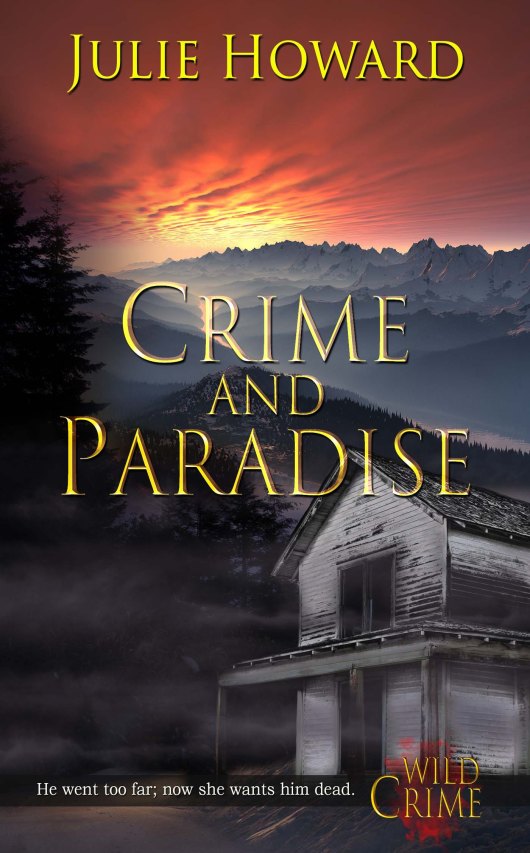
I’m happy to welcome Wild Rose Press author Julie Howard. Today, Julie shares tips on embedding carrots into recipes and her novel, Crime and Paradise.
Here’s Julie!
 Okay, this is a strange topic. But Joanne has this “top ten” list theme on her blog, and this came immediately to mind.
I love carrots. I love my children. But when my kids were little, they didn’t like carrots. As any good mother would do, I tricked them at every opportunity into eating plenty of these vitamin-laden vegetables. Over the years, I became an expert into sneaking carrots into recipes.
My children are now grown, but I still sneak carrots into a variety of dishes where they wouldn’t normally belong. Now I deal with a husband who hates cooked carrots, so I’m still up to my old tricks.
1. Chili – I dice them up and toss them in. They get soft during the hour or so the chili is on the stove or crockpot. With all the other strong flavors in chili – from garlic to red peppers – the carrots add a delicious hint of sweetness.
2. Enchiladas – Chicken enchiladas with a verde sauce is my favorite, but I love adding a hefty variety of vegetables to the mix. My enchiladas are 2/3rds veggies to 1/3 chicken, and of course I never forget the carrots.
3. Zucchini or pumpkin bread. It’s easy to add a little extra veggie to these breads, and grated carrots keep them moist.
4. Lasagna – Same as enchiladas. I dice them up, give them a quick saute, and sprinkle some in. I love adding a few extra veggies to lasagna, even zucchini or spinach. I’m careful not to overdo it though as too many veggies can make your lasagna watery.
5. Potato latkes – I don’t make these too often, but when I do, I grate some carrots in. They add a nice color to the savory pancakes and a bit of sweetness. I’m not sure why more people don’t do this.
6. Smoothies – You need to cook the carrots first so they are soft and will blend well into the rest of your ingredients. I’ll make a fruit smoothie and add in a carrot for extra vitamins, and you’d never know it was there.
7. Salads – I’ll grate a raw carrot and add to a salad. Those tiny orange tendrils add a beautiful color to a green salad without overwhelming the flavor.
8. Stuffing – This isn’t weird at all! I’ll microwave a carrot until it’s soft, dice it up and add it. Stuffing can be so bland so it’s just begging for some variety – like some carrots!
9. Jello salad – I’m not the first in my family to trick kids to eat carrots. My mother added shredded carrots to Jello salads all the time. This is a tried-and-true way to get kids to eat their vegetables.
10. Carrot cake – I’m going end this on a sweet note. I love carrot cake, a dessert that is unabashedly carrot-based. I learned quickly not to call it “carrot” cake when my kids were little. Anyone want some cake?
Voila! And eat your veggies.
Blurb
Meredith has been uprooted to the middle of nowhere with two kids and an abusive husband. After she fantasizes about ways to kill him, he ends up dead. Despite all the evidence pointing to her, Meredith finds an unlikely supporter and friend in the county sheriff. Together, they uncover some ugly truths about her husband and this small, isolated town.
Can Meredith make this place a new home for her family, or will the real secret behind her husband’s death send her away for good?

Amazon | Apple | Barnes and Noble
About the Author
Julie Howard is the author of the Wild Crime and Spirited Quest series. She is a former journalist and editor who has covered topics ranging from crime to cowboy poetry. Now she edits an online anthology, Potato Soup Journal, and spends many delightful hours writing her books.
Based on the memoir of Christian music star Jeremy Camp (K. J. Apa), I Still Believe chronicles the singer’s whirlwind romance with Melissa Henning (Britt Robertson).
Jeremy, a musically-gifted student from a financially-strapped Indiana family, meets his hero, Jean-Luc La Joie (Nathan Parsons), within hours of arriving at Calvary Chapel Bible College in Southern California. Flattered and somewhat amused by Jeremy’s enthusiasm, the successful Christian rocker takes him under his wing.
Thrilled to have Jean-Luc as a mentor, Jeremy quickly absorbs all his advice and begins writing “love songs to God—mostly to God.” Jeremy also becomes smitten by Melissa, a special friend of Jean-Luc’s. A romantic triangle involving Jean-Luc, Jeremy, and Melissa takes up much of the first act. When the truth emerges, there are hurt feelings and awkwardness but no passionate or violent episodes.
The characters reconcile when Melissa is diagnosed with Stage 3C ovarian cancer.
At age twenty, Jeremy takes a semester off. He stands by Melissa throughout chemo, surgeries, public and private praying sessions, remission, and a beautiful beach wedding. In the third act, the cancer return, and Jeremy experiences a spiritual crisis.
I was most impressed by Apa’s performance. He did his own singing and playing of Jeremy Camp’s real-life compositions. My favorite: the title track, his tribute to Melissa.
I would have liked more scenes with Jeremy’s parents (Gary Sinise and Shania Twain). While Gary Sinise delivers one emotional father-and-son scene toward the end of the film, Shania Twain remains in the background. A long-time fan, I would have loved to hear her sing one song with Jeremy.
An appearance by the real-life Jeremy Camp, his second wife, and three children brought an effective end to the roller-coaster of emotions.
An uplifting film!
Thanks to Sandy & Jim Hill for sharing this Isolation ABBA Medley.
On Wednesdays, I share posts, fables, songs, poems, quotations, TEDx Talks, cartoons, and books that have inspired and motivated me on my writing journey. I hope these posts will give writers, artists, and other creatives a mid-week boost.
Each Friday afternoon, I receive Funds for Writers, a free weekly newsletter from C. Hope Clark. Here’s a timely and thought-provoking reflection from a recent newsletter:
Before the COVID era, we moved like fish, the current and demands of survival directing us here and there to do what keeps us alive as writers. During this era, we aren’t certain what to do because the entire industry isn’t sure what to do. Even self-publishing, which was so sure of itself before the virus, hasn’t decided how to recuperate.
Now is the perfect time to decide who you intend to be as a writer.
But you don’t know what writing will be wanted, which publishers will still be alive, what topics will be in demand and which will have fallen off a cliff. But that is a good thing. You have no parameters. You have no directives. You have nobody telling you to write this or write that.
Now is probably the best, most wide-open time in your life to write what moves you.
I was told by a zillion people in my early years that nobody wanted to read Carolina Slade. Nobody liked a rural mystery. She was too quirky. I just turned in the fifth manuscript to the publisher, and a producer is working with a movie writer on a script.
The world doesn’t want more of the same. When it recovers from this virus, and when it starts shifting into a different normal way of life, there will be few rules of thumb. All will be different. That’s why you should start working on defining yourself now. Set goals. Work daily on those goals until they become habit. Suddenly you are a different person than before. . . probably closer to who you really are, because you have no shackles and no reins. You’re finally doing what you wanted to do.
Sign up to receive Hope’s newsletter here.
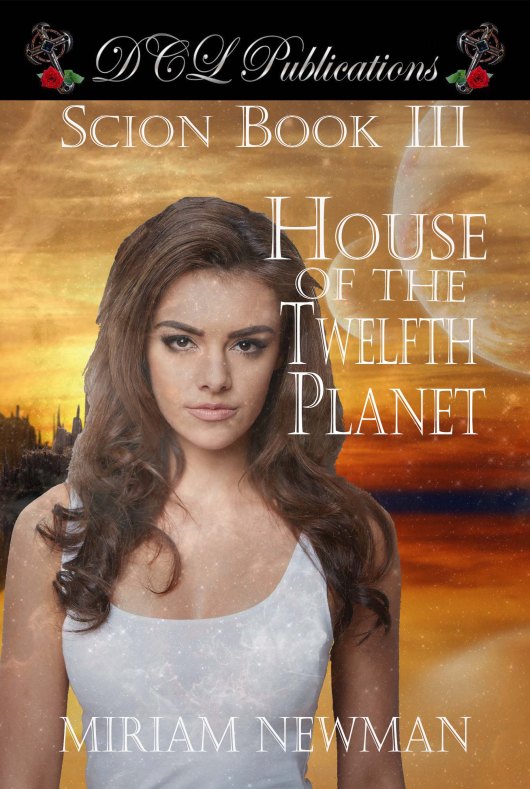
I’m happy to welcome poet and author Miriam Newman. Today, Miriam shares her latest release, House of the Twelfth Planet.
Blurb
To whom does Lela owe her loyalty: her own people or the Thelonian Lord who loves her?
Excerpt
Her last memory was of sleeping in Caius’s arms. Her first was of his face.
There were other faces, too—human faces unlike her Thelonian Lord’s. More like her own. Shrill beeping noises. Nearly unbearable lights and a cold, sharp smell.
“Just be patient a moment,” one of the human faces said. “We will have you out shortly.”
Out of where, Lela thought, but she could see hands and feel them on her, too. Strange sensations, not unpleasant, but…invading. Removing things from her skin. Through it all, Caius’s steady, calm voice kept her from utter panic.
“You are awakening from a long sleep,” he told her, and she could well believe it. How long could you sleep, to forget where you were and why?
“You are on board a space transport,” he told her. “I have been with you the whole time. Just let the crew help you.”
She lay still, hardly daring to blink.
“There,” a woman’s voice said cheerily. “All finished now. How do you feel?”
Lela’s stare fixed on her. A medico. Fully human, understandable, not a threat. Dimly, she remembered. This woman had given her a substance that made her sleep, with Caius in their tiny cabin accommodation. His heartbeat was the last thing she had felt before she slept. Now she was inside one of the sleeping pods she had seen the crew members use. They had gone into the long sleep, and so had she. There were others, around her, stirring and stepping out of their pods.
“Strange,” she told the medico, then looked past her to Caius. “How long have I slept?”
“Twelve years by our suns. But now we are coming into the orbit of Colony Twelve, where I believe the days and years are somewhat longer.”
She shook her head. She was a simple nonni-girl from Danaali, a farmer, not a learned person who would know such things. It was all very well for Caius to tell her. He had a law-giver’s degree. She was confused except for one thing: on Colony 12 she was no longer a slave.
Ten Things You Don’t Know About My Character
1) Caius was named by his father, a scholar familiar with Earth history who had an affinity for ancient Rome.
2) He is recognizably humanoid, but well over the height of an average denizen of Earth.
3) Like most Thelonians, Caius has caramel colored skin to protect him from Thelona’s two suns—the rising and ascending suns, equivalent to morning and afternoon.
4) Though his pupils are essentially normal and golden-colored by Earth standards, they can turn blood red under conditions of stress, temper or passion. This makes him intimidating to those unused to it—which is most of the universe.
5) He is the result of a political marriage between his parents—the requisite child to carry on the family name.
6) He was essentially raised by his parents’ slaves. In some ways, he incorporates their values superimposed on his patrician birthright.
7) The conflict with his parents that drove him still is not dead, even though his father is.
8) He once found a woman he could truly, deeply love and walked away from her. She married someone else.
9) He drinks too much and sleeps around too much, but he is secretly looking for the woman he will want to come home to.
10) He does not realize what a dangerous anarchist he is at heart—but other people do.
Buy Links
Amazon | Barnes and Noble | Lulu
Author Bio and Links
 Fantasy poetry driven by myths and legends has been my passion for as long as I can remember. I was published in poetry before catching the romance writing bug. I bring that background to my writing along with a lifelong addiction to horses, an 18-year career in various areas of psychiatric social services and many trips to Ireland, where I nurture my muse. My published works range from contemporary fantasy romance to fantasy historical, futuristic, science fiction and historical romance. Currently I live in rural Pennsylvania with a “motley crew” of rescue animals. You can see my books at http://www.miriamnewman.com.
Website | Celtic Rose Blog | Facebook | Twitter | Amazon
Giveaway
Miriam Newman will be awarding a $20 Amazon/Barnes & Noble gift card to a randomly drawn winner via Rafflecopter during the tour. Find out more here.
Follow Miriam on the rest of her Goddess Fish tour here.
 In 1999, Sue Monk Kidd considered writing a novel about the fictional wife of Jesus Christ but ended up talking herself out of this daunting task.
Fifteen years later, she mustered enough audacity to put pen to paper. After four and a half years of researching and writing, she produced a mesmerizing novel written in the first person.
From the start, Ana’s voice rings loud and clear: “I am Ana. I was the wife of Jesus ben Joseph of Nazareth. I called him Beloved, and he, laughing, called me Little Thunder.”
This was no ordinary woman.
Her father, Matthias, head scribe and counselor to Herod Antipas, suggests that her “talents were better suited for prophets and messiahs, for men who parted seas, built temples, and conferred with God on mountaintops.”
Her mother, Hadar, believes that a demon named Lilith had visited at birth and defiled Ana with unnatural tendencies.
Fortunately, Ana receives comfort and encouragement from her paternal Aunt Yaltha, a fascinating woman who experienced pain and tragedy but somehow found the courage to reassemble her broken life.
Inspired by Aunt Yaltha, Ana uses her formidable talents to chronicle the lives of neglected and silenced women. Her passion is evident throughout the novel: “To be ignored to be forgotten, this was the worst sadness of all. I swore an oath to set down their accomplishments and praise their flourishings, no matter how small.”
At age fifteen, Ana is forced to hide her parchments and scrolls and prepare for a betrothal to Nathaniel ben Hananiah, an elderly widower. At their first meeting in the marketplace, Ana faints and is rescued by a young, bearded man with remarkable eyes that exude generosity and kindness. Ana experiences an intense attraction: “My heart bounded up, along with an odd smelting in my thighs, as if my legs might give way once again.”
A series of unexpected circumstances (possibly manifested by Ana and Aunt Yaltha) follow, and the unwanted suitor dies from an illness. Considered a widow and defiled, Ana faces an uncertain future on the fringes of society. Another chance meeting with Jesus leads to a proposal. Anxious to be rid of Ana, her father gives his consent.
What follows is the author’s masterful attempt to fill that ten-year gap (ages 20 to 30) of Jesus Christ’s life. Ms. Kidd succeeds in demonstrating his humanity while downplaying his divinity. Jesus loves and worships God, but he is also determined to support his wife, mother, and family. Living in a crowded, multi-generational home has its challenges—limited funds, argumentative brothers, a resentful sister-in-law, a capricious goat—but Jesus rises above the fray.
The familiar events of Jesus’s life are retold through Ana’s eyes, as his wife and the sister of Judas Iscariot. Adding this twist to the narrative, created several subplots involving the conflicted man who would betray Jesus.
I highly recommend this compelling, multi-dimensional story about an extraordinary woman who refuses to be held back by a culture determined to keep her quiet and hidden.
Audio-Book Excerpt
Buy Links
Amazon (US) | Amazon (Canada) | Indigo | Barnes & Noble
Note: Sue Monk Kidd is hosting a virtual book club for The Book of Longings during the month of May. Find out more here.
On Wednesdays, I share posts, fables, songs, poems, quotations, TEDx Talks, cartoons, and books that have inspired and motivated me on my writing journey. I hope these posts will give writers, artists, and other creatives a mid-week boost.
Narrator Matilda Butler shares inspiration and writing tips from Stephen King and Virginia Woolf.

