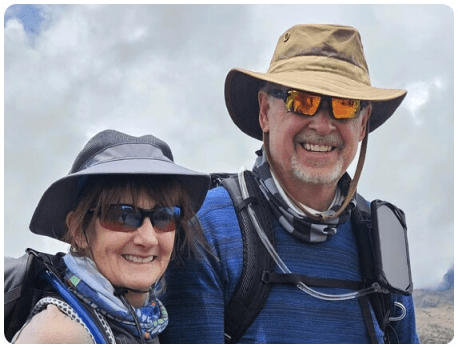
I’m happy to welcome author David Tindell. Today, David shares his new release, The Dance We Shared.
What was your inspiration for this book?
A couple of years ago, my wife Sue and I were watching a documentary about Garth Brooks. He discusses his career and his hit songs, and he talks about “The Dance,” one of his first #1 hits. Then he sings the song. It really hit home for me, because that song came out shortly before Sue and I started dating. I was working in radio at the time and occasionally would play the song on my show. Well, there was a point where I didn’t know if we were going to make it as a couple, and one morning during that low point I played the song, and it really hit me. Fortunately, everything worked out for us—we’ll be married 31 years this fall—but when the song came up in the documentary, it hit me again. I’d come close to losing the love of my life. How could I have gone on?
So, I started thinking about that. What would’ve happened if we hadn’t made it back then? I came up with the story of Ben Fletcher, a guy in his mid-50s, who lost Ronnie, the love of his life, 20 years ago due to a stupid mistake on his part. Ronnie married another man and moved away. Ben has recovered, sort of; he has a good job and makes a decent living, but he’s never fallen in love with another woman. Then one day when he’s cleaning his office, he finds an envelope. Inside is a card, with a phone number and three words in Ronnie’s handwriting: “Please help me.” Ben turns over the envelope and sees that it had been sent five years earlier…just at the time Ronnie disappeared.
What is the best part of being an author? The worst?
The best part is telling stories that are meaningful, as well as entertaining. My protagonists are people who are trying their best to live a life of honor, which is not an easy thing these days. I happen to think we’ve lost a lot in that area, so if my stories can inspire people, even a little bit, to be better, to care for one another and be willing to fight for a just cause, then I’ve succeeded.
The worst part? Well, I could say that the worst part is not cracking the best-seller lists or seeing my books made into movies or TV series, but let’s get real. Very few authors ever see that level of success. If you get into this because you want to make a lot of money, you’ll be frustrated and disappointed. It’s like any other kind of artist—musician, painter, sculptor, poet, you name it. You’re in it to create art, and if people admire it, want to buy it, all the better. So, I really don’t have a “worst part.”
Describe your writing space.
We’re in the process of building a new house here in southwest Wisconsin, so for the next year or so, my writing space is the kitchen table in our rented cabin. The new house will have a library, which is where I’ll have my “office,” if you will. I’m trying to be patient, but it can’t get here soon enough.
Which authors have inspired you?
I’ve been fortunate to meet and talk with some fine authors: Brad Thor, Mark Greaney, Kyle Mills, Jack Carr, William Kent Krueger, and others. Their work inspires me, but so do their words of encouragement.
What is your favorite quote?
“It is not the critic who counts…but the man who is actually in the arena.”
Theodore Roosevelt
If you had a superpower, what would it be?
Like any husband, I sometimes think that having the ability to read minds would be helpful, but if we’re looking at a Superman-type of power, it would be flying. Definitely flying. Although, to be honest, super-strength would be handier.
Besides writing and reading, what are some of your hobbies?
I trained in martial arts for about 20 years, earning black belts in taekwondo and Ryukyu kobujutsu, which is the study of Okinawan weaponry. My wife is also a black belt in that art, and we’ve both trained in karate. My own training has been more or less on the shelf the past couple years as I’ve dealt with some podiatry issues, but I intend to resolve those and get back on the mat as soon as possible.
I mentioned that we’re building a house, and we’ve relocated from the lake country of northwest Wisconsin to the Driftless Area of the state’s southwest. It’s a beautiful area and there are so many things to explore, so my wife and I are making that our new hobby.
Any advice for aspiring writers?
Steven Pressfield, author of Gates of Fire, had six words of advice that every writer should follow: “Get your ass in the chair.”
What are you working on next?
I have three series underway. The Dance We Shared is book 3 in the Men of Honor series. My next work will be on book 4 in the Quest series. Quest for Justice will follow the protagonists, Wisconsin brothers Jim and Mark Hayes, and their wives as they go to West Africa to help a group of missionaries who are being threatened by Marxist revolutionaries. Jim is an accomplished martial artist and Mark, his younger brother, is an Army combat veteran. They work for a Chicago-based security firm, and they’ll answer an appeal from a missionary who speaks at their church. It’ll turn out to be a lot more dangerous than just going into the jungle and escorting some folks back to civilization.
My White Vixen series is four books in, and book 5 will be The Black Orca, in which I send my heroine, US Air Force special operator Jo Ann Geary, to Antarctica to uncover the mystery of a sunken WW2 U-boat that may lead to a secret Nazi base that could still be operational, 35 years after the end of the war. (Sue and I are planning a trip to Antarctica for early ’28; I love doing research in the field!)
Finally, book 4 in MoH will be Man on a Mission. I’m still not sure what that’ll be about, but it will take place in Crawford County, here in the Driftless, and feature an appearance by Scott Armstrong, the protagonist in book 2, The Man in the Arena.
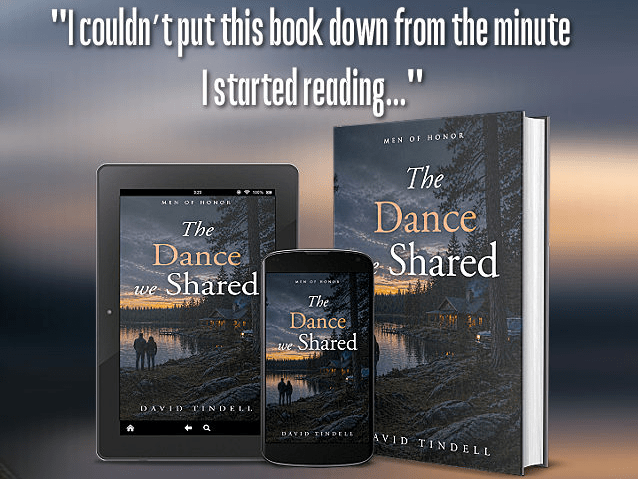
Blurb
Ben Fletcher seems to have it all going for him. In his early fifties, he’s in great shape thanks to a disciplined regimen of weight training, swimming and martial arts. He has a job that pays him a good living in the charming Wisconsin city of La Crosse. Divorced a quarter-century earlier, he remains close to his two grown children and grandkids. Ben is content with his life.
But he’s not happy. Twenty years ago, he was, during that glorious year and a half he was dating the glamorous Veronica Starr. They were an “item”: Ben, the city’s highest-rated radio announcer, and Ronnie, an award-winning TV newscaster. They were starting to talk about the future, one that would include marriage and kids. But then, Ben made a stupid mistake, and it all came crashing down. Ronnie broke off the relationship, met an older man and married him.
Within a year she was gone, moving with her new husband to the Twin Cities. Ben had no choice but to move on with his life the best he could.
One day, he’s cleaning out a file cabinet in his office and finds an old catalog. Before throwing it out, he riffles through its pages, and an envelope drops onto his desk. Opening it, he finds a card. In handwriting he immediately recognizes as Ronnie’s are a phone number and the words, “Please help me.” When he looks again at the envelope he sees the postmark: it had been sent five years earlier…just before Veronica Starr left her husband, quit her job and disappeared.
Excerpt
Please help me.
Three words. The first from her in…how long? They were definitely hers, though. Not in an email but real ink on paper, and not typed, but written, in her distinct, precise and very feminine cursive, with a phone number below. On the inside of a card, otherwise blank. On the face of the card, the Minneapolis skyline.
The square envelope, empty now, lay there on my desk, its face staring up at me. My office address, also in her hand. No return address, though. And the kicker: the postmark. The card had been sent from the Twin Cities almost exactly five years ago.
It was the start of a new week, and my first order of business for the morning was to clean out a filing cabinet that was due to be taken away, destined for a homeless shelter. The athletic director had emailed the staff, asking us to consider donating little-used office furniture to the cause. Today was the deadline to have stuff ready for a crew of students to haul away. The cabinet was an easy choice. As the media relations director for athletics at the University of Wisconsin-La Crosse, I had a lot of records, and since most of them now were electronic, I really had no use for this old gray clunker. What paper there was inside, I thought, could be sorted through, most of it discarded, the important stuff filed in the one remaining cabinet.
I’d pulled a catalog out of the bottom drawer, from some long-forgotten and probably shuttered sporting goods supplier and was just about to toss it into the trash bin when something—that’s all I can call it, something—prompted me to riffle through the pages. You never knew. And the envelope dropped out and onto my desk.
Getting something from the Twin Cities wasn’t out of the ordinary. Here in La Crosse, everybody was familiar with the Minnesota metropolis ninety minutes away. People listened to its radio stations and watched its TV channels, and went there for the shopping, college and pro sports, the theaters, and of course the airport. I went there only when work demanded it, and if I flew anywhere, it was usually out of the smaller airport in La Crosse, where I’d lived for the past quarter-century. I avoided the Cities because she worked there. Or used to, until she left. And it wasn’t as if she’d resigned from her high-visibility job as morning news anchor on the market’s highest-rated TV station and went somewhere else, maybe the network’s morning show in New York, which is where I always assumed she’d wind up.
No. It was five years ago, right after the date on the postmark, that Veronica Starr, the love of my life, vanished.
– Excerpted from The Dance We Shared by David Tindell, KDP, 2026. Reprinted with permission.
About the Author
David Tindell was born in Germany and grew up in southwest Wisconsin. Together with his wife Sue, he’s traveled the world, seeking new locales for his novels. He trains in the martial arts, dabbles in radio and joins Sue in the never-ending search for the perfect chai tea latte.
His latest book is The Dance We Shared (Book 3 in Men of Honor). Other books include The Heights of Valor (Book 1 in Men of Honor) and The Man In the Arena (Book 3 in Men of Honor).
Website | X | Facebook | Instagram







 Joanne Guidoccio