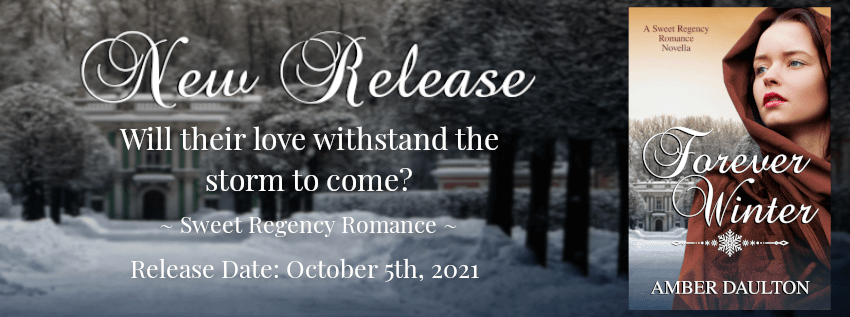
I’m happy to welcome back multi-published author, Amber Daulton. Today, Amber shares interesting facts about her new release, Forever Winter.
Here’s Amber!
 Thank you for letting me visit today, Joanne. I’m excited to share ten awesome facts about my new release.
1. Forever Winter isn’t a new book. Not really. It was originally published in a Christmas-themed anthology with Bradley Publishing back in 2012. The publisher went under two months after the release, but luckily, one of the authors I met who also wrote for Bradley suggested I submit my story to her other publisher, Books to Go Now. Thankfully, BTGN accepted Forever Winter in 2013 and re-released it as an individual book. It stayed there for years until the rights reverted to me a few months back.
2. Forever Winter is my debut book.
3. I’ve given it a makeover with a fresh cover and edit for the re-release. I’ve also added a new subplot, which carries strongly throughout the book. Honestly, I don’t know why I didn’t think of it when I first wrote the book almost ten years ago.
4. I love graphic design, so I created the cover for Forever Winter myself. After a couple failed attempts and repeat visits to the drawing board, I finally created something I really liked that also got great feedback from the artists and authors in my book design groups.
5. I prefer to write sensual to smoking hot romance, but Forever Winter is one of two sweet, no on-page sex stories in my backlist. (The other is Lightning Over Bennett Ranch.)
6. I love historical romances, and the Regency period is one of my favorite eras. Most Regency books take place in the heyday of the era—between 1811-1820—but the time period typically ranges from 1795 to 1837. Anyway, Forever Winter is set in 1834, an oddity in the world of Regency romances.
7. Most romance books begin with the protagonists meeting and falling in love with maybe a quick, sappy wedding ceremony before the book ends. Not so in Forever Winter! The reader meets Susanna and Camden on their wedding day. They’ve already courted for a year and are now ready to begin their married life together. Don’t let this put you off from the book, though! It’s a complete, standalone novella that focuses on a single day in the lives of two people who are madly in love.
8. Weddings in the Regency period were typically low-key affairs for the common-folk and just a little better for the wealthy. Most took place in a church before noon, but if you obtained a special license—which was very expensive—you could marry wherever you wanted at whatever time you liked. In addition to the bride, groom, priest, and two witnesses being present, family and friends could of course attend, but few people traveled to attend a ceremony. It was just too expensive, difficult, and time consuming to travel from town to town or clear across the country to witness an event that would be over in less than an hour. There wasn’t a big to-do about the flowers, seating arrangement, or the dress, though some wealthy women did buy a new dress for the ceremony, which they later wore as a regular dress. In Forever Winter, Camden purchases a special license and Susanna orders a new dress, but their big day doesn’t compare to the extravaganzas lots of people throw today.
9. Susanna and Camden’s wedding day tanks! Everything that could go wrong, goes wrong in a spectacular fashion. If I were Susanna, I probably would’ve postponed the wedding, but she didn’t have that option—not as a young woman living under the strict rules of 19th century England. Poor girl.
10. Forever Winter shows the strength of love, friendship, and mutual respect in the face of adversity and that no matter what happens, love will prevail.

Synopsis
A perfect Christmas wedding, a snowstorm, and a shocking secret. What could go wrong?
Susanna Lorican must marry the man she loves before the truth is discovered, or face the gossip of the ton. With an unexpected snowstorm injuring the minister, her future hangs in the balance.
Viscount Camden Beckinworth vows to keep his bride safe, even if he must betray her confidence. When their love is put to the test, how will he uphold her honor without jeopardizing his own?
– Warning: this sweet, complete Regency romance novella features a brief scene where the heroine is assaulted.
– Second edition. Newly revised and edited.
Tagline
Will their love withstand the storm to come?

Excerpt
“Susanna, please, talk to me. Let me know your thoughts.”
He grasped her arms in a firm but gentle hold. Did he expect her to flee rather than confide in him? She couldn’t lie to him, nor did she want to. The truth spilled from her lips in a rush—her shame, her frustration, her anger. Everything poured out of her, except for the most precious reason of all.
“Oh, my darling.” He pressed her close to his chest.
She sniffled. His rich scent of smoke and pure male radiated from him in a soothing balm she scarcely deserved. “I-I planned the perfect wedding but never imagined things might go wrong. I didn’t consider anyone but myself. If I could change what I did, I would, but it’s too late. Too much is underway.” She gritted her teeth and pulled back from Camden’s embrace. She wrapped her arms around her churning stomach and paced again.
As Camden rubbed his creased brow, she bit back a cry of frustration. He tried so hard to be patient with her. Every fiber in his body probably urged him to snatch her arm, pin her against his chest, and kiss her until she melted in a puddle at his feet. She almost wished he would. Who cared about the gossip that might ensue if someone caught them in the act?
“You were right.” Susanna pressed her knuckles against her aching temples. “Mama was right. A spring wedding would have been wonderful, but with my luck, these catastrophes would have happened regardless.”
“There is always the possibility of something bad happening—rain, wind, anything. The dress still might have been late, or a highwayman could have robbed the coach and stolen it. The reverend could have fallen from his horse on a dry road.”
His words rang with truth, but the misery clenching her heart doubled.
Camden blocked her path. “I’m glad you chose today, the anniversary of the day my life changed for the better. I will never forget your blue muslin dress, or how you moaned over your hurt ankle then clammed up when you saw me. You were so stubborn, so beautiful, that I lost my voice. I had never truly seen you until that moment.”
She flushed warm as the memory calmed her racing heart.
She’d been playing with a few of the servants’ children in the courtyard when she fell and twisted her ankle. While the children hurried off to find help, Camden found her and carried her inside. They were inseparable for the rest of the evening. Though his kiss in the library startled her so much that she’d slapped him, her heart had soared and nearly split her rib cage.
He suckled her lower lip between his teeth until a moan escaped her throat. He pulled back and stared deep into her eyes. “You are so kind, darling. I wish you realized that.”
“How could you believe such a falsehood? I’m selfish and—”
“Would a selfish woman invite servants to her wedding, and their brood?” He cupped her cheek. “Of course not. You wanted them to enjoy this day too. I have seen the way the children—both your flesh and blood and the others—gravitate to you. Your goodness calls to them.” He tapped his palm on her upper chest, right above her heart. “If something else happens and prohibits our union, God forbid, we will marry as soon as possible. Nothing will keep me away from you.” He hooked a stray lock of her hair behind her ear and lowered his mouth to hers.
Add to Goodreads – https://bit.ly/foreverwintergoodreads
Check it out on BookBub – https://bit.ly/foreverwinterbookbub
Purchase Links
Amazon | Barnes and Noble | Kobo | Apple/iBooks | Google Play
About the Author
Amber Daulton is the author of the romantic-suspense series Arresting Onyx and several standalone novellas. Her books are published through Daulton Publishing, The Wild Rose Press, and Books to Go Now, and are available in ebook, print on demand, audio, and foreign language formats.
She lives in North Carolina with her husband and demanding cats.
Universal link – https://linktr.ee/AmberDaulton


 D. Lieber has a wanderlust that would make a butterfly envious. When she isn’t planning her next physical adventure, she’s recklessly jumping from one fictional world to another. Her love of reading led her to earn a Bachelor’s in English from Wright State University.
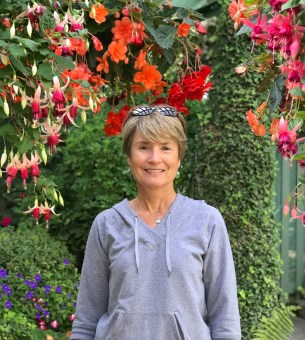 Thank you, Joanne, for hosting me today! This is a lucky day for me because my eighth book, The Three Widows of Wylder, releases today.

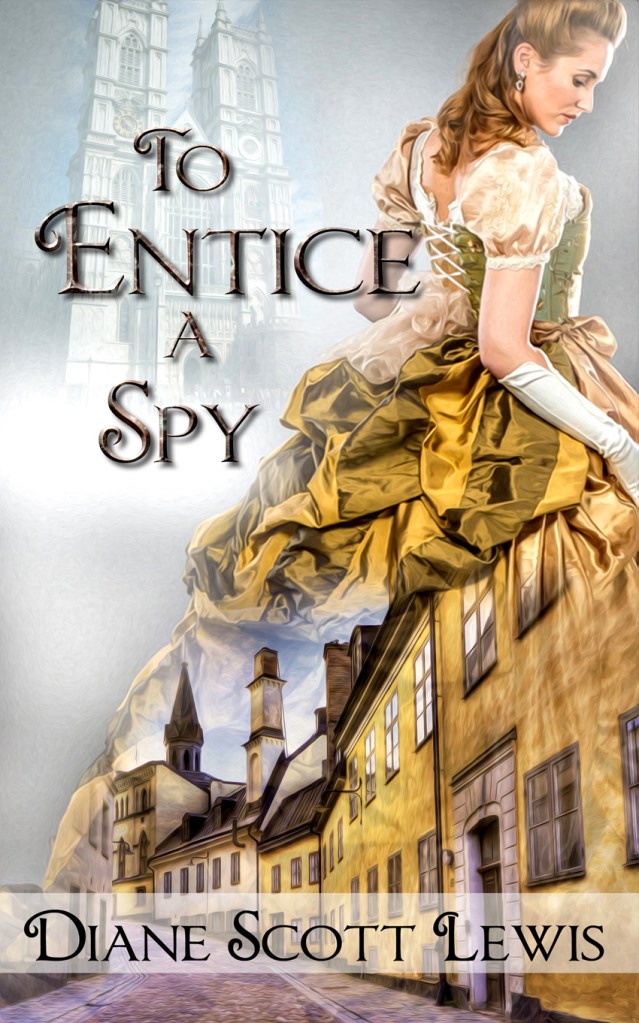
 Diane Parkinson (Diane Scott Lewis) grew up near San Francisco, joined the Navy at nineteen, married in Greece and raised two sons in Puerto Rico, California, and Guam. She’s a member of the Historical Novel Society and wrote book reviews for their magazine. She’s always loved travel and history and has had several historical novels published. Her most recent is the Oyster War Novel set in the 1950s: Ghost Point.

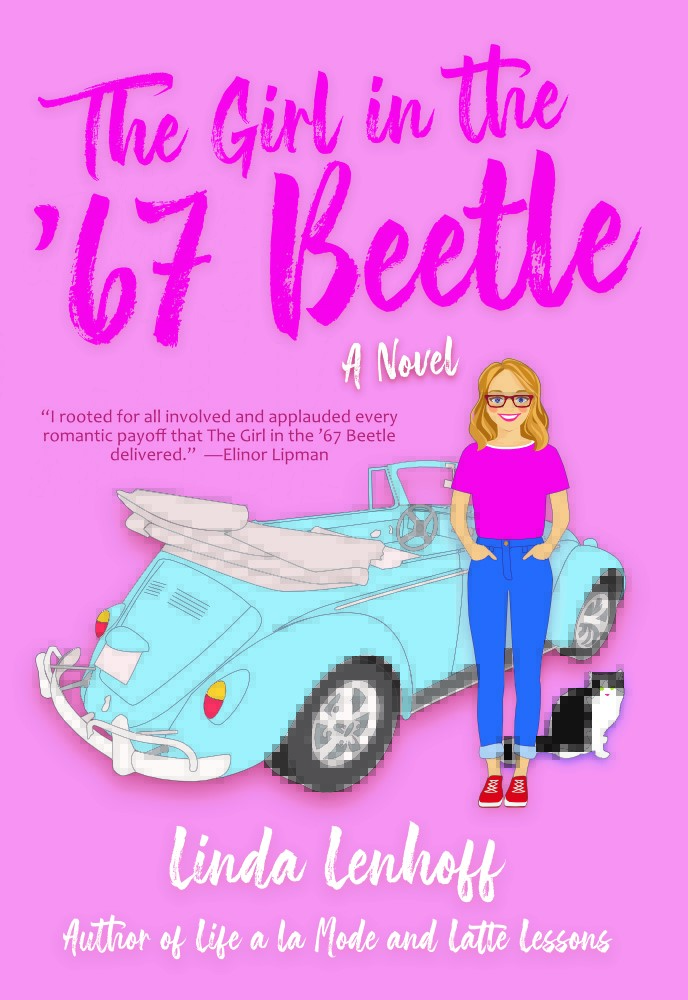
 Linda Lenhoff has worked in publishing as a writer and editor for several years, having edited nearly everything from makeup techniques (apply blush up and over the “apples” of your cheeks) at Seventeen Magazine to migraine studies (cut back on that chocolate) at research institutes. She has earned an MFA in Creative Writing, and her next novel, *Your Actual Life May Vary, will be published in 2022. Linda lives in California’s Bay Area with her husband and daughter.
