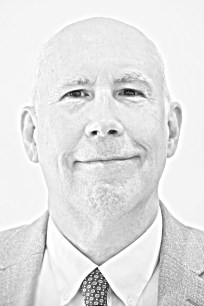
I’m happy to welcome award-winning author Edward Parr. Today, Edward shares his creative journey and new release, Tamanrasset: Crossroads of the Nomad.
Here’s Edward!
 Do you ever wish you were someone else? Who?
When I’m writing, I frequently imagine I am someone else. Since I write primarily from one character’s Point of View at a time, I need, in the same way that the theater guru Konstantin Stanislavski would have required were I performing each part in a play, to imagine what I would feel and say and do if I were that character in that situation. However, while I love to dream up incredible situations and imagine being inside them, that’s a far cry from wishing I was really someone else. On the other hand, I don’t think I’d enjoy writing as much as I do if I did not sometimes feel uncomfortable being myself and find refuge in the imagined lives of others. Maybe that is common to all authors – I don’t know.
Who is the last person you hugged?
I try to hug my wife several times a day, often to her annoyance. On the other hand, our Labrador retriever is always receptive to a quick hug.
What are you reading now?
I’m trying to get a better understanding of the whole modern mystery genre and some of the earliest examples. I’ve been reading through all the works of Agatha Christie and just recently read The Moonstone: A Romance by Wilkie Collins (1868) and E.C. Bentley’s Trent’s Last Case (1913). My next book to read is probably going to be Riders of the Purple Sage, a classic Western novel written by Zane Grey (1912). I’m still trying to figure out if I like Westerns. I’m generally more interested in the camaraderie of soldiers who are bound together than in the heroism of rugged individualists.
How do you come up with the titles to your books?
When I was writing my First World War series, I knew that a major theme of the work was about the collapse of the dynastic monarchies that had ruled the world for centuries. I had actually come up with the title Kingdoms Fall as a sort of short, snappy supra-title for the series and had begun writing the second book when I finally thought to Google the phrase and discovered a biblical except that perfectly fit the title (Psalm 46:6). Ordinarily I like the title to reflect something of the heart of the book; it becomes a key for the reader to understand what the book is “about.” My newest novel, Tamanrasset: Crossroads of the Nomad, is my attempt to tell a story that reflects the amazing place and time of many classic pulp fiction stories – the Sahara desert of Africa at the dawn of the 20th century. In the novel, the lives of four protagonists become entwined, and it is only through the chance intersection of their lives that they become bound together and influence a world that stands on the brink of vanishing. It’s a novel about loss and alienation and the fragile, transitory bonds that tie people together. I came up with the main title Tamanrasset fairly early because I knew that, at the point where the climax of a book would ordinarily be, the action would take place at or near the deep-Saharan city of Tamanrasset. What I later came to understand was the extent to which the city also came to be a metaphor for the main characters, which I chose to emphasize by adding the subtitle Crossroads of the Nomad. The city itself, located in the heart of the Sahara, evolved as a crossroads where desert-crossing caravans would stop to meet and trade before continuing on, and I feel that’s a pretty good analogy for what the main characters do in the story.
Share your dream cast for your book.
I like to have specific people in mind (actors usually) when I am writing a character so that I can better envision them in my mind, but often the specific person changes or it might be an actor who died years ago or is just not available. For the four lead characters today, I would propose a great young actor named Ashton Arbab, who appeared on General Hospital, to play Ahmad al-Haybah – he has the youthful appearance I’d want to see; I don’t know much about Mr. Arbab personally, but I do think a practicing Muslim person should play the role. Julia Ragnarsson is a Swedish actor who looks like she could play the part of Isabel but I’m not very familiar with her work. Callum Turner (Masters of the Air) could be great as the ambitious archeologist Renwick Villere. And I could easily see the great Josh Hartnett (Black Hawk Down, The Trap) playing the unflappable, experienced Sergeant Demoreau.
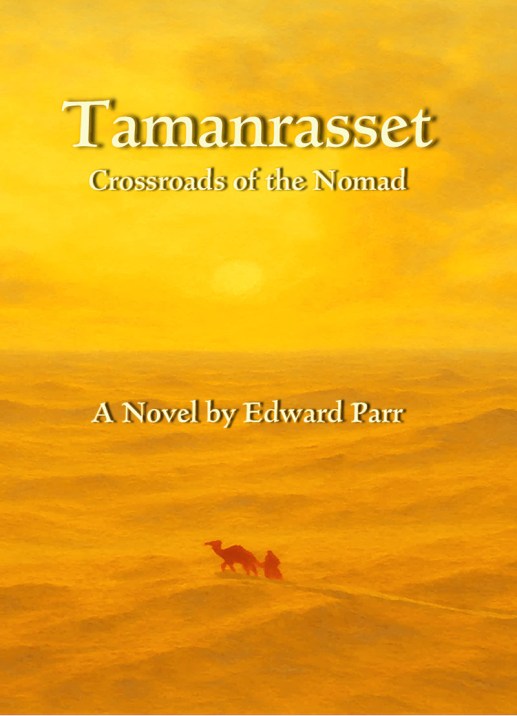
Blurb
TAMANRASSET is historical fiction set on the edge of the Sahara as the ancient world begins to fade and great empires collide. Four strangers—a mature Foreign Legionnaire, a Sharif’s wrathful son, an ambitious American archaeologist, and an abandoned Swedish widow—become adrift and isolated, but when their paths intersect, the fragile connections between them tell a story of survival and fate on the edge of the abyss. Blending the sweep of classic adventure with the horror of a great historical calamities, Edward Parr’s TAMANRASSET is a saga about the crossroads where nomads meet.
Excerpt
Demoreau knelt beside Lieutenant Claussen. The Sergent had been in plenty of actions during more than twenty years of service in the Legion: The sun beating down, the barrel of his rifle smoking and hot from constant firing, the taste of sand and sulfur in his mouth as he and his comrades fought off their enraged enemy with nerves of steel and cooler heads. “Que voulez-vous? C’est la Legion!” A part of him relished it. He had a calmness of mind gained through years of experience and training. As he raised his rifle to aim at the advancing tribesmen, he recalled to his mind the melody of a fine composition, the death waltz by Saint-Saëns, which unrolled in his inner ear, turning his blood to ice. He hummed the tune as his rifle fired and his deadly accurate shooting dropped one rider after another.
Claussen was a good Lieutenant and had plenty of courage, but that did not mean he couldn’t benefit from Demoreau’s experience. The Sergent turned and faced his commander: “We’re being overwhelmed and losing too many men, Sir: We can’t maintain this position. We must move east onto the ridge where there’s cover among the rocks.”
“I know, but it may be too far, Sergent,” Claussen replied.
“Yes, it might,” the Sergent agreed, “but we still have to go: We’ll certainly all be killed if we stay here.”
Claussen looked distraught, but as he looked Demoreau in the eyes his nerve was hardened. Everything had to be done “par règlement” in the Foreign Legion. He nodded: “Yes, give the order, Sergeant. Withdraw to the ridge; smartly, now.”
Author Bio and Links
Edward (“Ted”) Parr studied playwriting at New York University in the 1980’s, worked with artists Robert Wilson, Anne Bogart, and the Bread and Puppet Theater, and staged his own plays Off-Off-Broadway, including Trask, Mythographia, Jason and Medea, Rising and an original translation of Oedipus Rex before pursuing a lengthy career in the law and public service. He published his Kingdoms Fall trilogy of World War One espionage adventure novels which were collectively awarded Best First Novel and Best Historical Fiction Novel by Literary Classics in 2016. He has always had a strong interest in expanding narrative forms, and in his novel writing, he explores older genres of fiction (like the pulp fiction French Foreign Legion adventures or early espionage fiction) as inspiration to examine historical periods of transformation. His main writing inspirations are Charles Dickens, George Eliot, Bernard Cornwell, Georges Surdez, and Patrick O’Brien.
Website | LinkedIn | Goodreads | Amazon Author Page |Facebook | Reddit | Instagram | Amazon Buy Link | Barnes & Noble Buy Link
Giveaway
One randomly chosen winner via Rafflecopter will win a $25 Amazon/Barnes & Noble gift card. Find out more here.
Follow the author on the rest of his Goddess Fish tour here.




 Lloyd gently released me. His dark eyes seemed lighter as they gazed at me. “You are troubled.”




 Joanne Guidoccio