I’m happy to welcome back award-winning Wild Rose Press author M. S. Spencer.
Thank you so much, Joanne, for allowing me to talk about my new mystery, The Wishing Tree: Love, Lies and Spies on Chincoteague Island. Today I’d like to offer ten interesting details about Addison Steele, my heroine, and her life.
The Wishing Tree
The wishing tree is fictional, although I’m sure there are similar things put to the same use. Addison had heard stories about it from the time she was a little girl. This is how it’s described in The Wishing Tree:
“This tree, so Chincoteague lore went, welcomed the first Spaniards to its shores. The conquistadors tethered their horses to it, horses that would evolve into the Chincoteague salt hay ponies that roam the marsh today. This tree had seen hurricanes, naval battles, gun runners, pirates, poachers…and lovers. From the early 1700s on, a young maiden of the Eastern Shore would hang her token—a kerchief, a ribbon, an earring—on the ancient oak. It was said that if a high wind caught the token and blew it away across the ocean, her true love would reveal himself. The girl would visit the tree every chance she had, hoping to find her precious trinket gone. Of course, she usually had a true love already in mind and, to get the ball rolling, would sometimes contrive to draw the object of her affection’s attention to the tree. He would dutifully collect the trophy, keeping it hidden until the day he proposed.”
When we meet Addison, she is on sabbatical from her job at the Senate Library in Washington, DC. She still grieves for her husband Seth, who was lost at sea four days into their honeymoon. She is checking to see if her token is still on the wishing tree, when a handsome stranger speaks to her.
Her Name
Addison Steele is named after her ancestor Richard Steele and his best friend and collaborator Joseph Addison. They were part of a prominent London literary circle that included the poet Alexander Pope and Samuel Johnson (of dictionary fame). Richard Savage was also part of the group, until he fell out of favor due to his reprobate ways. Students of 18th-century literature may notice a few other historic names among the characters in The Wishing Tree. Caution: Addison and Nick are fictional characters, not actually related to the historical figures mentioned in the story.
The Senate Library
Addison is a librarian with the Senate Library. The United States Senate Library is the official library of the United States Senate. The Library was established in 1871 and today holds an estimated 220,000 volumes. Not to be confused with the Library of Congress, the Senate Library is a small center in the Russell Senate Office Building, that members can use for quick reference.
The Library of Congress
While she has time off, Addison is researching a book, and has snagged stack passes to the Library of Congress. Such passes are only available to a few scholars and highly sought after. The LC is technically not a national library. The core of its original collection were books owned by the founding fathers, and when they were destroyed in the War of 1812, Congress bought Jefferson’s personal library.
The Naughty Triumvirate
While browsing the Library of Congress stacks, Addison comes across a trio of 18th-century women writers of “amatory fiction.” Eliza Haywood, Aphra Behn, and Delarivier Manley, were known as the “naughty triumvirate” for their scandalously bawdy fiction. Eliza Haywood’s (1693?-1756) private life mirrored her erotic novels—including a six-year affair with Richard Savage, the poet and noted scalawag, which ended in nasty recriminations. Richard is the ancestor of our (fictional) hero Nick Savage, whose family harbored a desire for vengeance on the Steeles for 300 years. The feud comes back to haunt Addison and Nick.
Chincoteague
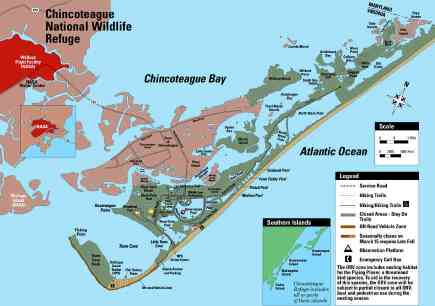
Chincoteague is an island in the Delmarva peninsula. The Eastern shore refers to the land east of Chesapeake Bay. The area is chock-a-block with small islands and wetlands, and has a rich history. People began to settle there around 1800. The Steeles have owned land on Chincoteague Island for four generations. Like the other early settlers, they began to graze cattle there in the late 1600s, and eventually built a vacation house on the Assateague Channel with a view of the lighthouse. Addison spent summers there from the time she was a little girl, and knows many stories of the island.
Assateague
Addison loves birdwatching and Chincoteague National Wildlife Refuge, situated on the Eastern Atlantic Flyway, is ideal for the hobby. Assateague (home of the Chincoteague National Wildlife Refuge) is a barrier island to the east of Chincoteague. Longer than Chincoteague, it protects it from the ravages of the Atlantic. Over a hundred years, sand has accumulated at the south end of Assateague, curling around the bottom of Chincoteague to form a huge hook. In The Wishing Tree, Addison suspects that spies are camping on the Hook—due to mysterious flashing lights coming from there.
Wallops Island
An adjacent island is Wallops, on which NASA has a flight launch facility. The NASA Goddard Space Flight Center’s Wallops Flight Facility, established in 1945, is the agency’s premier location for conducting research using suborbital vehicles—aircraft, scientific balloons, and sounding rockets. Wallops welcomes visiting scientists from all over the world. In The Wishing Tree, Addison meets some Belarusian biologists who act very suspiciously.
Life Saving Stations
Addison and Nick suspect that his brother may be using a derelict life saving station house as a hideout. The United States Lifesaving Service was created in 1878. Assateague—appropriate considering the number of shipwrecks in that part of the Atlantic coast—had four stations: Assateague Beach, Pope Island, Green Run, and North Beach. Together they were responsible for over 250 rescues. The only thing still standing of the four is the Pope’s Island Boathouse, which was moved to North Beach, but the house was left to fall to ruin. In The Wishing Tree, a tragic scene unfolds there.
Old Town Alexandria
Addison has two cats—Flopsy and Mopsy. One stays in Chincoteague, the other in Old Town Alexandria where Addison has a townhouse. Old Town Alexandria is a Colonial city, complete with cobblestone streets and taverns that date from the time of George Washington. She has an unsettling encounter in one tavern with Nick.
Blurb
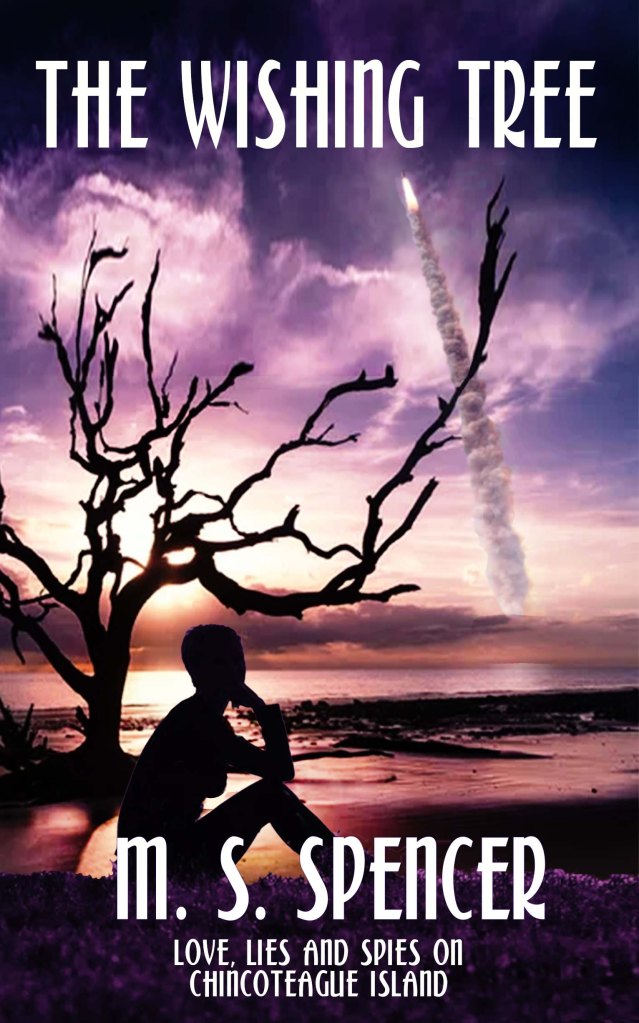
Will the wind whip her token from the Wishing Tree and make her wish come true?
Addison Steele dreams of the day her husband—lost at sea—returns to her. Instead, she meets Nick Savage, whose every word may be a lie. She is soon embroiled in mystery, all related to the top-secret science station at Wallops Island, Virginia.
After a Belarusian scientist at Wallops is murdered, the questions multiply. Was it because he caught the person stealing classified documents or because he wanted to defect? Is Nick the spy—or is it his brother? How can she trust the man who is slowly claiming her heart when his story keeps shifting?
Buy Links
Books 2 Read | Amazon | Barnes & Noble | BookBub | Goodreads
About the Author
Although M. S. Spencer has lived or traveled in five of the seven continents, before moving to Florida, she spent thirty years in Washington, D.C. as a librarian,
Congressional staff assistant, speechwriter, editor, non-profit director, and parent. After many years in academia, she worked for the U.S. Senate, the U.S. Department of the Interior, in both public and academic library systems, and at the Torpedo Factory Art Center in Alexandria, Virginia. She holds a Bachelor’s degree from Vassar College, a diploma in Arabic Studies from the American University in Cairo, and Masters in Anthropology and in Library Science from the University of Chicago.
Ms. Spencer has published sixteen romantic suspense or mystery novels. She divides her time between the Gulf Coast of Florida and a tiny village in Maine.
Blog | Facebook | Twitter | Pinterest | Goodreads | BookBub | MeWe | Amazon
 Joanne Guidoccio
Hey, Joanne. Good post. I have this book in my TBR file. Looking forward to reading even more now. I shared. 🙂
Wonderful! I’d love to hear your thoughts when you’ve finished.
I had so much fun writing about all the background bits to The Wishing Tree. Thank you for having me, Joanne. I hope readers enjoy the post.
You’re very welcome. Best of luck with sales. 🙂