Movie Review: Molly’s Game

The storyline is a compelling one: an Olympic-class skier runs an exclusive, high-stakes poker game for a decade before being arrested by seventeen FBI agents wielding automatic weapons. Insert Oscar-winning actress Jessica Chastain in the leading role and screenwriter-turned-director Aaron Sorkin at the helm and the movie becomes even more mesmerizing.

After suffering a devastating injury on the slopes, Molly Bloom, an Olympic hopeful, walks away from her small-town life and her father’s unrealistic expectations. Hoping to soak in the sun and have fun in Los Angeles, Molly ends up working as a personal assistant for an abusive employer (Jeremy Strong), who puts Molly in charge of organizing a weekly, back-room poker game populated by A-list actors, politicians, millionaires, and billionaires.

Under Molly’s supervision, the game grows exponentially as she adds more exclusive trappings: a suite in a luxury hotel, gourmet food, and expensive liquor. She also increases the buy-in, ensuring that she’ll make more in tips. In a recent interview, Molly revealed that her income in 2009 was over $4 million.

A run-in with Player X (Michael Cera) forces Molly to take her game to New York. There, she increases the buy-in to $250,000. While the clientele is still high-end, the game also attracts wealthy Russian gangsters who want a piece of the action. About this time, the FBI becomes very interested in Molly’s game.

Nominated for a Golden Globe, Jessica Chastain also deserves an Oscar nomination for her portrayal of this strong but deeply flawed woman. Her voice-over throughout the film skillfully anchors all the events from an early accident at age twelve to the handcuff scene to conversations in her lawyer’s office.

The supporting cast of male characters delivers award-winning performances. I was impressed by Idris Elba’s portrayal of Charlie Jaffey, the lawyer with scruples, who takes Molly’s case even though she’s broke and facing jail time.

Kevin Costner delivers an excellent performance as the hard-driving sports father and psychologist, who demanded academic and athletic excellence from his children. The skating rink scene provides a glimpse into his softer “dad” side.

Molly’s Game is more than just another poker movie. In fact, the Poker Princess aka Molly Bloom doesn’t even play the game.

A must-see film!


10 Interesting Facts About Calamity (Callie) Barnstable

I’m happy to welcome Canadian author Judy Penz Sheluk to the Power of 10 series. Today, Judy shares ten interesting facts about the protagonist of her Marketville series. I enjoyed reading and highly recommend Book 1, Skeletons in the Attic, and look forward to future installments.

Here’s Judy!

Calamity (Callie) Barnstable is the protagonist in SKELETONS IN THE ATTIC, the first book in Judy Penz Sheluk’s Marketville Mystery series. PAST AND PRESENT, the second book in the series, is scheduled for publication in early 2019.

1) Calamity (Callie) is named after Calamity Jane, a Wild West frontierswoman of questionable repute, although her mother actually named her after the considerably softened Calamity portrayed by Doris Day in a 1950s movie of the same name.


2) Callie is the only child of two only children, whose parents disowned them, and by association, their only grandchild, when Callie’s mother got pregnant at the age of 17.

3) Callie worked in the fraud unit of a bank call center in Toronto until she inherited a house in Marketville from her father, who died in an “unfortunate occupational accident.”

4) Callie has also inherited her father’s black-rimmed hazel eyes, unruly brown hair, and stubborn streak.

5) When it comes to love, Callie believes she is a victim of the “Barnstable family curse.” Her last boyfriend dumped her on Valentine’s Day, when Callie was expecting an engagement ring. Enough said.

6) Callie’s favorite take-out comfort food is cheese pizza with extra sauce and hot peppers, though she does make a great homemade lasagna and mac and cheese. Maybe cheese is the not-so-secret ingredient here.

7) Callie’s favorite alcoholic beverage is Australian chardonnay. Her favorite tea is Vanilla Rooibos.

8) Callie is a runner who runs in temperatures from -30 to +30 (that’s Celsius for you Fahrenheit folks…translation -22 to 86+)

9) Callie is “addicted” to cocoa butter lip balm and has tubes of it stashed everywhere.

10) Callie is both fascinated and doubtful about tarot and all things psychic.

Blurb

What goes on behind closed doors doesn’t always stay there…

Calamity (Callie) Barnstable isn’t surprised to learn she’s the sole beneficiary of her late father’s estate, though she is shocked to discover she has inherited a house in the town of Marketville—a house she didn’t know existed. However, there are conditions attached to Callie’s inheritance: she must move to Marketville, live in the house, and solve her mother’s murder.

Callie’s not keen on dredging up a thirty-year-old mystery, but if she doesn’t do it, there’s a scheming psychic named Misty Rivers who is more than happy to expose the Barnstable family secrets. Determined to thwart Misty and fulfill her father’s wishes, Callie accepts the challenge. But is she ready to face the skeletons hidden in the attic?

Bio

Judy Penz Sheluk is the author of two mystery series: The Glass Dolphin Mysteries (THE HANGED MAN’S NOOSE), and The Marketville Mysteries (SKELETONS IN THE ATTIC). Sequels to both series are scheduled for 2018. Judy’s short crime fiction appears is several collections.

Judy is a member of Sisters in Crime, Crime Writers of Canada, International Thriller Writers and the Short Mystery Fiction Society. She is also on the Crime Writers of Canada Board of Directors as the Regional Representative for Toronto/Southern Ontario (2017-2018).

Where to find Judy…

Website | Facebook | Twitter | Amazon

Find Judy’s books at all the usual suspects, including Audible and the publisher Barking Rain Press.


Life Advice from Unexpected Sources

On Wednesdays, I share posts, fables, songs, poems, quotations, TEDx Talks, cartoons, and books that have inspired and motivated me on my writing journey. I hope these posts will give writers, artists, and other creatives a mid-week boost.

I’ve always enjoyed this short period between Christmas and New Year’s. With most of the holiday madness out of the way, it’s a good time to reflect upon the past twelve months and start making plans for 2018. A self-help junkie, I like to reread my favorite books, but I’m also open to advice from unexpected sources.


Advice that resonates with me…

The Flash, Merida, Patrick Star, The Fairy Godmother, Chef G

Which advice speaks to you?


10 Interesting Facts About Jason Davey

I’m happy to welcome Canadian author Winona Kent to the Power of 10 series. Today, Winona shares ten interesting facts about the protagonist of her latest release, Disturbing the Peace.

Here’s Winona!

I first wrote about Jason five years ago in my novel Cold Play, which took place on board an aging cruise ship sailing from Vancouver to Alaska. Jason was one of the ship’s entertainers; he spent his evenings in the TopDeck Lounge singing, playing his guitar and observing his audience, several of whom ended up having rather more to do with Jason than merely sharing his voyage north.

Jason left the sea after Cold Play and after some adventures in Australia and Hong Kong, ended up back in London gigging at The Blue Devil, a jazz club in Soho.

In my new novella, Disturbing the Peace, Jason discovers he has some excellent investigative skills, and ends up in northern Canada attempting to find out what happened to a legendary musician who’s been missing for four years.

When I wrote Disturbing the Peace, I wanted to make sure I could actually handle a true mystery. I’ve been writing gentle time travel stories for the past couple of years, and I felt a complete change would be good for my creative soul. I ended up falling in love with Jason all over again. The result: I’m going to give him more adventures, full-length novels that fall squarely within the mystery genre. The next one is tentatively titled A Diminished Seventh, although I’m toying with renaming it Notes on a Missing G-String. I hope to have it finished by the end of 2018.

Here, then, are ten things you might not know about Jason Davey…

1. His real name is Jason David Figgis. His parents, Mandy Green and Tony Figgis, formed the folk-pop group Figgis Green in the early 1960s. Although he could trade on his parents’ fame, he doesn’t. He hates nepotism and would rather be recognized as a musician in his own right. In fact, very few people in the business in London know about Jason’s musical pedigree, and he wants to keep it that way. As a result, he sometimes finds himself struggling for recognition.

2. Jason’s a smoker. He gave it up for a few years after his wife, Emma, died, but picked it up again after he left the sea. He also gave up drinking – and that’s lasted. His favourite non-alcoholic concoction aboard the Star Sapphire was a hand-made melon-juice concoction supplied by Samuel, the bartender in the TopDeck Lounge. His favourite non-alcoholic drink now is a spicy tomato juice he creates himself from tinned crushed tomatoes, vinegar, sea salt, stevia, Worcestershire sauce, lemon juice, garlic powder, onion powder, minced onions and horseradish. The drink doesn’t show up in Disturbing the Peace but I’m going to introduce it in the next story. It’s my favourite drink too – I make it in bulk every couple of days and keep it in a jug in the fridge.

3. Jason has four guitars, which he keeps in a locked room at The Blue Devil: two solid body Fenders (a Tele and a Strat), a handsome black Phoenix hollow-body similar to the one Brian Setzer plays, and a Gibson ES-175, an archtop that’s a favourite of traditionalists, although he finds it uncomfortable because of an injury he sustained on board the Sapphire. He had six different guitars when he was gigging at sea, including an original Fender Strat that once belonged to his dad. You’ll have to read Cold Play to find out what happened to them.

4. Jason believes in ghosts and guardian angels, and intuitive and psychic powers. He had a guardian angel named Jilly in Cold Play, although he spent much of the novel assuming she was just one of his Twitter followers. She ending up proving she was much, much more than that. I suspect Jilly may put in a return appearance in future stories. She could definitely have helped him out in Disturbing the Peace.

5. Jason was married to a makeup artist named Emma. He has a son, Dominic, who’s now at university studying film production. Emma died in a fire which Jason believed he caused and the guilt he felt was what originally drove him to run away to sea. In Cold Play he met and fell in love with a travel agent named Katey Shawcross. Some years have passed, but he’s still on very friendly terms with Katey – and, indeed, we meet her again in Disturbing the Peace, where she proves to be very useful.

6. Jason’s favourite restaurant is Rules, in Covent Garden. He’s well-known there. His favourite dish is the Steak and Kidney Pie, although he has been known to order Wild Boar Pie, much to Katey’s disgust.

7. Jason’s a frustrated actor at heart. He loves situations where he can play at being someone he’s not. In Disturbing the Peace, he harnesses his acting skills to impersonate an accountant. Not the most exciting of roles – but it excites him, because it allows him access to information he might not otherwise have been privy to.

8. I love looking in peoples’ fridges to see what they keep there. Jason’s little fridge in his crew cabin on board the Sapphire contained the following: eleven G&B chocolate bars in assorted flavours, two jugs of fresh melon juice (see above), four bottles of Starbucks Mocha Frappucino, a four-day-old tray of take-out sushi from Ketchikan, a package of Brie, a package of Kerrygold Dubliner and a box of artisan whole leaf teabags (assorted varieties, many from obscure places in Africa). In Disturbing the Peace, Jason calls a tiny flat in a converted Georgian townhouse on Pentonville Road home. I didn’t have time to explore what was in his fridge there, but I promise in the next story, I’ll investigate! I suspect these days he’ll still have different cheeses and packets of pate from Waitrose. And a bread maker on his kitchen counter.

9. In Cold Play, Jason was a Twitter addict. His Twittername was @Cold_Fingers. I have yet to find out if he’s still driven by social networking. I suspect if he’s in touch with any of his old Twitterfriends, they’ve probably now all migrated over to Instagram or Facebook. Hopefully none of them include SaylerGurl, his Twitterstalker who had a fondness for sending him obsessive love notes featuring dreadful poetry.

10. Jason loves watching films on Netflix. His favourite is Mission: Impossible – he loves how they use their skills to solve problems. His favourite music these days is jazz, of course, but he’ll always have a fondness for Cliff Richard’s old backing group, The Shadows, and Hank Marvin particular. He absolutely loves Hank’s more recent Gypsy Jazz tunes.

Blurb

Disturbing the Peace is a 22,000 word novella introducing professional musician and amateur sleuth Jason Davey, who first appeared as a cruise ship entertainer in Winona Kent’s 2012 novel Cold Play.

Jason’s last job was aboard the Star Sapphire as she sailed from Vancouver to Alaska. Now he’s back on shore, and he has a regular gig at The Blue Devil jazz club in London.

When Dominic, Jason’s film-student son, asks his dad to help track down a missing musician for a documentary he’s making, Jason leaps at the chance.

Ben Quigley played rhythm guitar in Jason’s parents’ pop-folk group Figgis Green in the late 1960s. And, after living a life that in many ways paralleled Gerry Rafferty’s, he dropped off the face of the earth four years ago.

Jason’s search ultimately takes him to Peace River, Alberta – 300 miles from Edmonton in Canada’s frozen north. And what he discovers there is both intriguing – and disturbing.

Buy Links

Amazon (Canada) | Amazon (U.S) | Amazon (U.K.) | Amazon (Germany)

Bio

Winona Kent was born in London, England. She immigrated to Canada with her parents at age 3, and grew up in Regina, Saskatchewan, where she received her BA in English from the University of Regina. After settling in Vancouver, she graduated from UBC with an MFA in Creative Writing. More recently, she received her diploma in Writing for Screen and TV from Vancouver Film School.

Winona has been a temporary secretary, a travel agent and the Managing Editor of a literary magazine. Her writing breakthrough came many years ago when she won First Prize in the Flare Magazine Fiction Contest with her short story about an all-night radio newsman, Tower of Power. More short stories followed, and then novels: Skywatcher, The Cilla Rose Affair, Cold Play, Persistence of Memory and In Loving Memory.

Winona’s sixth novel, Marianne’s Memory, will be published in 2018, along with a new Jason Davey mystery. tentatively titled A Diminished Seventh.

Winona currently lives in Vancouver and works as a Graduate Program Assistant at the University of British Columbia.

Please visit Winona’s website at http://www.winonakent.com for more information about her writing.

She’s also written a blog about the inspiration behind Disturbing the Peace: https://winonakent.wordpress.com/2017/12/11/disturbing-the-peace

When I heard that Ms. Kent was planning to explore another genre, I was curious to see if she could successfully transfer her well-honed writing skills. I needn’t have worried. In Disturbing the Peace, she demonstrates ample proof of her wonderful eye for detail and gift for creating a strong sense of place. Riveted from the start, I found myself immersed in Jason Davey’s journey as he traveled from London, England to Peace River, Alberta. I strongly recommend setting aside an afternoon or evening to read this well-plotted, character-driven novella.


Just Let It Be

On Wednesdays, I share posts, fables, songs, poems, quotations, TEDx Talks, cartoons, and books that have inspired and motivated me on my writing journey. I hope these posts will give writers, artists, and other creatives a mid-week boost.

December can be stressful. Searching for that perfect gift…preparing that perfect meal…creating that perfect Christmas Day. All that perfection takes away from the spirit of the season. Whenever I feel stressed or overwhelmed, I take time to read and reflect upon the following Zen parable:

Buddha was walking from one town to another town with a few of his followers. While they were traveling, they happened to pass a lake. They stopped there and Buddha told one of his disciples, “I am thirsty. Please get me some water from that lake.”

The disciple walked up to the lake. When he reached it, he noticed that some people were washing clothes in the water and, right at that moment, a bullock cart started crossing the lake right at the edge of it. As a result, the water became very muddy, very turbid. The disciple thought, “How can I give this muddy water to Buddha to drink?” So, he came back and told the Buddha, “The water is very muddy. I don’t think it is fit to drink.”

The Buddha said, “Let us take a little rest here by the tree.” After about half an hour, Buddha asked the same disciple to go back to the lake and get him some water to drink. The disciple obediently went back to the lake. This time he found that the lake had clear water in it. The mud had settled down and the water above it looked drinkable. So he collected some water in a pot and brought it to the Buddha.

The Buddha looked at the water, and then he looked up at the disciple and said, “You let the water be, and the mud settled down on its own. You got clear water. It didn’t require any effort.”

Moral: Your mind is also like that. When it is disturbed, just let it be. Give it a little time. It will settle down on its own. You don’t have to put in any effort to calm it down. You can judge and make the best decisions of your life when you stay calm.

Source: Moral Stories


10 Facts about 18th Century Food and Drink

I’m happy to welcome The Wild Rose Press author Kathleen Buckley to the Power of 10 series. Today, Kathleen shares interesting facts about eighteenth century food and drink and her novel, An Unsuitable Duchess.

Here’s Kathleen!

I have enjoyed reading about the history of food since I was a child, and have done a good deal of research on the subject. Now that I write Georgian (18th century) romances, this hobby is becoming useful. This deals specifically with English/British eating habits, although most of this will apply to the American Colonies, too, with additions of foods specific to the New World.
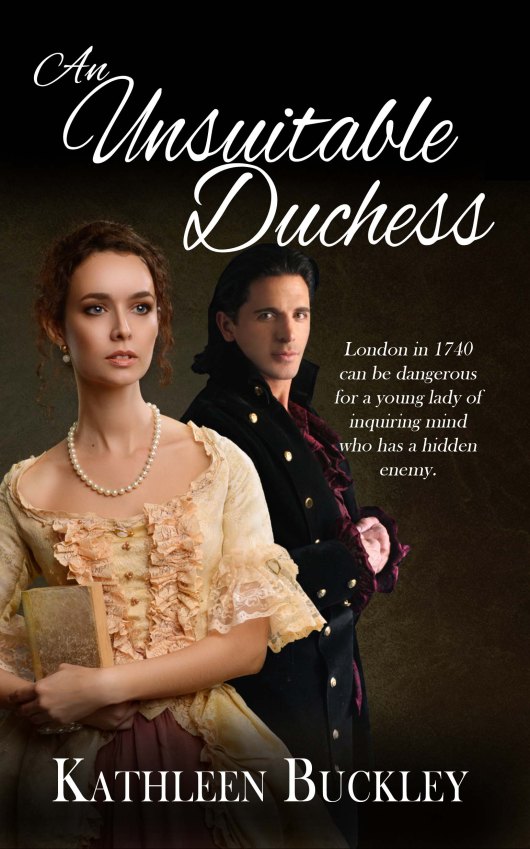


1. They ate things we don’t: syrup of turnips, brain cakes (brains mixed with flour, salt, nutmeg and raw egg, fried in butter), calf’s foot pie, mutton ham, larks, lampreys, calf’s head surprise. Yes, really.

2. They pickled things we don’t: not only cucumbers and onions, but walnuts, beetroot, pigeons, barberries, celery, kidney beans, oysters and almost anything else you can think of.

3. Candy was completely different. No candy bars, no bon-bons, no fudge. An 18th century confectioner’s cookbook contained recipes for drying or preserving fruit, making jam, candying flowers (and other things), making wafers, biscuits (cookies), puffs, almond paste, creams, jellies, including hartshorn jelly, caraway comfits, clotted cream, and chocolate almonds (sugar and chocolate sifted together with musk and ambergris and some binding ingredients, molded into the form of almonds). The Compleat Confectioner, or The Art Of Candying & Preserving In Its Utmost Perfection, by Mrs. Eales, Confectioner to Queen Anne, 3rd ed., 1742.

4. Chocolate was used almost exclusively as a beverage until the 19th century, when the discovery of the “Dutch process” made chocolate’s use in candy and baking feasible. The “chocolate almonds” mentioned above would have been nothing like modern chocolate candy, as they were evidently made by grinding cocoa nibs. Though cocoa nibs are now a “thing” among foodies. Go figure.

5. Wafers, biscuits, cakes and tea cakes were plain. Cakes tended to fall into two categories: pound cakes and fruit cakes. They and the small cakes—the equivalent of cookies or cupcakes—often contained caraway seeds, rose water, wine or brandy, and a spices like nutmeg, mace, cinnamon, caraway, caraway comfits, and raisins or currants. Oh, and macaroons? They were made with ground almonds, not coconut. Very few cakes were iced.

6. Chelsea buns were the wildly popular specialty of the Chelsea Bun House (1712 to 1839), and no wonder. From contemporary descriptions, these yeast buns were filled with currants or raisins, lemon peel, butter, sugar, and spice, rolled up like our cinnamon rolls, baked and then coated with a sugar and water glaze. Other bun recipes of the period are very plain indeed. The families of both George II and George III visited the Bun House to indulge.

7. People ate what was in season, and what they could afford. Fruit and vegetables were not available all year as they are now, thanks to modern transportation. If you wanted fruit in the winter, you preserved it when it was available. Meat and fish were dried, pickled, salted or potted (by cutting it up, pounding and seasoning it, baking until it was soft, draining off any liquid or fat, putting it into a pot and covering the contents with clarified butter which presumably then sealed it).

8. Tea was the most popular non-alcoholic beverage, although it was expensive. Men socialized in coffee and chocolate houses. Everyone drank beer as a thirst-quencher. Gin was the scourge of the London poor.

9. Your 18th century dinner will probably not include potatoes. I found occasional recipes for potato pie and potato pudding. The 1805 edition of Hannah Glasse’s popular cookbook suggests boiling potatoes in their skins, removing the skins, and either buttering them or browning them on a gridiron or in beef dripping.

10. Meals were … different. If you could afford to eat well, your diet was heavy in meat and light in vegetables. Susanna MacIver’s late 18th century cookbook, intended for the “genteel and middling classes” suggests family dinners of five to fifteen dishes. This is a sample of a ten dish dinner (taken in the middle of the day):

Salmon – roast turkey – stewed celery – fried fish – marrow pasty – soup – baked pudding – veal cutlets – sliced turnips and carrots with melted butter – boiled tongue and udder with roots (root vegetables)

Supper was lighter and simpler. MacIver lists a page of possibilities, including hot or cold meat or fowl, pies, tarts, creams (think custardy things), anchovies, poached eggs with sorrel, and vegetables, from which “any lady of the smallest experience may form suppers of any extent according to the articles that are in season.”

If you were wealthy, your meals would be more elaborate. The poorest seldom had any cooking facilities, and probably bought their food in taverns or from street vendors. Bread, cheese, gin and beer were staples of their diet. Riots occurred when the price of wheat rose.

Blurb

After her guardian’s death, Anne Sinclair comes to Town seeking a man with broad interests, rather than broad estates. She possesses a competence and a pretty face, so why did her late guardian think it might be difficult for her to make a match? The question becomes urgent when she discovers that London can be perilous for a young lady of inquiring mind—especially when she has a hidden enemy.

Lord John Anniscote unexpectedly inherits the title and responsibilities of his dissolute brother, the Duke of Guysbridge, including houses, servants, tenants, and the need to provide himself with an heir. Formerly poor, cynical, and carefree, he finds himself hunted by marriage-minded females. When a plot against a young lady up from the country touches his honor, can the new duke safeguard her reputation and repair his own?

buynow

Bio

Kathleen Buckley became interested in history before she learned to read (every Saturday when her mother took her to the Anchorage library, she insisted on going through the library’s fascinating exhibit of Eskimo artifacts). As soon as she learned to read, she wanted to write, and began with a dictionary of all the words she knew how to spell. This led to a Master’s Degree in English literature and a series of non-writing-related jobs: customer service in a hospital billing department, accounts receivable bookkeeper in a commercial print shop, paralegal, and security officer.

She has lived in both Anchorage and Fairbanks, Alaska, in Seattle, Washington, and now lives in Albuquerque, New Mexico (warmer than Alaska; dryer than Seattle). Favorite authors in no particular order: Jane Austen, Louise Penny, Sir Walter Scott, J.A. Jance, Lois McMaster Bujold, Robert B. Parker, Fiona Buckley (no relation), Georgette Heyer, Anne Perry, John Dickson Carr, Mary Balogh, Elizabeth Peters/Barbara Michaels, Andrew Vachss.

Where to find Kathleen…

Blog | Facebook | Goodreads


Are You in Your Book?

I’m happy to welcome back author Catherine Castle to the Power of 10 series. Today, Catherine explains how she has inserted herself in her latest release, Bidding on the Bouquet.

Here’s Catherine!

Curious readers often want to know if a writer is in their book. I never thought I inserted myself into my books until recently. However, as I write more stories, I discover more of myself in each book. Here are 10 places I found myself, or my life and family experiences, in my latest book Bidding on the Bouquet, an inspirational contemporary romance from Forget Me Not Romances.

1. Flowers usually make an appearance in my books. Considering I’m a gardener, that’s probably not an unusual thing. Bidding on the Bouquet is no exception. Not only does the story revolve around a very special bridal bouquet, but there is some courting done with flowers.

2. I also have some interesting floriography references I think readers will love. Floriography is the language of flowers. Victorian couples often sent each other secret message based on the language of flowers. In Bidding on the Bouquet there is one scene using floriography that readers have already commented that they love. I won’t spoil your read by telling you which one it is.

3. Tinsy, one of the secondary characters in the book, quotes a family proverb that is often used in our home. “Work like it all depends on you and pray like it all depends on God.”

4. Food frequently appears in my books. My daughter hates a particular vegetable, and it got a role at the dinner table in this book.

5. I love roasted Brussel sprouts. They also ended up on a dinner plate.

6. My hero and heroine shared a steak meal the first time they ate together. Steak was also the first meal my husband bought me when we were dating.

7. The name of the steak house in Bidding on the Bouquet is the name of the steak house where my husband took me on our first date the summer between our junior and senior years in high school. Back then the guys had to wear a suit coat and tie for senior pictures. He thought he’d take a date out so as to not waste the effort of dressing up.

8. Pies are a motif in Bidding on the Bouquet. I hadn’t thought much about them recently, except we get a free slice every week at O’Charley’s restaurant. But as I was writing this book a lemon meringue pie appeared, and I remembered I used to make that particular pie—from scratch—for my husband when we were first married. It was his favorite back then.

9. Second-hand clothes have a role in Bidding on the Bouquet. My heroine wears them a lot. As a teen, I often shopped at Goodwill or other thrift stores. Some of my favorite outfits back then came from Goodwill.

10. Something my nephew did at Thanksgiving also appears in Bidding on the Bouquet. He called Cerri on his cell to ask a question. My phone’s not that smart, so I would have never thought about doing that. I’d have googled it instead. A few days later the hero unexpectedly (on my part) asked his Cerri assistant to tell him the meaning of a word. The hero did not like what the internet guru told him.

Well, that’s my Power of Ten for today. Thanks for dropping by. If you’re a writer, I’d like to know if you’ve ever appeared in your books. If you’re a reader, do you like to know if a writer has inserted themselves into a story?

Blurb

The chance to catch a bridal bouquet containing a solid gold rose makes underprivileged, down-on-her-luck grad student Marietta Wilson pawn everything she owns to come up with a bid to win a bridesmaid spot in the most prestigious wedding of the season.

When he discovers his sister is auctioning off bridesmaid spots in her wedding party, wealthy, elitist Chip Vandermere is appalled. Not only is it in poor taste, but no self-respecting lady would stoop so low as to bid. Convinced Marietta is a gold digger, Chip sets out to thwart her plans.

A social climber and a social misfit. Can a bridal bouquet unite them?

Buy Links

Bidding on the Bouquet | Groom for Mama | The Nun and the Narc (Amazon) | The Nun and the Narc (Barnes & Noble)

Bio

Catherine Castle is a multi-award-winning author who loves writing, reading, traveling, singing, watching movies, and the theatre. In the winter she quilts and has a lot of UFOs (unfinished objects) in her sewing case. In the summer her favorite place is in her garden. She’s a passionate gardener who won a “Best Hillside Garden” award from the local gardening club.

Her debut inspiration romantic suspense, The Nun and the Narc, from Soul Mate Publishing was an ACFW Genesis Finalist, a 2014 EPIC finalist, and the winner of the 2014 Beverly Hills Book Award and the 2014 RONE Award. A Groom for Mama, is a sweet romantic comedy from Soul Mate Publishing. Her latest release, Bidding on the Bouquet, from Forget Me Not Romances, is an inspirational contemporary romance. Her books are available on Amazon.

Where to find Catherine…

Website | Blog | Amazon | Goodreads | Twitter | Facebook | Google+

Fun Friday!

I was intrigued by the YouTube descriptor: “Its educational value was somewhat suspect. It was never aired.”

And so were thousands of other viewers who also decided to watch this “fake” commercial (shot in 1998) featuring literary sisters Charlotte, Emily and Anne Brontë as feminist vigilantes.

Enjoy!