Nailing That First Page

At last night’s dinner meeting for Guelph Writers Ink, we discussed a variety of topics, among them the all-important first page of a novel. Opinions varied around the table with most of us agreeing that the first page must introduce the protagonist and include a crisis or conflict of some kind. While it is important to set the scene, it should be done without getting bogged down in too many descriptions.

Those of us who write crime fiction must also consider the following question: Is it necessary to place the dead body on the first page of a novel?

In a recent article, bestselling author Louise Penny offered the following advice: “If you’re writing your first work of crime fiction, place the body near the beginning of your book—preferably on the first page, perhaps the first sentence. In later books this won’t be as necessary, but agents and editors like it established early, so readers know what they’re getting.”

I am a fan of Louise Penny and inclined to follow her advice. She has walked the walk and achieved literary success with her mystery series. Her first novel, Still Life, was turned down by 50 publishers and agents before it found a home with British literary agent Teresa Chris.

In my WIP, I had originally introduced the dead body at the bottom of the second page. But after reading Louise’s article and getting advice from other writers, I reworked the first chapter and placed the dead body in the first sentence.

Any other thoughts out there?
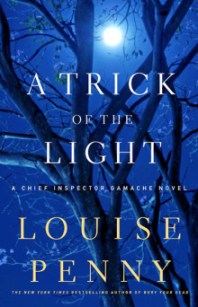
Colliding Worlds

Chief Inspector Armand Gamache is back in Three Pines, the idyllic village set in Quebec’s Eastern Townships. In this seventh entry of Louise Penny’s crime-fiction series, Gamache deals with the intricacies of the art world and, of course, murder.

When A Trick of the Light opens, 50-year old Clara Morrow is standing behind the frosted glass doors of the prestigious Musee d’Art Contemporain in Montreal. Before entering the “vernissage” (preview) of her one-woman show, she envisions every possible dream and nightmare about her future in the highly competitive art world. Her friends whisper reassurances and help her get through the event. Afterward, she returns to Three Pines for a party with her friends from the village and prominent members of the art world. The celebratory mood comes to an abrupt end with the discovery of a murdered corpse in Clara’s garden.

Murder has returned to the village that “produces bodies and gourmet meals in equal proportions.”

The dead woman is identified as Lillian Dyson, a childhood friend who cruelly betrayed Clara and destroyed many careers with her stinging art reviews. Faced with a wide field of suspects, Gamache and his deputy, Jean-Guy Beavoir, start their investigation. Gamache listens carefully to the artists, the people who support them, and the people who feed off them. Envy is a persistent theme, and we watch as the ravages of this strong emotion eat away at the characters, threatening their friendships, marriages, partnerships, and even lives.

In A Trick of the Light, Penny uses the worlds of art and Alcoholics Anonymous to explain fear and pain, hope and change. As these colliding worlds intersect, the characters stumble and search for reasons to live, love and forgive. Both worlds offer many surprises and people are not always what they appear to be. Throughout the novel, Penny poses the question: What is truth and what is a trick of the light?

The characters wrestle with the concept of forgiveness. Is it possible for a woman to forgive a spouse who  undermines her talent? Can a man forgive the chief inspector who arrested him for a murder he did not commit? What happens when a recovering alcoholic jumps to Step Nine of her handbook and asks for forgiveness?

The pacing is superb and the narration is simple and direct. The intricate plot follows all the rules of mystery writing complete with red herrings, false denouements, and a few gourmet touches. While reading Penny’s previous novels would provide context, the book is strong enough to stand on its own. Fans of the series will enjoy seeing their old friends from the village and watching their lives develop and change during the course of this investigation. At the end of the book, some of the characters’ lives are in shambles as they make tentative efforts to pick up the pieces. No doubt, Louise Penny will continue their stories in her eighth novel to be released in August 2012.